
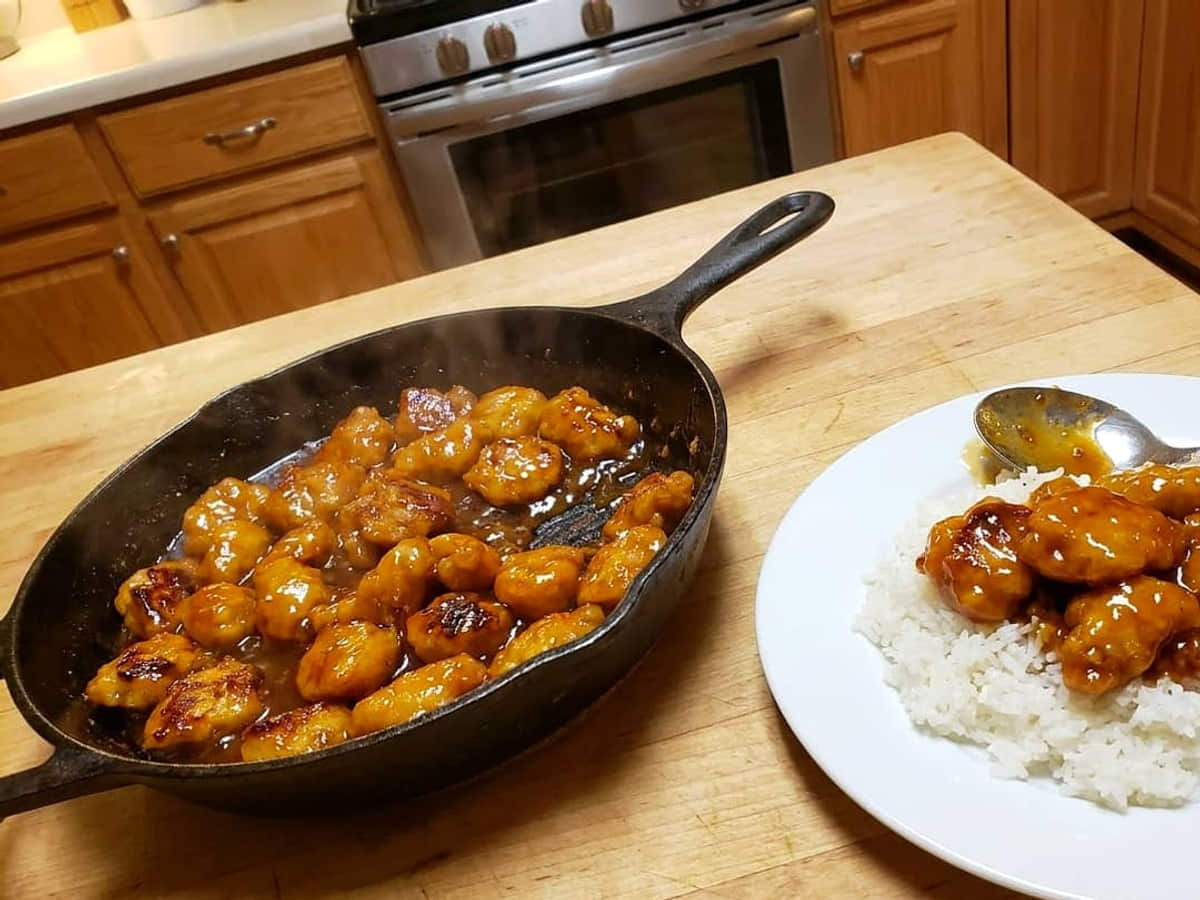
Sticky Orange Chicken
The jar of orange marmalade has been sitting in my fridge door since February, and orange chicken is the only reason I keep buying it. My kids spotted it on a takeout menu a couple of years ago and immediately decided it was their favorite thing on earth.
I figured I could do it at home on a Tuesday night, and I was right.
The version I make most often takes about 25 minutes start to finish. It uses two boneless, skinless chicken breasts cut into 1-inch pieces, tossed in cornstarch before they hit the pan, and finished in a sticky sauce built on fresh orange juice and that marmalade.
The marmalade does double duty here. It brings the sweetness and the orange peel flavor all at once, so you don’t need to zest a separate orange.
Prep: 10 minutes · Cook: 15 minutes · Total: 25 minutes · Serves: 4
What makes orange chicken sauce thick and glossy?
Two things work together: cornstarch in the sauce thickens it as it heats, and the pectin already in the orange marmalade helps it cling. Both sources I worked from mix the cornstarch into the sauce liquid before it goes in the pan, never sprinkling dry starch straight into a hot skillet, which would clump.
Why It Works
- Tossing the chicken in cornstarch before searing gives each piece a thin, dry coating that browns fast on high heat and gives the sauce something to grip onto.
- Mixing the 2 tablespoons of cornstarch directly into the sauce liquid before it hits the pan distributes it evenly, so the sauce thickens smoothly instead of going lumpy in spots.
- Pulling the pan off the heat the moment the sauce coats the chicken and the internal temperature reads 165°F means the chicken stays juicy. Overcooking is the most common reason homemade orange chicken turns rubbery.
The first time I made this I skipped the cornstarch dredge because I was in a hurry. The sauce slid right off the chicken and pooled at the bottom of the pan.
I’ve never skipped it since.
Why You’ll Love This Orange Chicken
- Ready in 25 minutes, start to finish, on a weeknight
- Pantry-friendly: the sauce comes together from things most people already have
- One skillet, minimal cleanup
- Kids eat it without a single complaint, which is its own kind of win
Grab These Ingredients
- 2 boneless, skinless chicken breasts, cut into 1-inch pieces
- 3 tbsp cornstarch
- ½ tsp salt
- ¼ tsp black pepper
- 1 tbsp neutral oil (vegetable or canola)
- ½ cup orange juice (no sugar added)
- ½ cup orange marmalade
- ⅓ cup low-sodium soy sauce
- 1 tbsp white vinegar
- 1 tsp garlic, minced (about 2 small cloves)
- 1 tsp fresh ginger, minced
- 1 pinch red pepper flakes
- ⅓ cup low-sodium chicken broth
- 2 tbsp cornstarch
Ingredient Notes and Swaps
Orange juice: use plain, no-sugar-added juice. Fresh-squeezed is great if you have it, but a good refrigerated carton works fine.
Both sources I worked from agree on exactly ½ cup, and that’s the number I trust most in this recipe. Avoid anything labeled “cocktail” or “drink,” which adds sweetness you can’t control.
Orange marmalade: this is the sweetener and the flavor base in one jar. It already contains orange peel and sugar, so the sauce doesn’t need anything else for that citrus punch.
A thin-cut marmalade blends into the sauce more smoothly than a chunky one. I don’t recommend swapping it for jam or jelly, which won’t give you the same bitter-bright edge.
Soy sauce: go low-sodium. Regular soy sauce at ⅓ cup makes the dish very salty, and you can’t fix that once it’s in the pan.
The cornstarch in the sauce concentrates every flavor as it thickens, so the salt level matters more here than in a dish with a thinner liquid.

Let’s Make It
- Coat the chicken. In a medium bowl, toss the chicken pieces with 3 tbsp cornstarch, ½ tsp salt, and ¼ tsp black pepper until every piece is lightly coated and no wet spots remain.
- Mix the sauce. In a separate bowl or large measuring cup, whisk together the orange juice, marmalade, soy sauce, white vinegar, garlic, ginger, red pepper flakes, chicken broth, and 2 tbsp cornstarch until the cornstarch is fully dissolved and no white streaks are visible at the bottom.
- Sear the chicken. Heat 1 tbsp oil in a large skillet over high heat until the oil shimmers. Add the chicken in a single layer, and cook for about 2 minutes per side until the edges are golden and the coating looks set. Don’t crowd the pan or the chicken will steam instead of brown.
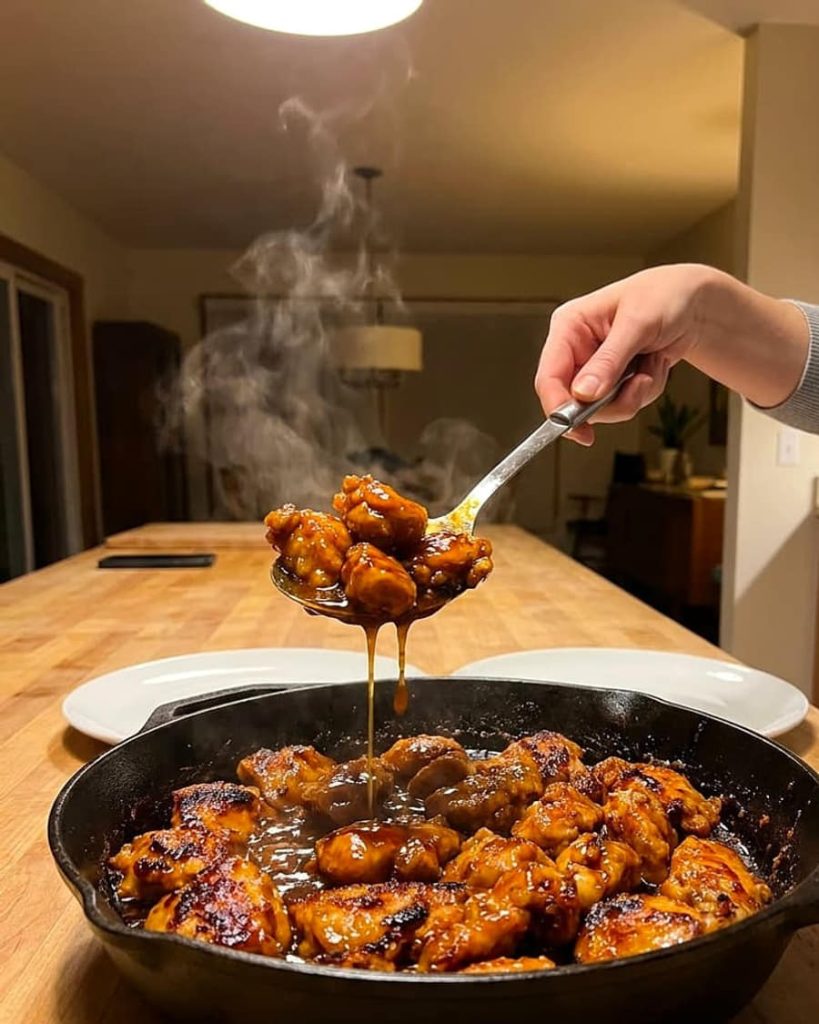
- Add the sauce. Reduce the heat to medium and pour the sauce over the chicken. Stir to coat all the pieces, then let it cook, stirring occasionally, until the sauce has thickened enough to coat the back of a spoon and the chicken reads 165°F on an instant-read thermometer, about 10 minutes. The USDA sets 165°F as the safe minimum internal temperature for poultry. Watch for both signs together: a thick, glossy sauce and that temperature reading. Don’t pull it just because the 10 minutes are up if the sauce still looks thin.
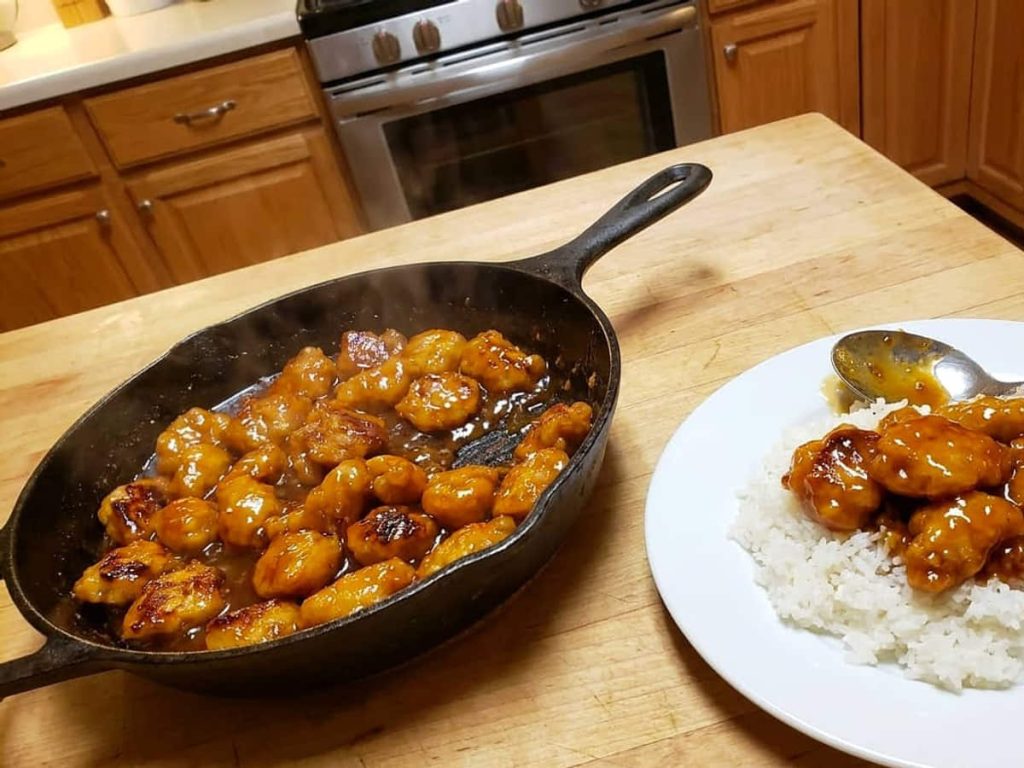
- Serve immediately. Spoon the orange chicken over steamed rice while the sauce is still bubbling and clinging to each piece.
Tips for Success
- Always mix the cornstarch into the sauce liquid before it goes in the pan. Sprinkling dry cornstarch into a hot skillet gives you lumps, and there’s no coming back from that.
- Don’t skip the dredge. I tried it once and the sauce pooled at the bottom of the pan instead of sticking to the chicken. The cornstarch coating is what makes this dish work.
- If your sauce thickens too fast before the chicken is cooked through, add a splash of chicken broth and stir. It’ll loosen right up without losing flavor.
- Thin-cut marmalade blends into the sauce more evenly than chunky-cut. If chunky is all you have, give it a rough chop before measuring.
- The red pepper flakes add a very mild heat. If you’re cooking for kids who don’t like any spice at all, you can leave them out entirely.
- Don’t walk away during the last few minutes. The sauce goes from perfect to scorched on the bottom quickly once the cornstarch activates.
Storing and Reheating
Neither of the recipes I worked from gives specific storage guidance, so here’s what I do in my own kitchen. Leftovers keep well in a sealed container in the fridge for up to 3 days.
The sauce thickens considerably as it cools, which is normal. To reheat, add a small splash of water or chicken broth to the container before microwaving, and stir halfway through.
That loosens the sauce back up without drying out the chicken. Reheating on the stovetop over low heat with a splash of broth works just as well.
I haven’t tried freezing this one. The cornstarch-thickened sauce tends to go grainy after freezing and thawing, so I’d rather make a fresh batch.
On the Side
- Steamed white rice soaks up the sticky sauce and is the most natural pairing here, keeping the orange flavor front and center.
- Steamed broccoli or snap peas on the side add a little crunch and green without competing with the sauce.
- Fried rice works great if you have leftover rice in the fridge, and the soy and ginger in both dishes play well together.
- A simple cucumber salad with rice vinegar cuts through the sweetness of the sauce and gives the plate some brightness.
Special Equipment
- A large skillet, at least 12 inches wide, so the chicken pieces have room to sear without steaming each other.
- An instant-read thermometer, the most reliable way to confirm the chicken has reached 165°F without cutting into every piece.
- A medium mixing bowl for the cornstarch dredge and a second bowl or large measuring cup for the sauce, keeping the two separate until you’re ready.
- A wooden spoon or silicone spatula for stirring the sauce as it thickens, which lets you feel when it starts to grab the bottom of the pan.
FAQ
Can I use chicken thighs instead of chicken breasts for orange chicken? Yes, and some cooks prefer them. Thighs stay a little more tender if you accidentally cook them a minute too long. Cut them into 1-inch pieces the same way and follow the same steps.
Can I use bottled orange juice instead of fresh? The two sources I worked from both call for no-sugar-added orange juice, and one specifically uses fresh-squeezed. A good refrigerated carton with no added sugar is a reasonable swap. Avoid shelf-stable juice with added sweeteners, since the marmalade already handles the sugar balance.
Why is my orange chicken sauce not thickening? The most common reason is that the cornstarch wasn’t fully dissolved in the sauce liquid before it went in the pan. Whisk the sauce mixture until you see no white sediment at the bottom of the bowl before you pour it in. If it’s already in the pan and still thin, give it another minute or two over medium heat, stirring constantly.
Is orange chicken supposed to be spicy? This version has just a pinch of red pepper flakes, which adds a very faint warmth rather than real heat. You can leave the flakes out entirely for a completely mild dish, or add more if your family likes a kick.
Can I make the sauce ahead of time? You can mix the sauce ingredients and keep them in a jar in the fridge for up to a day. Give it a good stir before using, since the cornstarch will settle to the bottom as it sits.
More From My Kitchen
- Beef Enchiladas with Chili Gravy
- Classic Baked Ziti
- Classic Beef Chili
- Classic Beef Stew
- Classic Ground Beef Tacos
- Classic Meatloaf with Brown Sugar Glaze
- Classic Pot Roast
- Classic Spaghetti and Meatballs
- Creamy Baked Mac and Cheese
- Creamy Broccoli Cheddar Soup
Sticky Orange Chicken
Course: DinnerCuisine: American4
servings10
minutes15
minutesIngredients
2 boneless, skinless chicken breasts, cut into 1-inch pieces
3 tbsp cornstarch
½ tsp salt
¼ tsp black pepper
1 tbsp neutral oil (vegetable or canola)
½ cup orange juice (no sugar added)
½ cup orange marmalade
⅓ cup low-sodium soy sauce
1 tbsp white vinegar
1 tsp garlic, minced (about 2 small cloves)
1 tsp fresh ginger, minced
1 pinch red pepper flakes
⅓ cup low-sodium chicken broth
2 tbsp cornstarch
Directions
- Coat the chicken. In a medium bowl, toss the chicken pieces with 3 tbsp cornstarch, ½ tsp salt, and ¼ tsp black pepper until every piece is lightly coated and no wet spots remain.
- Mix the sauce. In a separate bowl or large measuring cup, whisk together the orange juice, marmalade, soy sauce, white vinegar, garlic, ginger, red pepper flakes, chicken broth, and 2 tbsp cornstarch until the cornstarch is fully dissolved and no white streaks are visible at the bottom.
- Sear the chicken. Heat 1 tbsp oil in a large skillet over high heat until the oil shimmers. Add the chicken in a single layer, and cook for about 2 minutes per side until the edges are golden and the coating looks set. Don’t crowd the pan or the chicken will steam instead of brown.
- Add the sauce. Reduce the heat to medium and pour the sauce over the chicken. Stir to coat all the pieces, then let it cook, stirring occasionally, until the sauce has thickened enough to coat the back of a spoon and the chicken reads 165°F on an instant-read thermometer, about 10 minutes. The USDA sets 165°F as the safe minimum internal temperature for poultry. Watch for both signs together: a thick, glossy sauce and that temperature reading. Don’t pull it just because the 10 minutes are up if the sauce still looks thin.
- Serve immediately. Spoon the orange chicken over steamed rice while the sauce is still bubbling and clinging to each piece.


