
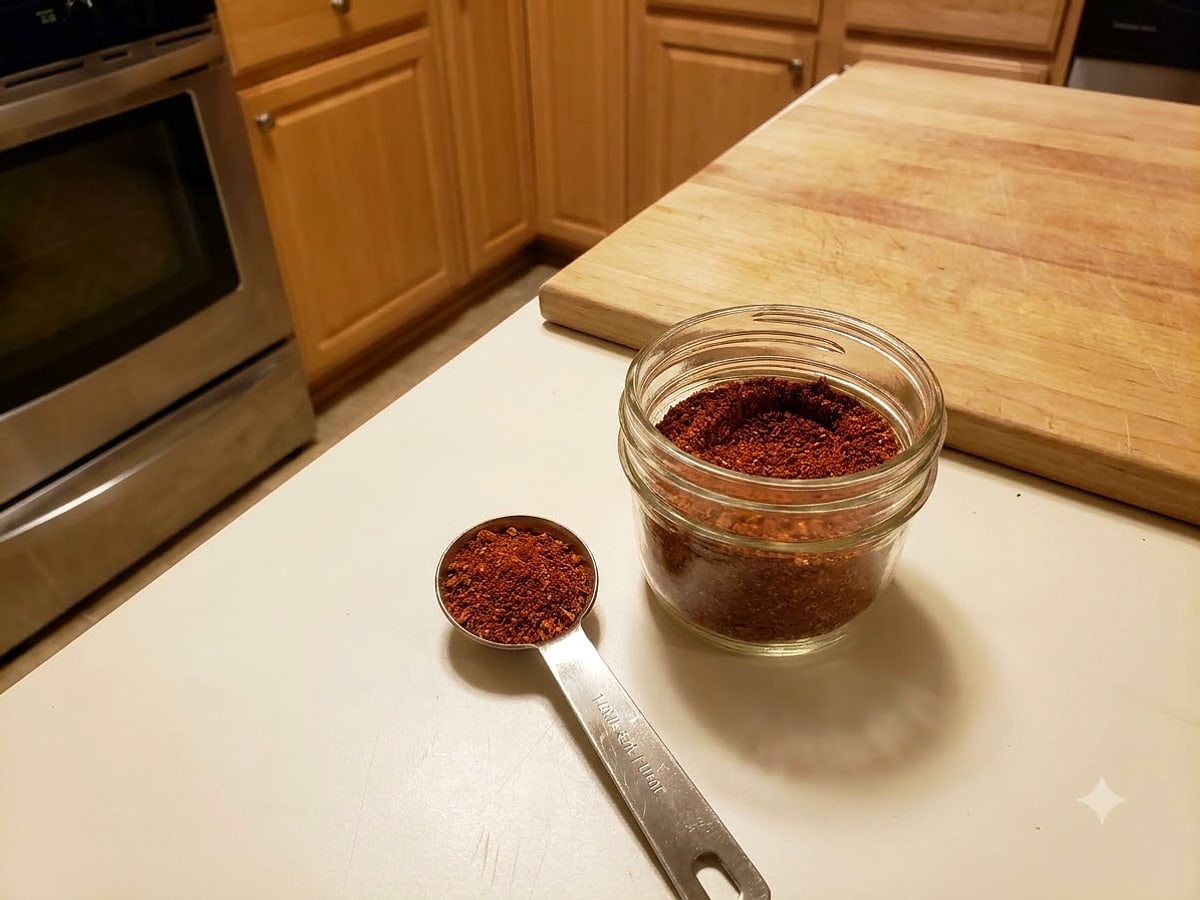
Homemade Fajita Seasoning
The fajita seasoning packet fell out of the spice drawer last Tuesday and split open on the floor, and that was the night I finally stopped buying them. I’d been meaning to make my own for months.
Five minutes and eight spices later, I had a jar that smelled better than anything I’d ever shaken out of a foil envelope. The real reason to make it yourself is control.
Store packets pack in a lot of salt and you can’t adjust it. With this blend, you decide how much heat and how much salt goes into your pan.
I’ve been making this version ever since, and it works on chicken, steak, shrimp, and a whole sheet pan of peppers and onions.
What goes into homemade fajita seasoning and how much do you use?
This fajita seasoning blend uses chili powder as the base, with paprika, cumin, onion powder, garlic powder, and cayenne rounding it out. Use about 2 tbsp per pound of meat or vegetables, according to Simply Scratch. The whole batch makes roughly ½ cup and keeps its potency for up to 6 months in an airtight jar.
The Method, in Plain English
- Chili powder carries the blend because it’s already a mix of dried chiles, cumin, and oregano, so it gives you depth without needing a dozen individual spices.
- Paprika at exactly half the amount of chili powder adds color and a mild sweetness that rounds out the heat without competing with it, a ratio that holds across multiple tested sources.
- Keeping salt separate in the jar (rather than pre-mixing it into every pinch) lets you season the meat itself and still control the final salt level at the pan.
The first time I made this, I went heavy on the cayenne and my kids pushed their plates away. I pulled it back to ¾ tsp and haven’t touched it since.
The recipe below is the version that actually gets eaten.
What Makes This Fajita Seasoning Special
- Ready in 5 minutes from spices you probably already own
- Replaces a store packet with a blend you can actually taste before it hits the pan
- Makes enough for four weeknight dinners in one quick mix
- Keeps for 6 months, so you make it once and forget about it
Ingredients for Fajita Seasoning
- 2 tbsp chili powder
- 1 tbsp kosher salt
- 1 tbsp paprika
- 1½ tsp sugar
- 1½ tsp onion powder
- 1½ tsp ground cumin
- ¾ tsp garlic powder
- ¾ tsp cayenne pepper
A Few Notes on the Ingredients
Chili powder is the foundation here, so use a fresh one. If the jar in your cabinet has been open for more than a year, it probably smells more like dust than chile, and the whole blend will taste flat.
A new jar from the grocery store is worth it. Kosher salt is what the recipe is built around.
If you swap in table salt, use about half the amount, since table salt packs more tightly into a measuring spoon and will make the blend noticeably saltier. The two aren’t a straight swap.
Cayenne is where you have the most room to adjust. The ¾ tsp in this recipe gives a mild-to-medium heat that works for most families.
Cut it to ¼ tsp if you’re cooking for kids or anyone who runs hot, or nudge it up to 1 tsp if your household likes a real kick.
Step-by-Step Directions
- Measure all the spices. Add the chili powder, kosher salt, paprika, sugar, onion powder, cumin, garlic powder, and cayenne into a small bowl. Check each one as you go so nothing gets doubled, since it’s easy to lose track with eight ingredients lined up.
- Stir to combine. Use a small whisk or a fork and mix until the color is completely even throughout, with no streaks of dark chili powder or pale garlic powder visible. This takes about 30 seconds. If you see uneven patches, keep stirring until the blend looks uniform.
- Taste and adjust. Pinch a tiny amount between your fingers and touch it to your tongue. If it tastes flat, the chili powder may be old. If it’s too hot for your family, stir in an extra ¼ tsp paprika to balance the cayenne. Adjust now, before you pour it into the jar.
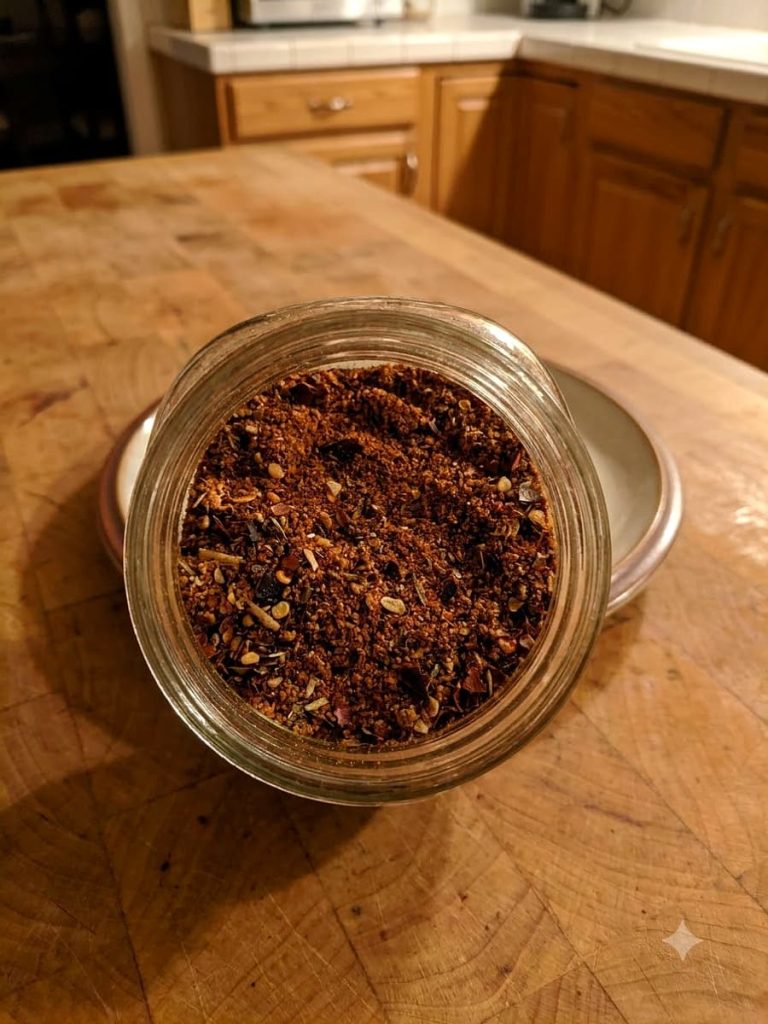
- Transfer to a jar. Spoon the blend into a small airtight glass jar or a zip-top bag with the air pressed out. Label it with the date so you know when you made it. The blend should look a deep, even brick-red color all the way through.
- Use it. Sprinkle about 2 tbsp of fajita seasoning per pound of chicken, steak, shrimp, or vegetables, as stated by Simply Scratch. Toss to coat, then cook in a hot skillet with a little oil. The spices bloom in the hot fat and that’s where the aroma really opens up.
Tips From My Kitchen
- Don’t toast the spices before mixing. Ground spices bloom in the hot pan fat when you cook the fajitas, and that’s all the activation they need. Pre-toasting ground spices can actually make them bitter.
- If your chili powder is older than 6 months, the whole blend will taste muted. Fresh spices are the single biggest factor in whether this tastes homemade-good or just okay.
- Sugar is optional but it helps the meat caramelize in the skillet and balances the heat. Leave it out if you prefer a strictly savory blend.
- This blend works on vegetables too. Toss sliced bell peppers and onions with 2 tbsp of seasoning and a drizzle of oil before roasting at 425°F until the edges are tender and slightly charred, about 20 minutes.
- Make a double batch and keep it in the pantry. It’s the same five minutes of work and you’ll have enough for a month of weeknight dinners.
Storage and Make-Ahead
Spoon the finished blend into a small airtight glass jar and store it in a cool, dark cabinet away from the stove. Heat and light both speed up how fast ground spices lose their punch.
Simply Scratch puts the shelf life at 6 months, and that’s a potency limit, not a safety limit. The blend won’t go bad after 6 months, but it will taste noticeably weaker.
To check if it’s still good, open the jar and smell it. If you get a strong, sharp chile smell, it’s fine.
If it smells faint or dusty, it’s time to mix a fresh batch. This blend doesn’t need refrigerating and doesn’t freeze better than it stores at room temperature.
Just keep it dry, keep it dark, and it’ll be ready whenever you need it.
Rounding Out the Meal
- Sliced chicken or skirt steak cooked in a hot skillet, because the seasoning blooms in the fat and that’s where the flavor really comes through.
- Warm flour or corn tortillas, since the whole point of fajita seasoning is to fill them.
- Sautéed bell peppers and onions tossed with the same seasoning, so the whole pan tastes like one cohesive dish.
- A simple avocado mash or sour cream on the side, because the cool creaminess cuts through the heat in the spice blend.
Tools You’ll Need
- A small mixing bowl, wide enough to whisk without spilling, since you’re combining eight dry ingredients.
- A small whisk or fork, to blend the spices evenly so no single spice clumps in the jar.
- A small airtight glass jar with a tight-fitting lid, glass is better than plastic because it doesn’t absorb the smell of the spices over time.
- Measuring spoons in a full set including ¼ tsp, ½ tsp, 1 tsp, and 1 tbsp, since every measurement in this recipe is a spoon measure.
- A small funnel or a folded piece of parchment, to get the blend into the jar without losing half of it on the counter.
FAQ
Can I make fajita seasoning without salt? Yes. Leave the kosher salt out entirely and season your meat separately at the pan. This is actually useful if you’re cooking for someone watching their sodium, since you can control exactly how much goes on each portion.
Is fajita seasoning the same as taco seasoning? They’re close but not identical. Fajita seasoning tends to have more paprika and less oregano than taco seasoning, and it’s built for high-heat skillet cooking. You can swap one for the other in a pinch and it’ll taste good, just slightly different.
How much fajita seasoning do I use per pound of meat? About 2 tbsp per pound, according to Simply Scratch. That’s one serving from this batch. If you’re cooking a larger amount, just scale up by the pound.
Why does my homemade fajita seasoning taste flat? Old chili powder is almost always the reason. Ground spices lose their volatile oils over time, and chili powder is the base of this blend, so if it’s faded, everything else fades with it. Start with a fresh jar and the difference is immediate.
Can I use this fajita seasoning on vegetables? Absolutely. It works especially well on bell peppers, zucchini, and onions. Toss them with 2 tbsp of seasoning and a little oil, then cook them in a hot skillet or roast them at 425°F until tender.
More Family Favorites
- Easy Homemade Coffee Creamer
- Crispy Oven Bacon
- How to Cook Fluffy White Rice
- Perfect Hard-Boiled Eggs
- Smooth Gravy from Drippings
- Beef Enchiladas with Chili Gravy
- Bubbling Blackberry Cobbler
- Bubbling Blueberry Cobbler
- Buttery Classic French Toast
- Chewy Homemade Bagels
Homemade Fajita Seasoning
Course: BasicsCuisine: American8
servings5
minutes5
minutesIngredients
2 tbsp chili powder
1 tbsp kosher salt
1 tbsp paprika
1½ tsp sugar
1½ tsp onion powder
1½ tsp ground cumin
¾ tsp garlic powder
¾ tsp cayenne pepper
Directions
- Measure all the spices. Add the chili powder, kosher salt, paprika, sugar, onion powder, cumin, garlic powder, and cayenne into a small bowl. Check each one as you go so nothing gets doubled, since it’s easy to lose track with eight ingredients lined up.
- Stir to combine. Use a small whisk or a fork and mix until the color is completely even throughout, with no streaks of dark chili powder or pale garlic powder visible. This takes about 30 seconds. If you see uneven patches, keep stirring until the blend looks uniform.
- Taste and adjust. Pinch a tiny amount between your fingers and touch it to your tongue. If it tastes flat, the chili powder may be old. If it’s too hot for your family, stir in an extra ¼ tsp paprika to balance the cayenne. Adjust now, before you pour it into the jar.
- Transfer to a jar. Spoon the blend into a small airtight glass jar or a zip-top bag with the air pressed out. Label it with the date so you know when you made it. The blend should look a deep, even brick-red color all the way through.
- Use it. Sprinkle about 2 tbsp of fajita seasoning per pound of chicken, steak, shrimp, or vegetables, as stated by Simply Scratch. Toss to coat, then cook in a hot skillet with a little oil. The spices bloom in the hot fat and that’s where the aroma really opens up.


