
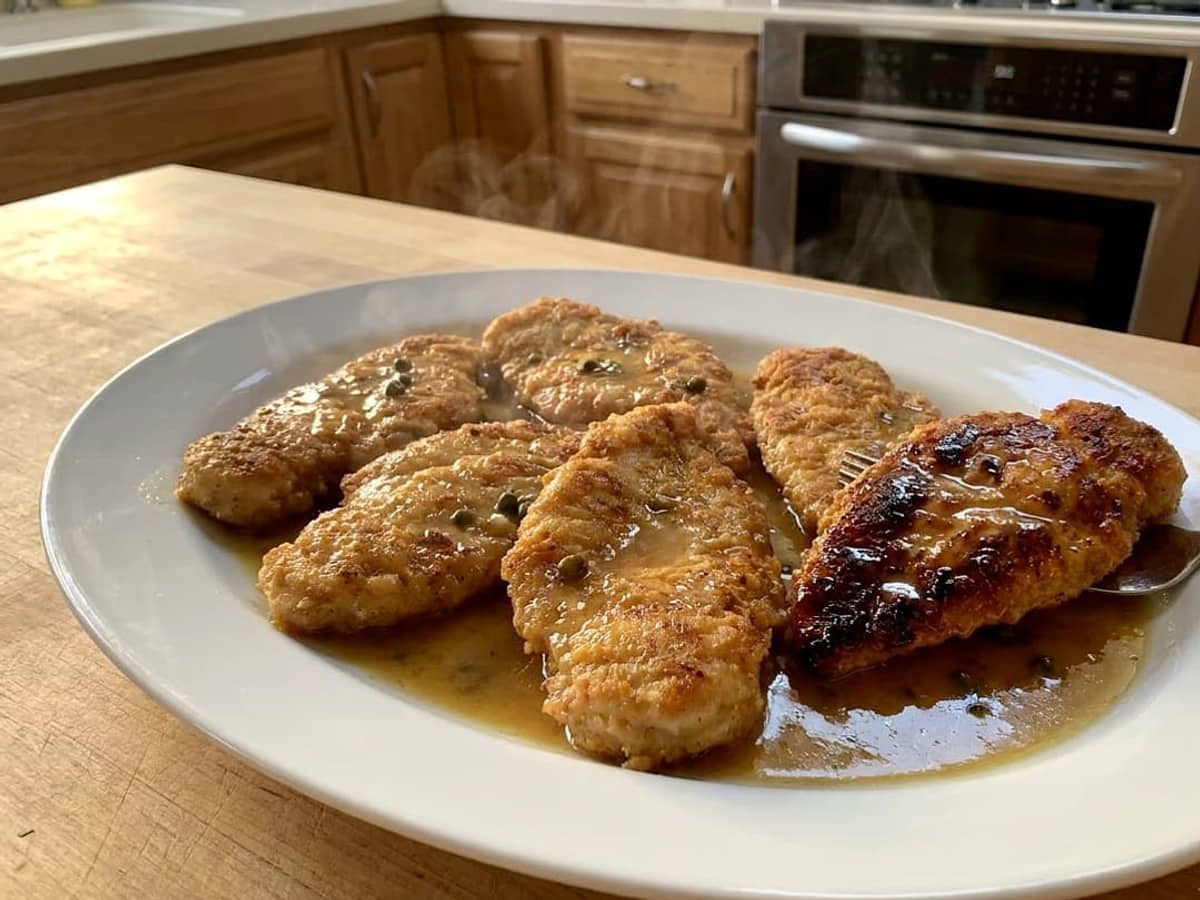
Crispy Chicken Piccata
My neighbor dropped off a bag of lemons from her tree last week, and chicken piccata was the first thing I thought of. It’s one of those weeknight dinners that sounds impressive but comes together in a single skillet in under 30 minutes of actual cooking.
The whole house smells like browned butter and white wine, and my kids come to the table without being called twice.
The trick that took me a few rounds to figure out is shaking off every bit of extra flour before the chicken hits the pan. Too much flour and the coating turns gummy instead of golden.
Thin cutlets, a hot pan, and that one small habit are really all this dish needs.
Prep: 15 minutes · Cook: 20 minutes · Total: about 35 minutes · Serves: 6
What makes chicken piccata sauce taste so bright?
Chicken piccata sauce gets its sharp, bright flavor from the combination of fresh lemon juice, capers, and butter added off the heat. The capers bring a briny punch, the lemon lifts everything, and swirling in cold butter at the end gives the sauce a glossy, silky body without breaking it.
Why This Recipe Works
- Cutting each breast in half horizontally creates thin cutlets that cook through quickly and evenly, so you get a golden crust without drying out the center.
- Cooking the chicken in two separate batches keeps the pan hot enough to sear rather than steam, which is what gives you that crisp, flour-coated exterior.
- Adding butter off the heat, or right at the very end of cooking, lets it melt into the sauce without separating into greasy pools.
The first time I made this I crowded all six cutlets into the pan at once. They steamed, turned pale, and the coating went soft.
Two batches fixed everything.
What Makes This Chicken Piccata Special
- One skillet, start to finish, so cleanup is fast on a weeknight.
- The sauce builds itself from the browned bits left in the pan after the chicken cooks.
- Thin cutlets cook in just a few minutes per side, so dinner is on the table fast.
- Capers and lemon are pantry staples that keep for months, so you can make this any night.
Grab These Ingredients
- 3 large boneless, skinless chicken breasts
- Salt and black pepper
- 1/2 cup all-purpose flour
- 2 tbsp olive oil, plus 1 tbsp more for the second batch
- 3 tbsp unsalted butter, divided (2 tbsp for cooking, 1 tbsp for the sauce)
- 1/2 cup dry white wine (such as Chardonnay)
- 1/4 cup fresh lemon juice (from about 1 large lemon), or 2 tbsp if you prefer a milder sauce
- 3 tbsp capers, rinsed under cold water
- 1 tbsp unsalted butter (added at the end)
- 1/4 cup fresh Italian parsley, chopped
- Thin lemon slices, for serving
Ingredient Notes
The chicken breast is the whole foundation here. You want large breasts so that when you cut them in half horizontally, each cutlet is wide enough to fill a dinner plate.
Thin is the goal: a thick cutlet won’t cook through before the coating over-browns. Neither of the recipes I worked from specifies a pan type, so I’ll tell you what I use: a wide, heavy skillet that holds heat well.
Capers come packed in either brine or salt, and both work fine here. What matters is rinsing them well under cold water before they go in.
Both Natasha’s Kitchen and Once Upon a Chef call for rinsing, and for good reason: straight from the jar, capers are aggressively salty and will throw the whole sauce off.
For the wine, use something dry that you’d actually drink, like a Chardonnay or a Pinot Grigio. Cooking wine from a bottle labeled “cooking wine” tends to be salty and thin, and it shows in the sauce.
If you’d rather skip the wine entirely, I don’t have a tested swap from either source I worked from, so I can’t promise the same result.
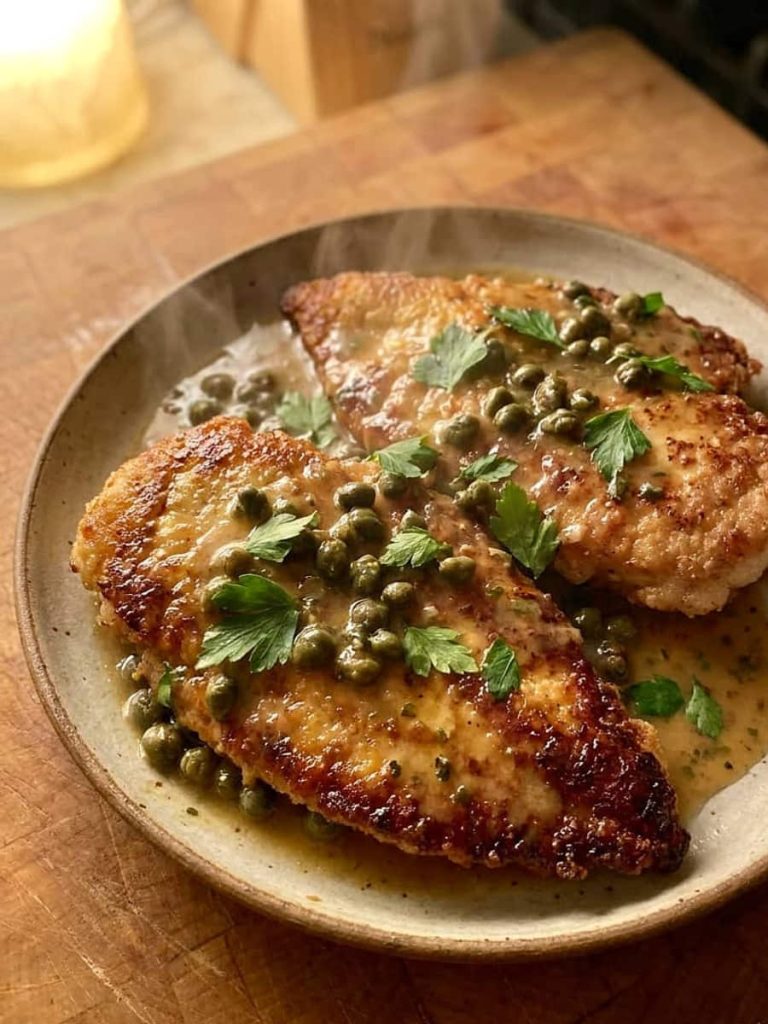
Making Chicken Piccata, Step by Step
- Prep the chicken. Cut each chicken breast in half horizontally so you have 6 thin cutlets total. Season both sides generously with salt and black pepper, until every surface is lightly coated.
- Dredge in flour. Spread the flour in a shallow dish. Press each cutlet into the flour on both sides, then lift it and shake off every bit of excess. Set the cutlets in a single layer on a clean plate. Flour that clings too thickly will turn gummy in the pan.
- Sear the first batch. Heat a large skillet over medium-high. Add 2 tbsp olive oil and 2 tbsp butter. Wait until the butter has fully melted and starts to sizzle actively, then lay in 3 cutlets. Cook 2 to 4 minutes per side, until the coating is deep golden and the chicken reads 165°F on an instant-read thermometer, per Natasha’s Kitchen. Transfer to a plate.
- Sear the second batch. Add the remaining 1 tbsp olive oil to the same skillet. Lay in the last 3 cutlets and cook the same way, 2 to 4 minutes per side, until golden and cooked through at 165°F. Move them to the plate with the first batch.
- Build the sauce. Keep the heat at medium-high and pour the white wine into the skillet. It will bubble up immediately. Use a wooden spoon to scrape up all the browned bits from the bottom of the pan, those are pure flavor. Add the lemon juice and capers. Let the sauce simmer for about 1 minute, until slightly reduced and fragrant.
- Finish with butter. Pull the skillet off the heat. Add the remaining 1 tbsp butter and swirl the pan until it melts into the sauce and the liquid looks glossy and slightly thickened. This is the step that ties the whole sauce together, and it only works if the pan is off the burner.
- Return the chicken. Nestle the cutlets back into the sauce a few at a time, turning to coat. Let everything simmer together for about 2 minutes over low heat, until the sauce clings lightly to the chicken. Spoon the sauce over the top, add lemon slices, and scatter the parsley over everything.
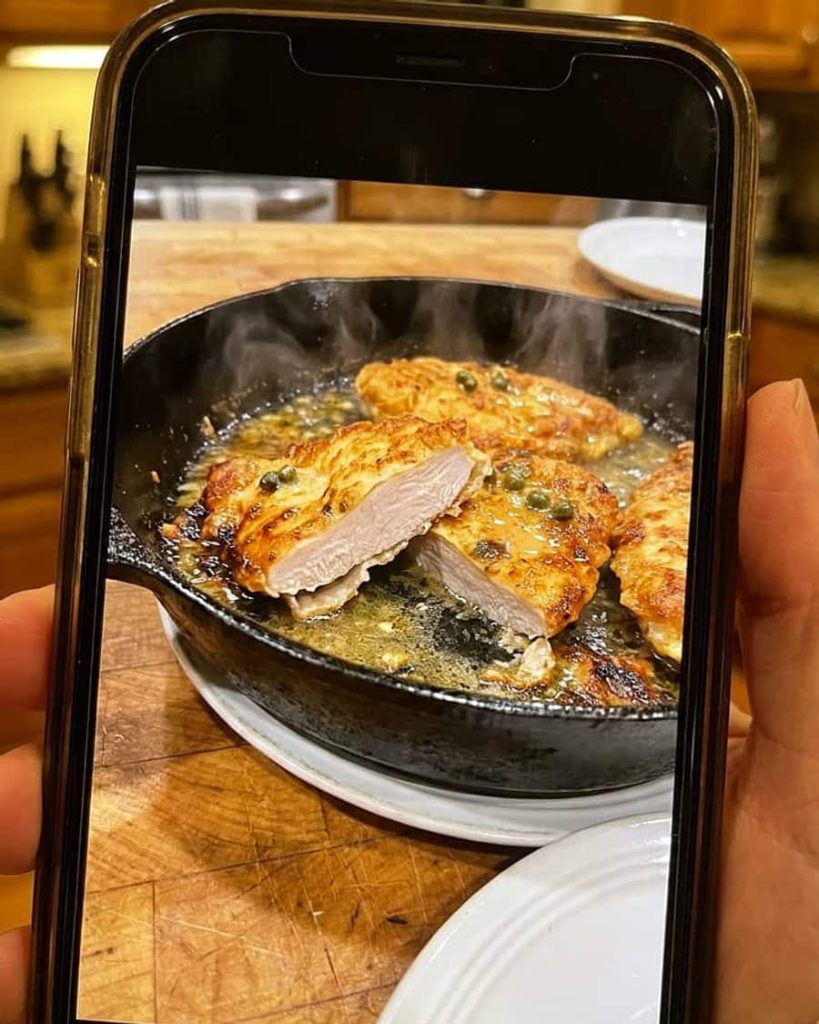
Tips
- Don’t skip shaking off the excess flour. A thick flour coating absorbs too much fat and turns the crust heavy and pasty instead of light and crisp.
- Rinse the capers well under cold running water before they go in. Both sources I used are clear on this, and it really does matter: un-rinsed capers can make the whole sauce taste like pure brine.
- The browned bits stuck to the pan after cooking the chicken are the flavor base of the sauce. Don’t wipe the skillet between batches, and don’t skip scraping them up when the wine goes in.
- Natasha’s Kitchen uses 165°F as the target internal temperature for the chicken, and I trust a thermometer over a timer every time. Cutlet thickness varies, so the clock alone isn’t reliable.
- I still don’t measure the lemon juice the same way twice. The two recipes I worked from are a full 2 tablespoons apart on this, so start with less and taste before you add more.
Make-Ahead and Leftovers
Leftover chicken piccata keeps in an airtight container in the refrigerator for 3 to 4 days. Store the chicken and sauce together so the cutlets don’t dry out.
To reheat, Natasha’s Kitchen recommends a 350°F oven for about 20 minutes after thawing in the refrigerator overnight. A covered skillet over low heat with a splash of water also works well and keeps the sauce from tightening up too much.
This dish does freeze. Natasha’s Kitchen puts the freeze time at up to 3 months.
Thaw overnight in the refrigerator before reheating, and don’t try to rush it on the counter.
What to Serve With Chicken Piccata
- Buttered egg noodles or thin spaghetti, because the pasta catches every drop of the lemony pan sauce and nothing goes to waste.
- Steamed white rice, a simple base that lets the bright sauce stay front and center without competing.
- Roasted asparagus or green beans, because the slight bitterness of the vegetable balances the richness of the butter sauce.
- Crusty bread, for pressing into the sauce left on the plate at the end.
Equipment Worth Having
- A large skillet, wide enough to hold 3 cutlets without crowding, so the chicken sears instead of steaming.
- A shallow dish or pie plate for dredging, flat and wide enough to lay a full cutlet flat.
- An instant-read thermometer, the most reliable way to confirm the chicken has reached 165°F without cutting into it.
- A wooden spoon or flat spatula for scraping the browned bits off the pan bottom when the wine goes in.
- A sharp chef’s knife and a cutting board for slicing the breasts in half horizontally, a steady hand matters more than a fancy knife here.
Questions I Get About Chicken Piccata
What does piccata mean? Piccata is an Italian-American preparation where thin cutlets are pan-fried and finished in a sauce of lemon, capers, and butter. The word comes from the Italian for “larded” or “sharp,” which fits the bright, pungent flavor of the sauce.
Can I make chicken piccata without wine? The two recipes I worked from use either dry white wine or chicken broth as the sauce base, and they produce noticeably different results. I haven’t tested a direct swap myself, so I can’t promise the same sauce if you substitute one for the other.
Why is my chicken piccata sauce too thin? The sauce thickens as it simmers and as the butter emulsifies into it. If it’s still watery, let it cook a minute or two longer before adding the butter, and make sure you add the butter off the heat so it binds rather than separates.
Do I have to pound the chicken? Once Upon a Chef pounds the cutlets to 1/4 inch for even cooking. If your cutlets are already thin after cutting, you may not need to. Uneven thickness is the main reason one end overcooks while the other stays underdone.
Can I use salted butter? You can, but the capers and the pan drippings already bring a lot of salt to the sauce. Taste before you season at the end, and hold back on any extra salt until you know where the sauce stands.
If You Liked This One
- Beef Enchiladas with Chili Gravy
- Classic Baked Ziti
- Classic Beef Chili
- Classic Beef Stew
- Classic Ground Beef Tacos
- Classic Meatloaf with Brown Sugar Glaze
- Classic Pot Roast
- Classic Spaghetti and Meatballs
- Creamy Baked Mac and Cheese
- Creamy Broccoli Cheddar Soup
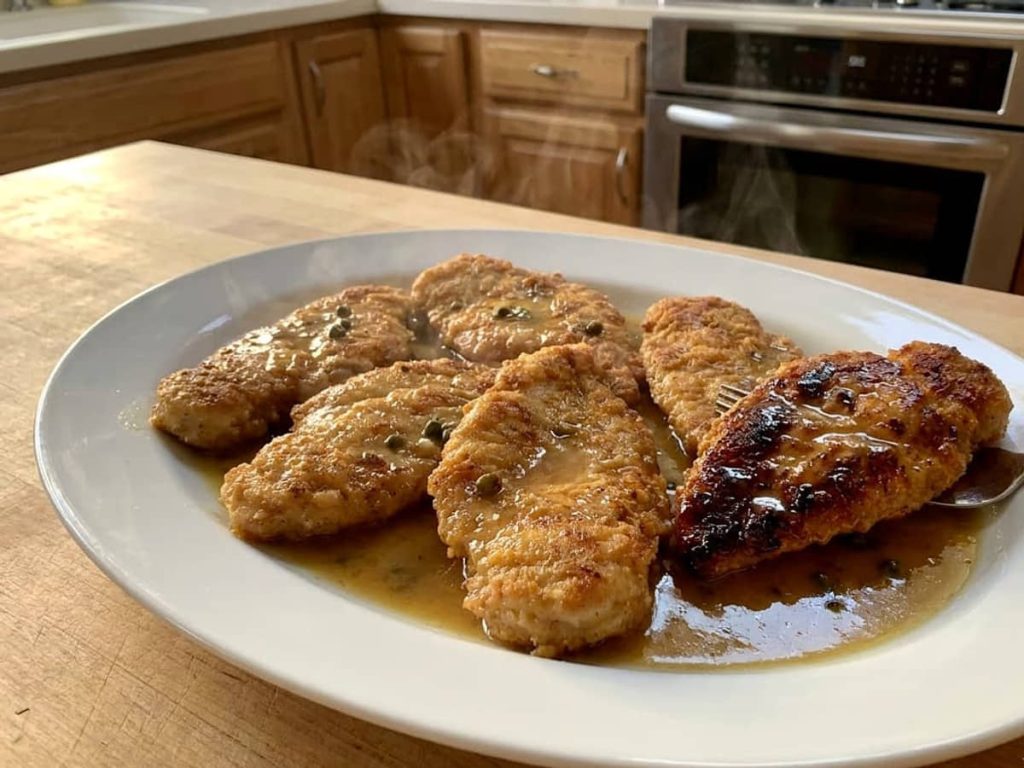
Crispy Chicken Piccata
Course: DinnerCuisine: American6
servings15
minutes20
minutesIngredients
3 large boneless, skinless chicken breasts
Salt and black pepper
1/2 cup all-purpose flour
2 tbsp olive oil, plus 1 tbsp more for the second batch
3 tbsp unsalted butter, divided (2 tbsp for cooking, 1 tbsp for the sauce)
1/2 cup dry white wine (such as Chardonnay)
1/4 cup fresh lemon juice (from about 1 large lemon), or 2 tbsp if you prefer a milder sauce
3 tbsp capers, rinsed under cold water
1 tbsp unsalted butter (added at the end)
1/4 cup fresh Italian parsley, chopped
Thin lemon slices, for serving
Directions
- Prep the chicken. Cut each chicken breast in half horizontally so you have 6 thin cutlets total. Season both sides generously with salt and black pepper, until every surface is lightly coated.
- Dredge in flour. Spread the flour in a shallow dish. Press each cutlet into the flour on both sides, then lift it and shake off every bit of excess. Set the cutlets in a single layer on a clean plate. Flour that clings too thickly will turn gummy in the pan.
- Sear the first batch. Heat a large skillet over medium-high. Add 2 tbsp olive oil and 2 tbsp butter. Wait until the butter has fully melted and starts to sizzle actively, then lay in 3 cutlets. Cook 2 to 4 minutes per side, until the coating is deep golden and the chicken reads 165°F on an instant-read thermometer, per Natasha’s Kitchen. Transfer to a plate.
- Sear the second batch. Add the remaining 1 tbsp olive oil to the same skillet. Lay in the last 3 cutlets and cook the same way, 2 to 4 minutes per side, until golden and cooked through at 165°F. Move them to the plate with the first batch.
- Build the sauce. Keep the heat at medium-high and pour the white wine into the skillet. It will bubble up immediately. Use a wooden spoon to scrape up all the browned bits from the bottom of the pan, those are pure flavor. Add the lemon juice and capers. Let the sauce simmer for about 1 minute, until slightly reduced and fragrant.
- Finish with butter. Pull the skillet off the heat. Add the remaining 1 tbsp butter and swirl the pan until it melts into the sauce and the liquid looks glossy and slightly thickened. This is the step that ties the whole sauce together, and it only works if the pan is off the burner.
- Return the chicken. Nestle the cutlets back into the sauce a few at a time, turning to coat. Let everything simmer together for about 2 minutes over low heat, until the sauce clings lightly to the chicken. Spoon the sauce over the top, add lemon slices, and scatter the parsley over everything.


