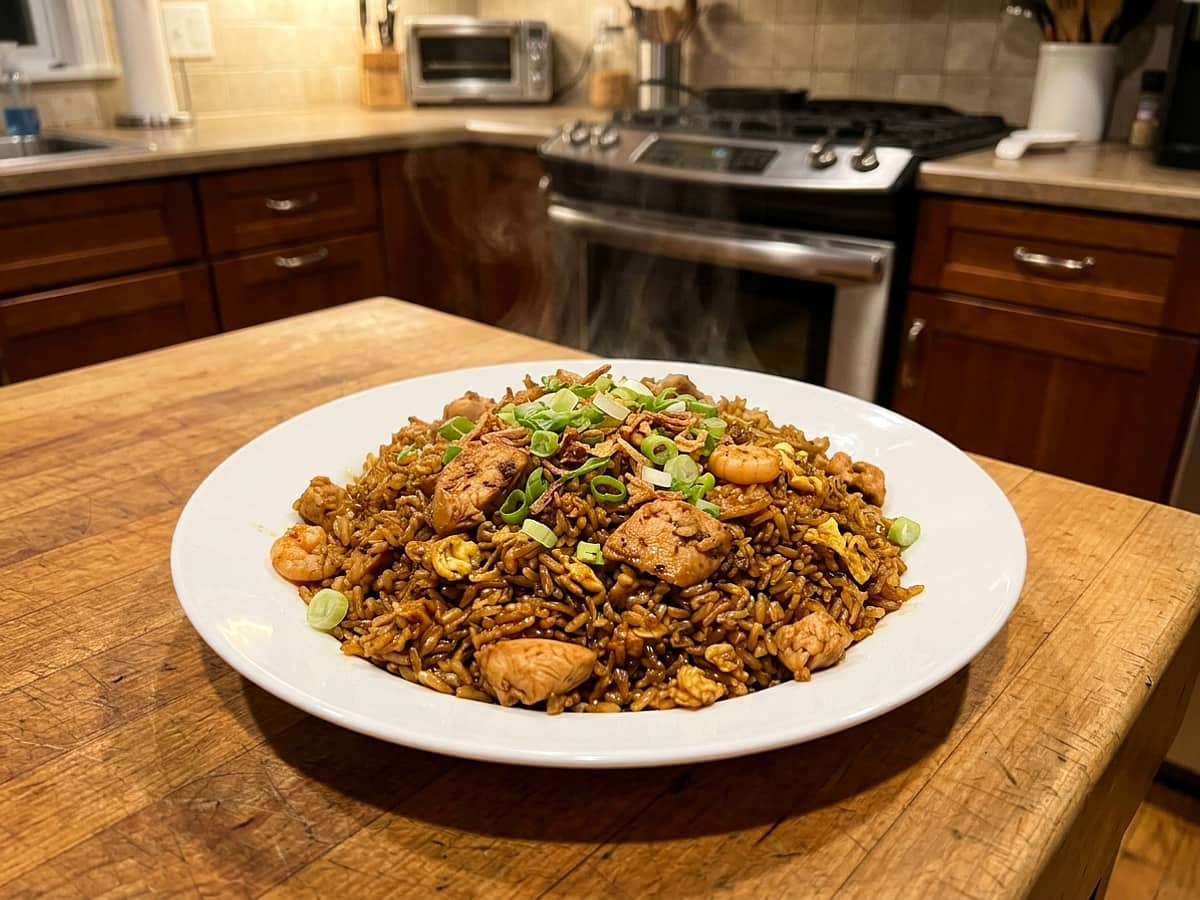
Savory Nasi Goreng
Cold rice from the plastic takeout tub had set into a firm block in my fridge by Tuesday evening. Turning leftover grains into quick nasi goreng solved the dinner rush before anyone asked what was cooking.
I learned early on that warm rice turns to mush in a hot pan. My grandmother always kept day-old rice uncovered on a shelf to dry out, and that practical habit stuck with me.
Today I keep a jar of Indonesian sweet soy sauce in my pantry door just for nights like this. It brings a caramel richness that turns plain vegetables and chicken into something special.
Prep: 15 minutes · Cook: 10 minutes · Total: 25 minutes · Serves: 2
How do you keep nasi goreng from turning mushy? Nasi goreng stays fluffy when you use thoroughly chilled, day-old cooked rice with separated grains.
Warm freshly steamed rice carries excess surface moisture that steams inside the skillet instead of frying, resulting in gummy clumping. Cooking the meats first and keeping the heat high ensures dry, distinct grains throughout.
Grab These Ingredients
- 1 tbsp cooking oil
- 40 g chicken thigh, cut into bite-sized pieces
- 40 g shrimp (about 8 small shrimp), peeled and deveined
- 30 g carrot, finely diced
- 30 g green beans, trimmed and sliced thin
- 300 g cooked rice, completely cooled and chilled
- 1 tbsp dark soy sauce
- 1 tbsp kecap manis (sweet soy sauce)
- 30 g scallions (3 stalks), sliced thin
- 1 tsp sesame oil (optional)
- 5 g fresh cilantro, chopped (optional)
Ingredient Notes and Swaps
Cold cooked rice makes or breaks this entire skillet. Freshly steamed rice traps steam and turns gummy the second it hits hot oil.
Day-old rice that has rested in the refrigerator has dry surface starches, which allows every grain to tumble freely and take on seasoning.
Kecap manis provides the signature dark color and glossy body. It is an Indonesian soy sauce brewed with palm sugar until it pours as thick as molasses.
If your local grocery aisle lacks it, you can find it in any Asian market, but regular soy sauce cannot replace its molasses-like sweetness.
Dark soy sauce adds depth, gentle salt, and an amber tint without thinning the pan. Chicken thigh stays tender over high heat where breast meat would dry out quickly.
Small shrimp cook rapidly and stay plump when tossed quickly in hot oil.
Step-by-Step Directions
- Sear the meats. Heat the cooking oil in a large skillet over high heat, add the chicken and shrimp, and stir constantly until the shrimp curl pink and chicken is cooked through to a safe 165°F internal temperature, as verified by USDA guidelines.
- Sauté the vegetables. Transfer the cooked chicken and shrimp to a clean plate, then add the diced carrots and sliced green beans to the empty hot skillet, tossing briskly until the vegetables become crisp-tender, about two minutes.
- Fry the rice. Add the chilled rice to the skillet, breaking up any remaining clumps with your spatula, and stir vigorously until the grains are piping hot and coated in pan oil.
- Season the grains. Pour in the dark soy sauce, stirring constantly across the pan base until the rice turns an even, deep amber color throughout without any white patches remaining.
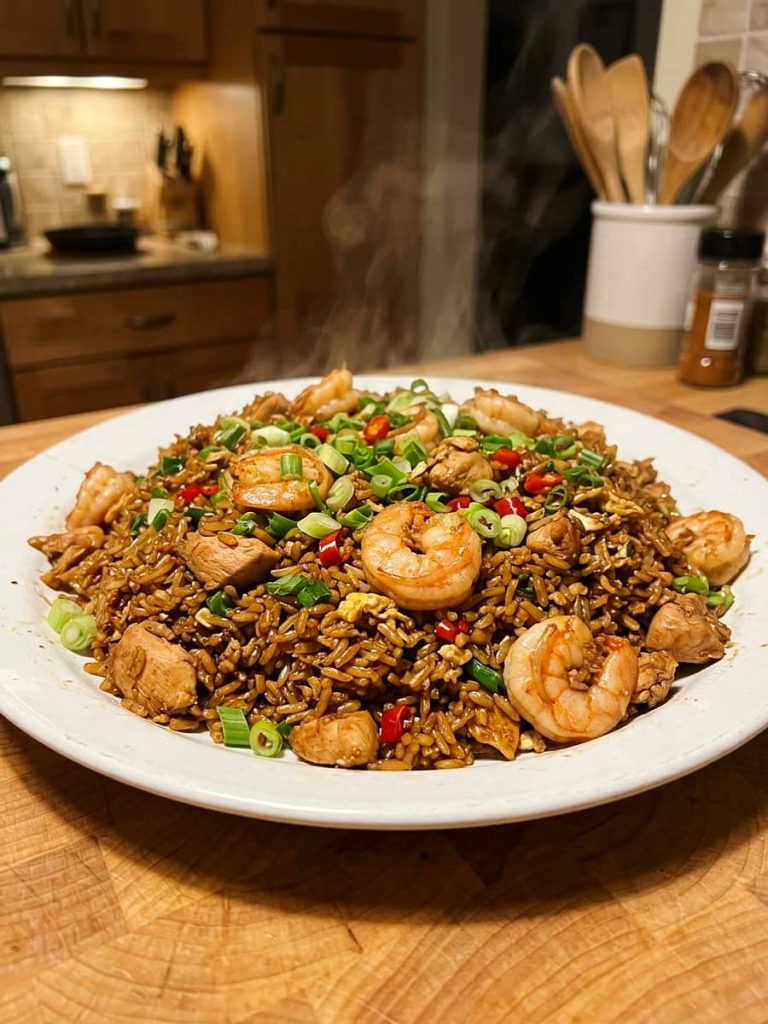
- Glaze and finish. Return the chicken, shrimp, and any resting juices to the pan, drizzle the kecap manis and optional sesame oil over the top, and toss rapidly with the scallions until the sauce clings evenly and smells caramelized.
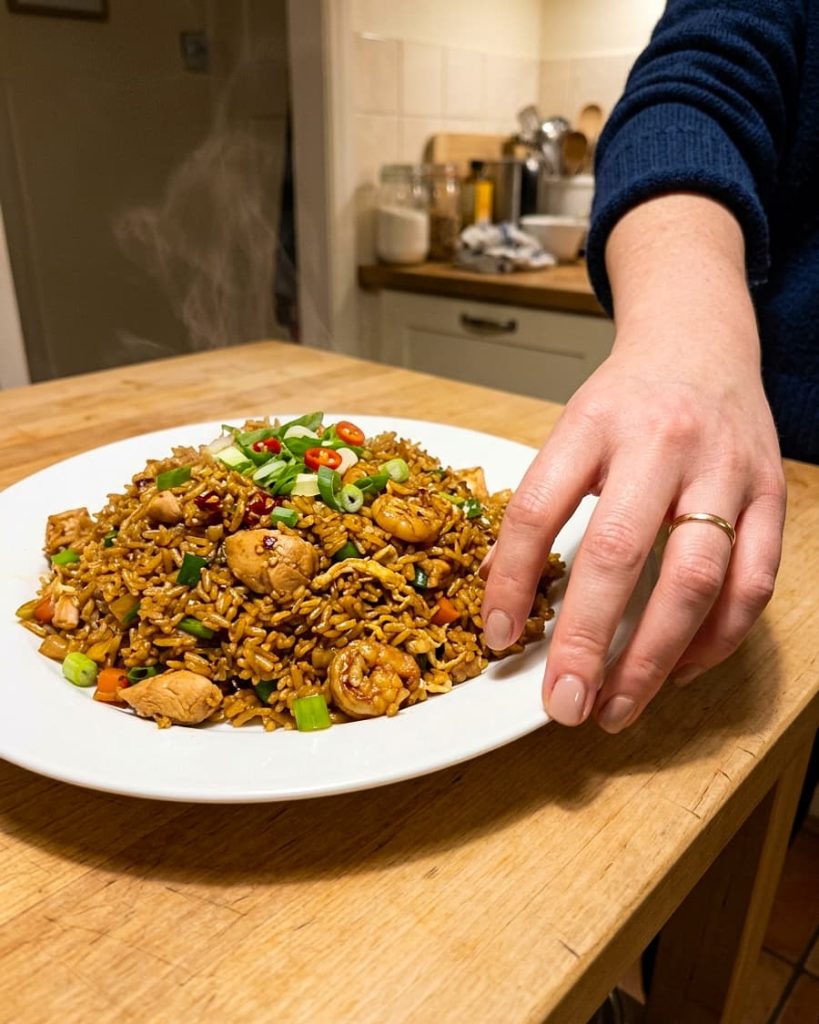
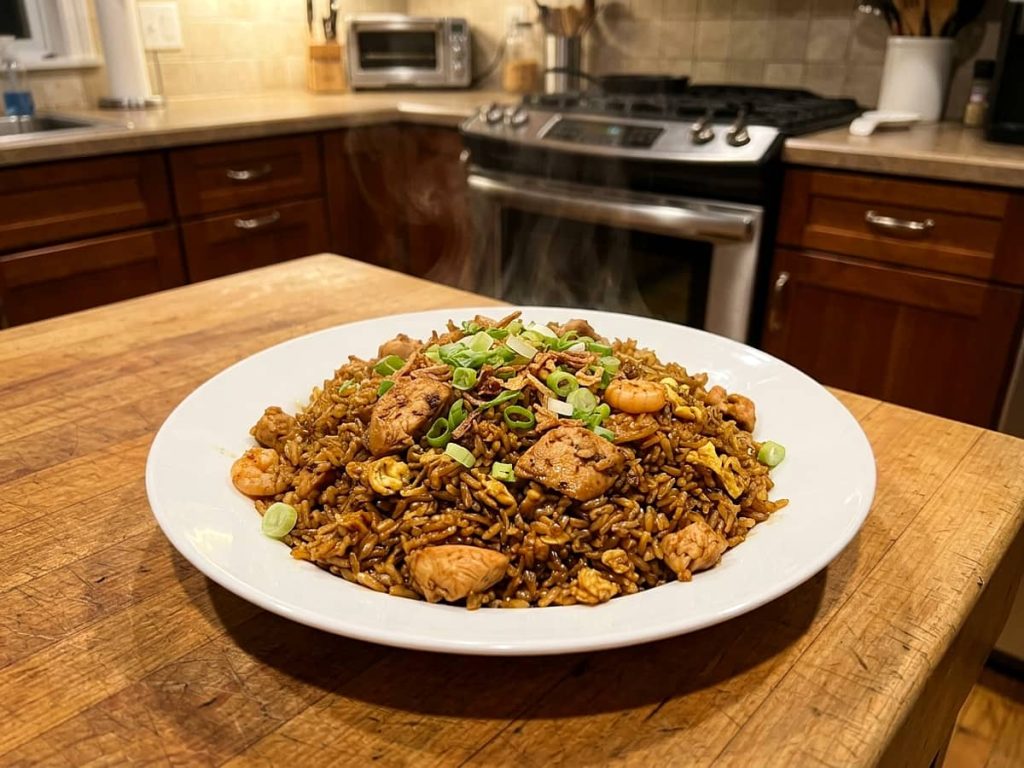
- Garnish the skillet. Remove the hot pan from heat immediately, scatter the fresh cilantro over the top if using, and transfer the food to plates while steam rises from the grains.
Storing and Reheating
Store leftover fried rice in a sealed glass container in the refrigerator for up to three days. Cooked rice dries out quickly when exposed to air, so seal the lid tightly once the food reaches room temperature.
For food safety, refrigerate any leftovers within two hours of cooking. Reheat portions in a hot skillet with a teaspoon of water and a few drops of oil over medium heat.
Stir constantly until the grains turn soft and steaming. You can also microwave covered portions on high for two minutes, stirring halfway through.
Freezing works well for meal prep. Spread the cooled rice flat in a freezer-safe zip bag and freeze for up to two months.
Thaw overnight in the refrigerator before reheating in a skillet.
More Recipes You’ll Like
- Beef Enchiladas with Chili Gravy
- Classic Baked Ziti
- Classic Beef Chili
- Classic Beef Stew
- Classic Cottage Pie
- Classic Ground Beef Tacos
- Classic Meatloaf with Brown Sugar Glaze
- Classic Pot Roast
- Classic Spaghetti and Meatballs
- Classic Stuffed Peppers
Savory Nasi Goreng
Course: DinnerCuisine: American2
servings15
minutes10
minutesIngredients
1 tbsp cooking oil
40 g chicken thigh, cut into bite-sized pieces
40 g shrimp (about 8 small shrimp), peeled and deveined
30 g carrot, finely diced
30 g green beans, trimmed and sliced thin
300 g cooked rice, completely cooled and chilled
1 tbsp dark soy sauce
1 tbsp kecap manis (sweet soy sauce)
30 g scallions (3 stalks), sliced thin
1 tsp sesame oil (optional)
5 g fresh cilantro, chopped (optional)
Directions
- Sear the meats. Heat the cooking oil in a large skillet over high heat, add the chicken and shrimp, and stir constantly until the shrimp curl pink and chicken is cooked through to a safe 165°F internal temperature, as verified by USDA guidelines.
- Sauté the vegetables. Transfer the cooked chicken and shrimp to a clean plate, then add the diced carrots and sliced green beans to the empty hot skillet, tossing briskly until the vegetables become crisp-tender, about two minutes.
- Fry the rice. Add the chilled rice to the skillet, breaking up any remaining clumps with your spatula, and stir vigorously until the grains are piping hot and coated in pan oil.
- Season the grains. Pour in the dark soy sauce, stirring constantly across the pan base until the rice turns an even, deep amber color throughout without any white patches remaining.
- Glaze and finish. Return the chicken, shrimp, and any resting juices to the pan, drizzle the kecap manis and optional sesame oil over the top, and toss rapidly with the scallions until the sauce clings evenly and smells caramelized.
- Garnish the skillet. Remove the hot pan from heat immediately, scatter the fresh cilantro over the top if using, and transfer the food to plates while steam rises from the grains.