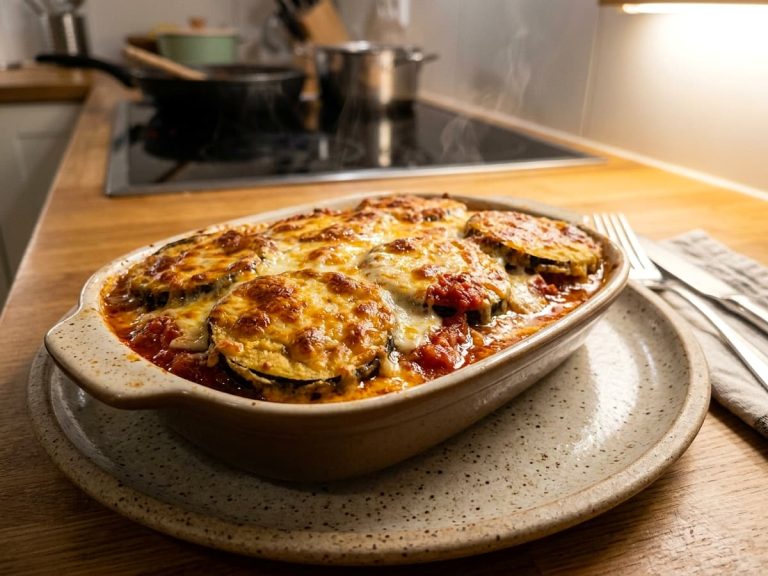
Crispy Chicken Fried Steak
My grandmother kept a coffee can of bacon grease on the back of her stove, and the first time I ordered chicken fried steak at a roadside diner outside Abilene, I understood exactly where that habit came from. The crust shattered when I cut into it.
The gravy was thick, peppery, and pooled into every crack.
I spent a long time trying to get that same result at home. My early attempts came out soggy, and I finally figured out the coating was sliding off because I wasn’t letting it rest before it hit the oil.
That ten-minute wait is the whole game.
This recipe pulls from two classic sources and gives you the shatter-crisp crust and the peppery cream gravy that made me fall for this dish in the first place.
Prep: 25 minutes · Cook: 30 minutes · Total: about 1 hour (includes resting) · Serves: 4
How do you get chicken fried steak to stay crispy?
The coating stays on when you let the breaded steaks rest on a rack for 10 minutes before frying. That rest lets the flour hydrate and grip the meat. Frying in oil held at 350°F, and never crowding the pan, keeps the crust from going soft and greasy.
Why It Works
- Cornstarch and baking powder in the dredge create a lighter, crispier crust than plain flour alone. The cornstarch limits gluten development, and the baking powder gives the coating a little lift as it fries.
- Keeping the oil at 350°F, as Bates Kitchen measures it, means the crust sets fast and seals before the meat can steam from the inside. Drop below that and the coating absorbs fat instead of repelling it.
- Whisking the reserved dredging flour into the hot drippings for a full 1 to 2 minutes before any liquid goes in, per Bates Kitchen, cooks out the raw flour taste. Skip that step and the gravy tastes pasty no matter how long you simmer it.
The first time I got the crust right, I pulled the steaks and held them on a rack over a sheet pan instead of paper towels. Paper towels trap steam underneath and undo everything you just did.
Why You’ll Love This Chicken Fried Steak
- The crust is genuinely shatter-crisp, not just crunchy on the outside and gummy underneath.
- Everything comes from a regular supermarket, no special trip required.
- The gravy uses the same seasoned flour you already made for the dredge, so nothing goes to waste.
- It feeds four people on a weeknight for less than a restaurant appetizer costs.
Grab These Ingredients
- 4 cube steaks, about ½ inch thick (roughly 1½ to 2 lb total)
- 1 tsp kosher salt
- ½ tsp black pepper
- ½ tsp garlic powder
- 2 cups all-purpose flour
- ¼ cup cornstarch
- 1 tsp baking powder
- 1 tsp smoked paprika
- ½ tsp black pepper
- ½ tsp cayenne (optional, leave it out for a mild version)
- 1 cup buttermilk
- 2 large eggs
- 1 tbsp hot sauce
- Neutral oil (vegetable or canola), enough to fill a skillet ½ inch deep
- ¼ cup pan drippings (from frying)
- ¼ cup reserved seasoned dredging flour
- 2½ cups whole milk
- Salt and black pepper to taste
Ingredient Notes and Swaps
Cube steak is the right cut here. It’s already been run through a tenderizer at the butcher counter, which gives the surface that rough, cratered texture the coating grabs onto.
If your store is out, buy a piece of beef bottom round, cut it to ½ inch, and pound it to ¼ inch with a meat mallet. It takes five extra minutes and works just as well.
Buttermilk is worth buying for this. The acidity helps the coating stick and adds a faint tang that plain milk won’t give you.
If you’re in a pinch, stir 1 tbsp of white vinegar into 1 cup of regular milk and let it sit for five minutes.
Whole milk makes a noticeably richer gravy than 2%. The fat is what gives it that glossy, clingy texture that coats the steak instead of running off the plate.
Don’t swap it for skim.

Let’s Make It
- Season the steaks. Pat the cube steaks dry with paper towels, then season both sides with the salt, black pepper, and garlic powder. Dry meat takes the seasoning better and helps the coating adhere, so don’t skip the pat-dry step.
- Make the dredge. Whisk together the flour, cornstarch, baking powder, smoked paprika, ½ tsp black pepper, and cayenne in a wide shallow bowl. In a separate bowl, whisk the buttermilk, eggs, and hot sauce until smooth. Set aside about ¼ cup of the seasoned flour mixture in a small bowl for the gravy later.
- Bread the steaks. Dredge each steak in the flour mixture, pressing firmly so it sticks into all the crevices. Dip it in the buttermilk mixture, letting the excess drip off, then press it back into the flour a second time. Set the breaded steaks on a wire rack and let them rest for 10 minutes, until the coating looks matte and dry rather than wet and shiny.
- Heat the oil. Pour neutral oil into a large heavy skillet to a depth of ½ inch. Heat over medium-high until the oil shimmers and a pinch of flour dropped in sizzles immediately, about 350°F on an instant-read thermometer. Don’t rush this step.
- Fry the steaks. Working in batches of two, lower the steaks carefully into the hot oil. Don’t crowd the pan or the temperature drops and the crust goes soft. Fry for 3 to 4 minutes per side until the coating is deep golden brown and firm when you press it lightly. Transfer to the wire rack and repeat with the remaining steaks.
- Make the gravy. Pour off all but ¼ cup of the drippings from the skillet. Set the pan back over medium heat, whisk in the reserved ¼ cup seasoned flour, and cook, stirring constantly, for 1 to 2 minutes until the mixture turns a pale golden color and smells nutty. Slowly pour in the 2½ cups of whole milk, whisking the whole time so no lumps form. Simmer, stirring often, until the gravy coats the back of a spoon thickly and holds a line when you drag your finger across it, about 5 to 8 minutes. Season generously with salt and black pepper.
- Serve immediately. Plate the steaks and spoon the hot gravy over the top, or serve it on the side if your family likes to control the pour. The crust stays crispier when the gravy goes on right before eating.

Good to Know
- Don’t skip the double dredge. One coat gives you a thin shell that cracks and falls off. Two coats give you the thick, shaggy crust that shatters the way it should.
- Rest the breaded steaks on a rack, not a plate. A plate traps moisture under the coating and you’ll lose half of it in the oil.
- I still don’t measure the cayenne, and I’m not going to start. Taste the dredge flour before you bread anything and adjust from there.
- If your gravy seizes up too thick, whisk in a splash more milk over low heat. It loosens right back up without any lumps.
- Leftover frying oil can be strained through a fine mesh strainer and stored in the fridge for one more use, as long as it doesn’t smell off.
Storing and Reheating
Leftover chicken fried steak keeps in the fridge for up to 3 days in an airtight container. Store the gravy separately so the crust doesn’t go completely soft overnight.
To reheat, put the steaks on a wire rack set over a sheet pan and warm them in a 375°F oven for 10 to 12 minutes until the crust crisps back up. A microwave will heat the meat but the crust won’t recover.
Reheat the gravy in a small saucepan over low heat, whisking in a splash of milk if it’s gotten too thick. The steaks freeze well without the gravy.
Wrap each one individually in plastic wrap, then foil, and freeze for up to 2 months. Reheat straight from frozen in a 375°F oven for about 20 minutes.
On the Side
- Mashed potatoes are the classic pairing because the gravy has somewhere to go. Make them a little looser than usual so everything pools together on the plate.
- Creamed corn adds sweetness that cuts through the pepper in the gravy without competing with it.
- A simple green salad with a sharp vinegar dressing balances the richness of the fried crust and the cream gravy.
- Buttermilk biscuits on the side let everyone soak up the extra gravy, which is the whole point of making extra gravy.
Special Equipment
- A large heavy skillet, at least 12 inches wide, so you can fry two steaks at a time without crowding. Cast iron holds heat steadily and is ideal here.
- A wire rack set over a rimmed sheet pan, used twice: once to rest the breaded steaks before frying, and again to hold the fried ones so the bottoms stay crisp.
- An instant-read thermometer to check that the oil is at 350°F before the first steak goes in. Guessing the oil temperature is how you end up with a greasy crust.
- Two wide shallow bowls for the dredge and the wet dip. Wide and shallow lets you press the steak flat into the coating without making a mess.
Frequently Asked Questions
What cut of meat is used for chicken fried steak? Cube steak is the traditional choice because it’s already been mechanically tenderized, giving the surface the rough texture the coating needs to grip. Bottom round pounded thin to ¼ inch works just as well if cube steak isn’t available.
Why is it called chicken fried steak if there’s no chicken in it? The name refers to the method, not the meat. The steak is breaded and fried the same way you’d fry a piece of chicken, in seasoned flour with a wet dip, in hot shallow oil.
Can I make chicken fried steak ahead of time? You can bread the steaks up to an hour ahead and keep them on a rack in the fridge, uncovered. Fry them right before serving. The gravy can be made 30 minutes ahead and reheated gently on the stove with a splash of milk.
Why does my crust fall off during frying? The two most common reasons are skipping the rest after breading, and oil that isn’t hot enough. The rest lets the coating hydrate and bond to the meat. Cold oil means the crust sits in fat too long before it sets, and it loosens and slides.
Is chicken fried steak the same as country fried steak? They’re very close. Chicken fried steak is typically served with white cream gravy poured over the top. Country fried steak is more often served with brown gravy on the side. The breading method is essentially the same.
If You Liked This One
- Classic Baked Ziti
- Classic Beef Chili
- Classic Beef Stew
- Classic Ground Beef Tacos
- Classic Meatloaf with Brown Sugar Glaze
- Classic Pot Roast
- Classic Spaghetti and Meatballs
- Creamy Baked Mac and Cheese
- Creamy Broccoli Cheddar Soup
- Creamy Italian Sausage Pasta

Crispy Chicken Fried Steak
Course: DinnerCuisine: American4
servings25
minutes30
minutesIngredients
4 cube steaks, about ½ inch thick (roughly 1½ to 2 lb total)
1 tsp kosher salt
½ tsp black pepper
½ tsp garlic powder
2 cups all-purpose flour
¼ cup cornstarch
1 tsp baking powder
1 tsp smoked paprika
½ tsp black pepper
½ tsp cayenne (optional, leave it out for a mild version)
1 cup buttermilk
2 large eggs
1 tbsp hot sauce
Neutral oil (vegetable or canola), enough to fill a skillet ½ inch deep
¼ cup pan drippings (from frying)
¼ cup reserved seasoned dredging flour
2½ cups whole milk
Salt and black pepper to taste
Directions
- Season the steaks. Pat the cube steaks dry with paper towels, then season both sides with the salt, black pepper, and garlic powder. Dry meat takes the seasoning better and helps the coating adhere, so don’t skip the pat-dry step.
- Make the dredge. Whisk together the flour, cornstarch, baking powder, smoked paprika, ½ tsp black pepper, and cayenne in a wide shallow bowl. In a separate bowl, whisk the buttermilk, eggs, and hot sauce until smooth. Set aside about ¼ cup of the seasoned flour mixture in a small bowl for the gravy later.
- Bread the steaks. Dredge each steak in the flour mixture, pressing firmly so it sticks into all the crevices. Dip it in the buttermilk mixture, letting the excess drip off, then press it back into the flour a second time. Set the breaded steaks on a wire rack and let them rest for 10 minutes, until the coating looks matte and dry rather than wet and shiny.
- Heat the oil. Pour neutral oil into a large heavy skillet to a depth of ½ inch. Heat over medium-high until the oil shimmers and a pinch of flour dropped in sizzles immediately, about 350°F on an instant-read thermometer. Don’t rush this step.
- Fry the steaks. Working in batches of two, lower the steaks carefully into the hot oil. Don’t crowd the pan or the temperature drops and the crust goes soft. Fry for 3 to 4 minutes per side until the coating is deep golden brown and firm when you press it lightly. Transfer to the wire rack and repeat with the remaining steaks.
- Make the gravy. Pour off all but ¼ cup of the drippings from the skillet. Set the pan back over medium heat, whisk in the reserved ¼ cup seasoned flour, and cook, stirring constantly, for 1 to 2 minutes until the mixture turns a pale golden color and smells nutty. Slowly pour in the 2½ cups of whole milk, whisking the whole time so no lumps form. Simmer, stirring often, until the gravy coats the back of a spoon thickly and holds a line when you drag your finger across it, about 5 to 8 minutes. Season generously with salt and black pepper.
- Serve immediately. Plate the steaks and spoon the hot gravy over the top, or serve it on the side if your family likes to control the pour. The crust stays crispier when the gravy goes on right before eating.