

Hearty Minestrone Soup
My kids have a radar for cold weather, and the first genuinely chilly Tuesday of fall is always when somebody wanders into the kitchen and asks for minestrone soup. I’ve been making this since my youngest could barely see over the counter, and it’s become the soup I reach for when the pantry looks thin but dinner still has to happen.
It’s a true pantry meal. Canned tomatoes, canned beans, a handful of pasta, whatever greens are wilting in the drawer.
That’s the honest reason it works on a weeknight.
The trick I learned the hard way is to simmer the broth and vegetables for a full 20 minutes before the pasta goes in. I skipped that step the first few times and the soup tasted flat, like the vegetables hadn’t decided to be soup yet.
Prep: 15 minutes · Cook: about 35 minutes · Total: about 50 minutes · Serves: 6
How do you make minestrone soup thick and flavorful?
Sauté the vegetables until they’re soft before adding any liquid, and let the soup simmer for about 20 minutes before the pasta goes in. That time in the pot lets the tomatoes and broth pull together into something that tastes like it cooked all day. Stir in tomato paste for extra depth.
What Makes It Work
- Softening the mirepoix first (carrots, celery, onion) in fat draws out their natural sugars before the liquid goes in, which gives the broth a rounder, fuller flavor than if you just dump everything in at once.
- Simmering the soup for 20 minutes before adding pasta, as Once Upon a Chef recommends, lets the tomatoes break down and the broth absorb the vegetable flavor. Adding pasta to underdeveloped broth means the pasta cooks but the soup never catches up.
- Tomato paste concentrates quickly in the hot fat before any liquid is added, which deepens the tomato flavor without adding more liquid volume.
The first time I actually waited out that full simmer before adding the pasta, I couldn’t believe it was the same recipe. The broth went from thin and bright to something thick and savory that tasted like I’d been standing at the stove for an hour.
Why You’ll Love This Minestrone Soup
- Built almost entirely from pantry staples: canned tomatoes, canned beans, dried pasta, and dried herbs
- One pot from start to finish, which means one pot to wash
- Genuinely filling on a weeknight without needing meat
- Scales up easily if you’re feeding more people or want leftovers for the week
The Ingredient List
- 2 tbsp butter
- 3 tbsp olive oil
- 1 large onion, diced
- 2 celery stalks, sliced
- 2 to 3 large carrots, peeled and sliced into coins
- 4 garlic cloves, minced
- 2 tbsp tomato paste
- 1 can (14.5 oz) diced tomatoes
- 6 cups reduced-sodium chicken broth
- 1 large russet potato, peeled and cut into ½-inch cubes
- 1½ tsp salt
- ½ tsp sugar
- 1 tsp dried thyme
- ½ tsp dried oregano
- ¼ tsp black pepper
- 1 can (15 oz) cannellini beans, drained and rinsed
- 1 medium zucchini, diced
- ¾ cup small pasta (ditalini, shells, or elbow)
- 2 cups greens (spinach or kale), roughly chopped
- ⅓ cup grated Parmesan, for serving
- 2 tbsp fresh basil, optional, for serving
Picking the Right Ingredients
Cannellini beans are the call here because they’re creamy and mild, and they hold their shape through the simmer without turning to mush. Red kidney beans work fine if that’s what’s in your pantry, but they’ll give the broth a slightly darker color and a firmer bite.
5-oz can of diced tomatoes plus 2 tablespoons of tomato paste gives you both body and brightness. The paste goes in with the vegetables before the liquid, which lets it cook down and lose that raw, tinny edge.
Don’t skip it.
The potato is easy to overlook, but it does real work here. It breaks down slightly over the simmer and thickens the broth naturally.
A russet works best because it’s starchy enough to do that job. A waxy potato like a red or Yukon won’t give you the same effect.

How to Make Minestrone Soup
- Sauté the aromatics. Melt the butter with the olive oil in a large pot over medium heat. Add the onion, celery, and carrots. Cook, stirring occasionally, until the vegetables are soft and the onion is translucent, about 6 to 8 minutes. Don’t rush this step; the vegetables should look relaxed and smell sweet.
- Add the garlic and paste. Push the vegetables to the side and add the garlic and tomato paste directly to the center of the pot. Stir and cook for about 1 minute, until the paste darkens slightly and smells rich and toasty, then stir everything together.
- Build the broth. Pour in the diced tomatoes and chicken broth. Add the potato cubes, salt, sugar, thyme, oregano, and pepper. Stir to combine. The broth will look thin and bright red at this point, which is fine.
- Simmer the base. Bring the pot to a boil, then reduce the heat to a steady simmer. Cook uncovered for about 20 minutes, until the potato cubes are just tender when you press one against the side of the pot with a spoon and the broth has deepened in color and flavor.
- Add the beans, zucchini, and pasta. Stir in the drained cannellini beans, diced zucchini, and pasta. Keep the heat at a steady simmer and cook for another 10 to 15 minutes, stirring occasionally, until the pasta is tender but still has a little bite and the zucchini is soft but not falling apart.
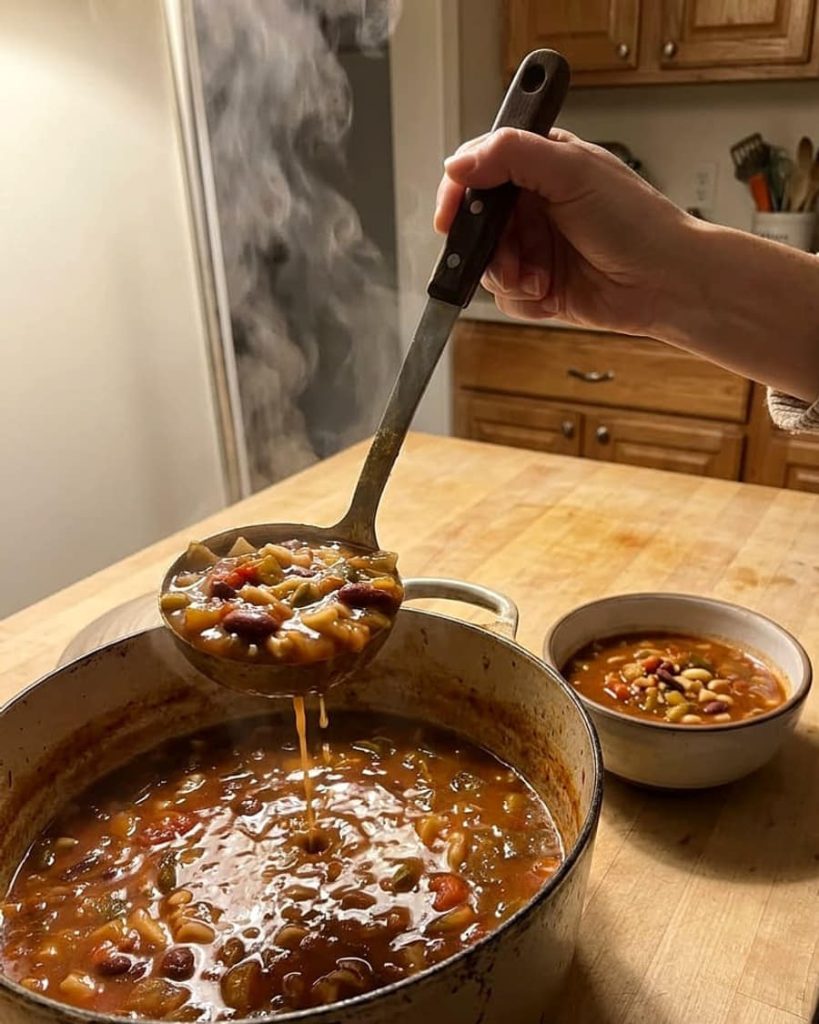
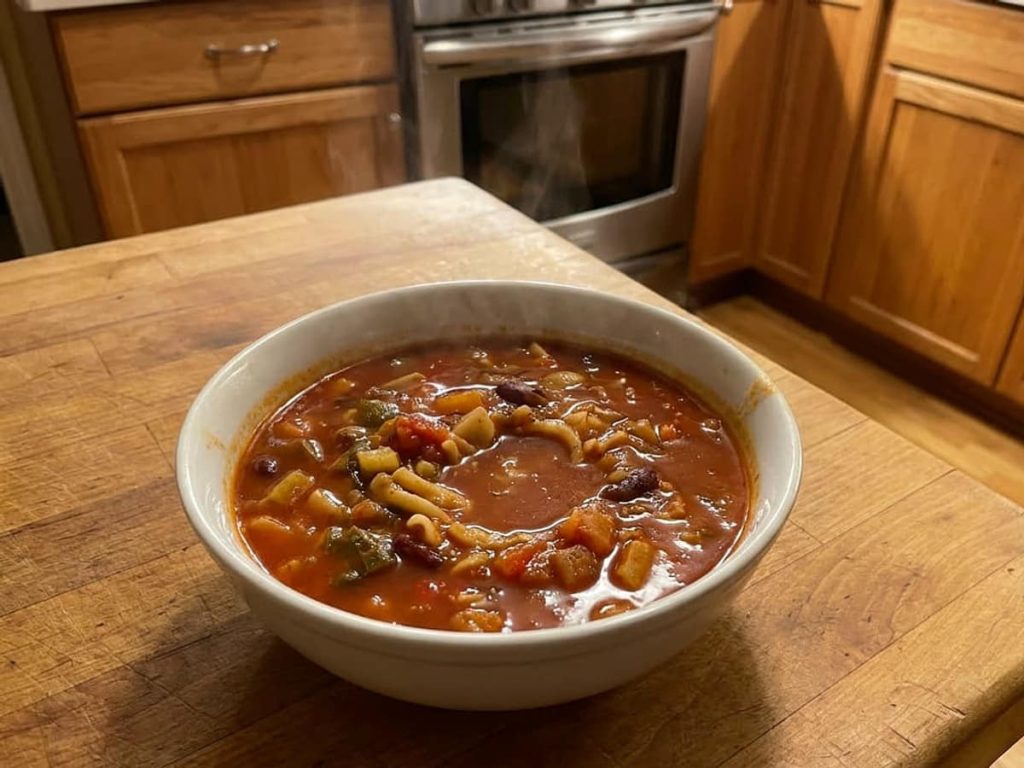
- Finish with greens. Stir in the chopped greens and cook for 2 to 3 minutes more, just until wilted and bright. Taste and adjust the salt. Ladle into bowls and top with Parmesan and fresh basil if you’re using it.
Tips
- This is a pantry soup at heart. Both Spend With Pennies and Once Upon a Chef build it from canned tomatoes and canned beans, which is exactly why it lands on a weeknight when you haven’t planned anything.
- If you’re planning to freeze a batch, cook the pasta separately and add it only to the bowls you’re eating right now. Pasta frozen in broth turns soft and bloated when you reheat it.
- The sugar is a small but real addition. It rounds out the acidity from the canned tomatoes without making the soup taste sweet.
- Don’t add the greens too early. Two to three minutes is all spinach needs. Kale can go in a minute or two sooner since it’s tougher, but either one turns army-green and slimy if it simmers too long.
- A Parmesan rind dropped into the pot during the 20-minute simmer adds a quiet savory depth to the broth. Fish it out before serving.
- I still don’t measure the fresh basil at the end, and I’m not going to start.
How to Store It
Leftovers keep well in a sealed container in the refrigerator for up to 4 days. The pasta will absorb more broth as it sits, so the soup thickens overnight.
Add a splash of broth or water when you reheat it on the stove over medium-low heat, stirring until warmed through. To freeze, leave the pasta out of the portion you’re saving.
The recipes I worked from both flag this: pasta frozen in broth turns to mush on reheating, and there’s no fixing it. Store the soup base in a freezer-safe container.
Once Upon a Chef notes it freezes well for about 2 months. Reheat frozen soup in a pot over medium heat from thawed or straight from frozen on low.
Cook fresh pasta separately and stir it in just before serving.
What Goes With Minestrone Soup
- A thick slice of crusty bread is the obvious move, and it’s obvious because it works. You want something to drag through the broth at the bottom of the bowl.
- A simple green salad with a sharp vinaigrette cuts through the richness of the soup and makes the meal feel complete without adding more cooking.
- Garlic bread works especially well with kids at the table. It gives them something to do while the soup cools down enough to eat.
- Extra Parmesan on the side lets everyone finish their own bowl the way they like it, which matters more than it sounds when you’re feeding a table of people with opinions.
What I Use to Make This
- A large, heavy-bottomed pot or Dutch oven, at least 5 to 6 quarts, so the soup has room to simmer without bubbling over
- A wooden spoon or sturdy silicone spatula for stirring the tomato paste into the hot fat without scratching the pot
- A sharp chef’s knife and a cutting board, since most of the prep time is just chopping vegetables
- A ladle for serving, deep enough to scoop broth and solids together in one pass
Frequently Asked Questions
Can I make minestrone soup vegetarian? Yes, swap the chicken broth for vegetable broth in the same amount. Neither of the recipes I worked from gives a specific ratio for this swap, so in my own kitchen I use it cup for cup and find the soup tastes just as full-bodied, especially with the tomato paste and Parmesan doing their work.
What pasta is best for minestrone soup? Small shapes work best because they fit on a spoon with the vegetables and beans. Ditalini, small shells, and elbow macaroni are all good choices. Avoid long pasta or large shapes that take over the bowl.
Can I add meat to minestrone soup? You can brown Italian sausage or ground beef in the pot before the vegetables and drain off the excess fat before you continue. Neither source I used includes meat in this version, but it’s a common addition that works well.
Why does my minestrone soup taste bland? The most likely reason is that the vegetables didn’t get enough time to soften before the liquid went in, or the soup didn’t simmer long enough before the pasta was added. Taste at the end and adjust the salt. A little more Parmesan on top also pulls the flavors together quickly.
Can I use fresh tomatoes instead of canned? You can, but canned tomatoes are more consistent and already concentrated, which is part of why this soup works year-round. If you use fresh, you’ll need to cook them down longer to get the same depth of flavor in the broth.
If You Liked This One
- Beef Enchiladas with Chili Gravy
- Classic Baked Ziti
- Classic Beef Chili
- Classic Beef Stew
- Classic Ground Beef Tacos
- Classic Meatloaf with Brown Sugar Glaze
- Classic Pot Roast
- Classic Spaghetti and Meatballs
- Creamy Baked Mac and Cheese
- Creamy Broccoli Cheddar Soup
Hearty Minestrone Soup
Course: DinnerCuisine: American6
servings15
minutes35
minutesIngredients
2 tbsp butter
3 tbsp olive oil
1 large onion, diced
2 celery stalks, sliced
2 to 3 large carrots, peeled and sliced into coins
4 garlic cloves, minced
2 tbsp tomato paste
1 can (14.5 oz) diced tomatoes
6 cups reduced-sodium chicken broth
1 large russet potato, peeled and cut into ½-inch cubes
1½ tsp salt
½ tsp sugar
1 tsp dried thyme
½ tsp dried oregano
¼ tsp black pepper
1 can (15 oz) cannellini beans, drained and rinsed
1 medium zucchini, diced
¾ cup small pasta (ditalini, shells, or elbow)
2 cups greens (spinach or kale), roughly chopped
⅓ cup grated Parmesan, for serving
2 tbsp fresh basil, optional, for serving
Directions
- Sauté the aromatics. Melt the butter with the olive oil in a large pot over medium heat. Add the onion, celery, and carrots. Cook, stirring occasionally, until the vegetables are soft and the onion is translucent, about 6 to 8 minutes. Don’t rush this step; the vegetables should look relaxed and smell sweet.
- Add the garlic and paste. Push the vegetables to the side and add the garlic and tomato paste directly to the center of the pot. Stir and cook for about 1 minute, until the paste darkens slightly and smells rich and toasty, then stir everything together.
- Build the broth. Pour in the diced tomatoes and chicken broth. Add the potato cubes, salt, sugar, thyme, oregano, and pepper. Stir to combine. The broth will look thin and bright red at this point, which is fine.
- Simmer the base. Bring the pot to a boil, then reduce the heat to a steady simmer. Cook uncovered for about 20 minutes, until the potato cubes are just tender when you press one against the side of the pot with a spoon and the broth has deepened in color and flavor.
- Add the beans, zucchini, and pasta. Stir in the drained cannellini beans, diced zucchini, and pasta. Keep the heat at a steady simmer and cook for another 10 to 15 minutes, stirring occasionally, until the pasta is tender but still has a little bite and the zucchini is soft but not falling apart.
- Finish with greens. Stir in the chopped greens and cook for 2 to 3 minutes more, just until wilted and bright. Taste and adjust the salt. Ladle into bowls and top with Parmesan and fresh basil if you’re using it.


