
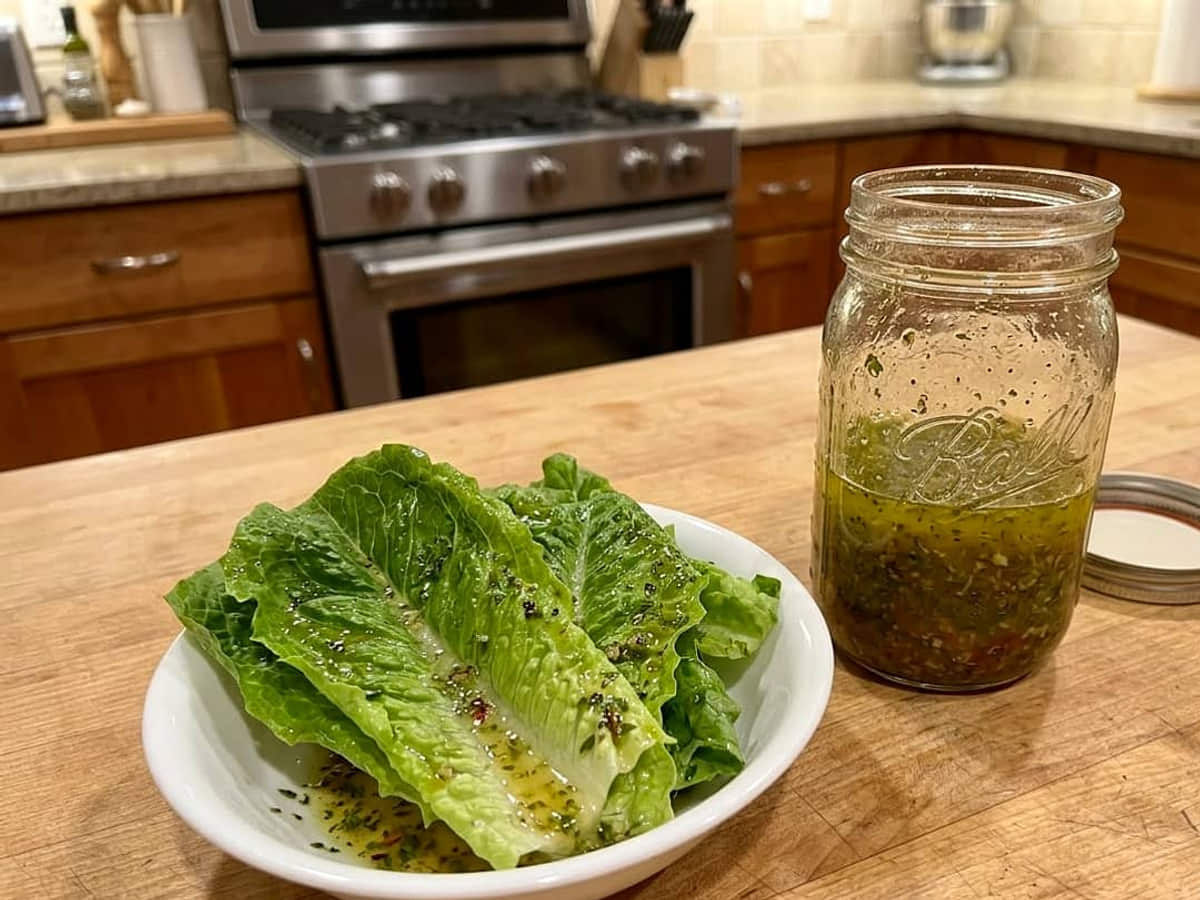
Homemade Italian Dressing
My mom had a drawer in the kitchen where she kept rubber bands, a broken thermometer, and a stack of those little foil packets of Italian dressing mix. She’d tear one open, shake it into a cruet with oil and vinegar, and call it done.
I made it that way for years too, until I finally read the back of the packet and thought, I have all of this already.
This Italian dressing comes together in one jar in about five minutes. The real difference from the packet version is parmesan, finely grated so it suspends right into the dressing instead of sinking to the bottom.
The 30-minute rest before you serve it isn’t optional. Dried herbs need that time to soften and release their flavor, and a dressing tasted right after shaking can seem flat and sharp.
Give it the time.
Prep: 5 minutes · Cook: 0 minutes · Total: about 35 minutes (with resting) · Serves: 10 (2 tbsp each)
How do you make Italian dressing from scratch?
Combine red wine vinegar, parmesan, Dijon mustard, garlic, dried oregano, basil, parsley, red pepper flakes, salt, and pepper in a jar. Add olive oil and shake hard for 20 seconds until cloudy and uniform. Rest 30 minutes before serving so the dried herbs soften and the flavor fills out.
Why It Works
- The oil-to-vinegar ratio is 3:1, the same backbone used in classic vinaigrettes across two sources in this series. It’s sharp enough to cut through salad greens without making you wince.
- Dijon mustard acts as an emulsifier, giving the oil and vinegar something to cling to so the dressing stays cloudy and uniform longer than a plain shake-together dressing would.
- Finely grated parmesan suspends into the liquid instead of clumping at the bottom, which is what gives this its distinctive savory depth.
Both sources in this series include parmesan, and once I started grating it on the fine side of the box grater instead of the medium side, it stopped settling and the flavor carried all the way through every bite.
Why This One’s Worth Making
- Ready in 5 minutes with pantry staples
- Keeps up to 2 weeks in the fridge, so one batch covers a whole week of salads
- Doubles as a quick marinade for chicken or pork
- No packet mix, no preservatives, no ingredients you can’t pronounce
The Ingredient List
- 3/4 cup light-tasting olive oil
- 1/4 cup red wine vinegar
- 1/4 cup parmesan, finely grated
- 2 tsp Dijon mustard
- 2 tsp sugar
- 2 cloves garlic, finely grated
- 1 tsp dried oregano
- 1 tsp dried basil
- 1 tsp dried parsley
- 1/4 tsp red pepper flakes
- 3/4 tsp fine salt
- 1/4 tsp black pepper
Ingredient Notes and Swaps
Red wine vinegar is the right call here. The two sources in this series split on white versus red, but red wine vinegar matches the flavor Americans picture when they think of Italian dressing, and the color is better in the jar.
For the oil, reach for a light-tasting olive oil rather than a strong extra-virgin. A peppery, grassy extra-virgin will overpower the herbs.
If that’s all you have, cut it with half a neutral oil like canola and it’ll work fine.
Parmesan is what makes this taste like Italian dressing and not just a plain herb vinaigrette. Grate it on the finest side of your box grater.
Coarsely grated parmesan sinks straight to the bottom and you’ll end up with a clump of cheese every time you pour.

Making Italian Dressing, Step by Step
- Combine everything except the oil. Add the red wine vinegar, parmesan, Dijon mustard, sugar, garlic, oregano, basil, parsley, red pepper flakes, salt, and pepper to a jar with a tight-fitting lid. Shake until the mustard and cheese are no longer sitting in visible clumps at the bottom, about 10 seconds.
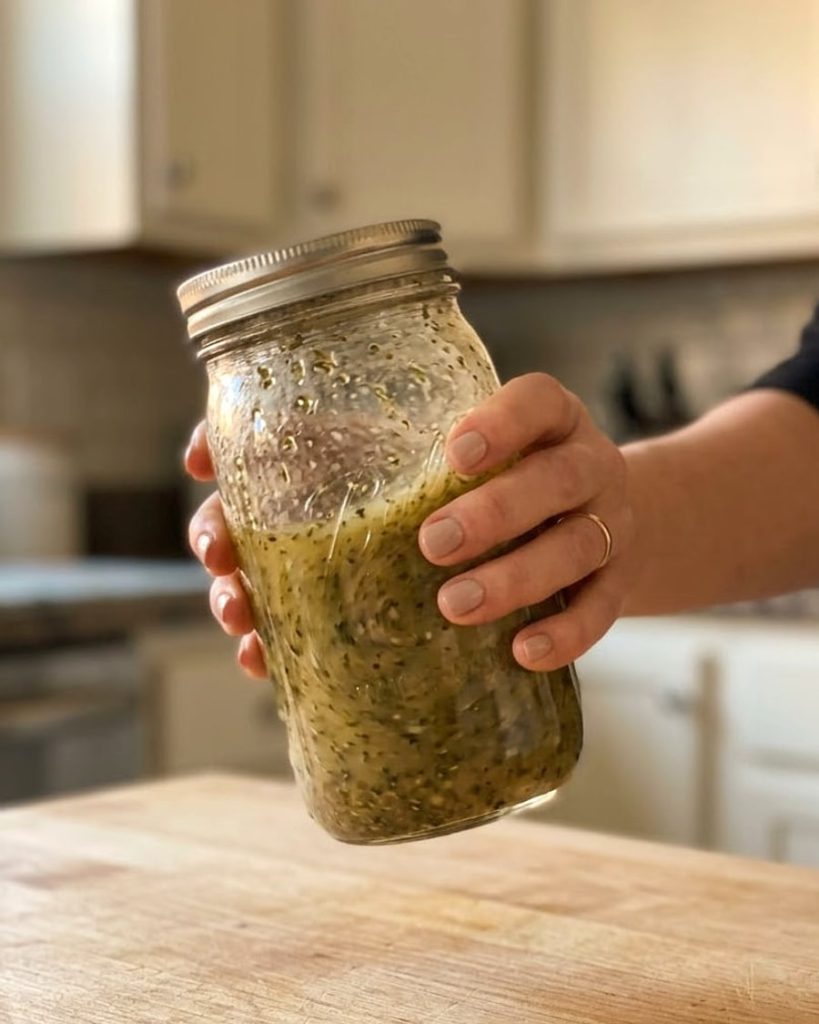
- Add the oil and shake hard. Pour in the 3/4 cup of olive oil, seal the lid firmly, and shake for a full 20 seconds. The dressing is ready to rest when it looks cloudy and uniform throughout, with no visible layers of oil floating on top.
- Let it rest before serving. Set the jar on the counter for 30 minutes. The dried herbs need this time to soften and release their flavor into the liquid. If you taste it right after shaking, it’ll seem flat and a little sharp. After 30 minutes, it’ll taste like Italian dressing.
- Taste on a lettuce leaf, not a spoon. Tear a small piece of romaine or iceberg, dip it, and taste. Adjust salt or vinegar from there. A spoon gives you straight acid and oil, which reads much sharper than it will on a dressed salad.
Tips
- Use dried herbs here, not fresh. Dried is what gives Italian dressing its familiar flavor, and it stretches the shelf life to about 2 weeks in the fridge. Fresh herbs would cut that down to a few days and the flavor profile would be completely different.
- Don’t skip the sugar. It’s only 2 tsp, but it rounds out the vinegar and keeps the dressing from tasting one-note. I tried skipping it once and the whole batch tasted flat and sharp.
- If you want to use this as a marinade for chicken thighs or pork, pour it over the meat and let it sit about 30 minutes before grilling. Don’t reuse marinade that has touched raw meat.
- The dressing will thicken in the fridge and the oil may partially solidify. That’s normal. Pull it out 20 to 30 minutes before dinner and shake it again before pouring.
- A fine microplane grater is the best tool for both the garlic and the parmesan. Minced garlic leaves chunks that can taste sharp and raw.
Storing and Reheating
Keep the dressing in a sealed jar in the refrigerator for up to 2 weeks. The oil will thicken and may look cloudy or even slightly solid when cold.
That’s just the olive oil responding to the temperature, and it doesn’t mean anything is wrong. To use it straight from the fridge, set the jar on the counter for 20 to 30 minutes, then shake well before pouring.
You can also run the sealed jar briefly under warm tap water to loosen it faster. This dressing doesn’t freeze well.
The emulsion breaks and the texture turns grainy. Two weeks in the fridge is plenty of time to use up a batch.
On the Side
- A classic romaine or iceberg salad, because the dressing clings to crisp leaves without wilting them the way a creamy dressing can.
- Pasta salad with rotini, cherry tomatoes, and black olives, where the herbs in the dressing do double duty as the seasoning for the whole dish.
- Grilled chicken thighs marinated in this dressing for 30 minutes before cooking, which gives you a savory, herb-flecked crust.
- Sliced cucumbers and red onion, tossed and left to sit for 20 minutes so the vegetables absorb the dressing.
Special Equipment
- A wide-mouth glass jar with a tight-fitting lid, at least 16 oz so there’s room to shake without the dressing leaking out the sides.
- A fine microplane or rasp grater, which turns both the garlic and the parmesan into a paste that suspends into the dressing instead of sinking.
- A liquid measuring cup with a spout, for pouring the oil in cleanly without splashing.
- A box grater works for the parmesan if you don’t have a microplane, but use only the finest side.
Common Questions
Can I use white wine vinegar instead of red? Yes, the dressing will still work. The flavor will be a little lighter and the color will be pale gold instead of the deeper amber most people recognize. Red wine vinegar is the better choice for flavor and appearance.
Why does my Italian dressing separate so fast? All oil-and-vinegar dressings separate over time, that’s just physics. The Dijon mustard in this recipe slows it down, but you’ll still need to shake the jar before every use. It’s not a sign anything went wrong.
Can I make Italian dressing without parmesan? You can, but it’ll taste more like a plain herb vinaigrette than Italian dressing. Parmesan is the ingredient that gives it the savory, slightly salty depth that makes it taste like the dressing people know. Finely grated pecorino romano is the closest swap.
How long does homemade Italian dressing last? Up to 2 weeks in the refrigerator in a sealed jar. Because this recipe uses dried herbs instead of fresh, it has a longer shelf life than herb dressings made with fresh parsley or basil.
Can I use fresh garlic or does it need to be grated? Fresh garlic is correct here, but grate it fine rather than mincing it. Minced garlic can taste sharp and raw in a cold dressing. Grating it on a microplane turns it into a paste that blends right in.
More Family Favorites
- Chewy Snickerdoodles
- Classic Apple Crisp
- Classic Apple Pie
- Classic Beef Chili
- Classic Beef Stew
- Classic Blueberry Muffins
- Classic Carrot Cake with Cream Cheese Frosting
- Classic Chocolate Cake
- Classic Cornbread
- Classic Creamy Coleslaw
Homemade Italian Dressing
Course: Salads & DressingsCuisine: American10
servings5
minutes35
minutesIngredients
3/4 cup light-tasting olive oil
1/4 cup red wine vinegar
1/4 cup parmesan, finely grated
2 tsp Dijon mustard
2 tsp sugar
2 cloves garlic, finely grated
1 tsp dried oregano
1 tsp dried basil
1 tsp dried parsley
1/4 tsp red pepper flakes
3/4 tsp fine salt
1/4 tsp black pepper
Directions
- Combine everything except the oil. Add the red wine vinegar, parmesan, Dijon mustard, sugar, garlic, oregano, basil, parsley, red pepper flakes, salt, and pepper to a jar with a tight-fitting lid. Shake until the mustard and cheese are no longer sitting in visible clumps at the bottom, about 10 seconds.
- Add the oil and shake hard. Pour in the 3/4 cup of olive oil, seal the lid firmly, and shake for a full 20 seconds. The dressing is ready to rest when it looks cloudy and uniform throughout, with no visible layers of oil floating on top.
- Let it rest before serving. Set the jar on the counter for 30 minutes. The dried herbs need this time to soften and release their flavor into the liquid. If you taste it right after shaking, it’ll seem flat and a little sharp. After 30 minutes, it’ll taste like Italian dressing.
- Taste on a lettuce leaf, not a spoon. Tear a small piece of romaine or iceberg, dip it, and taste. Adjust salt or vinegar from there. A spoon gives you straight acid and oil, which reads much sharper than it will on a dressed salad.