
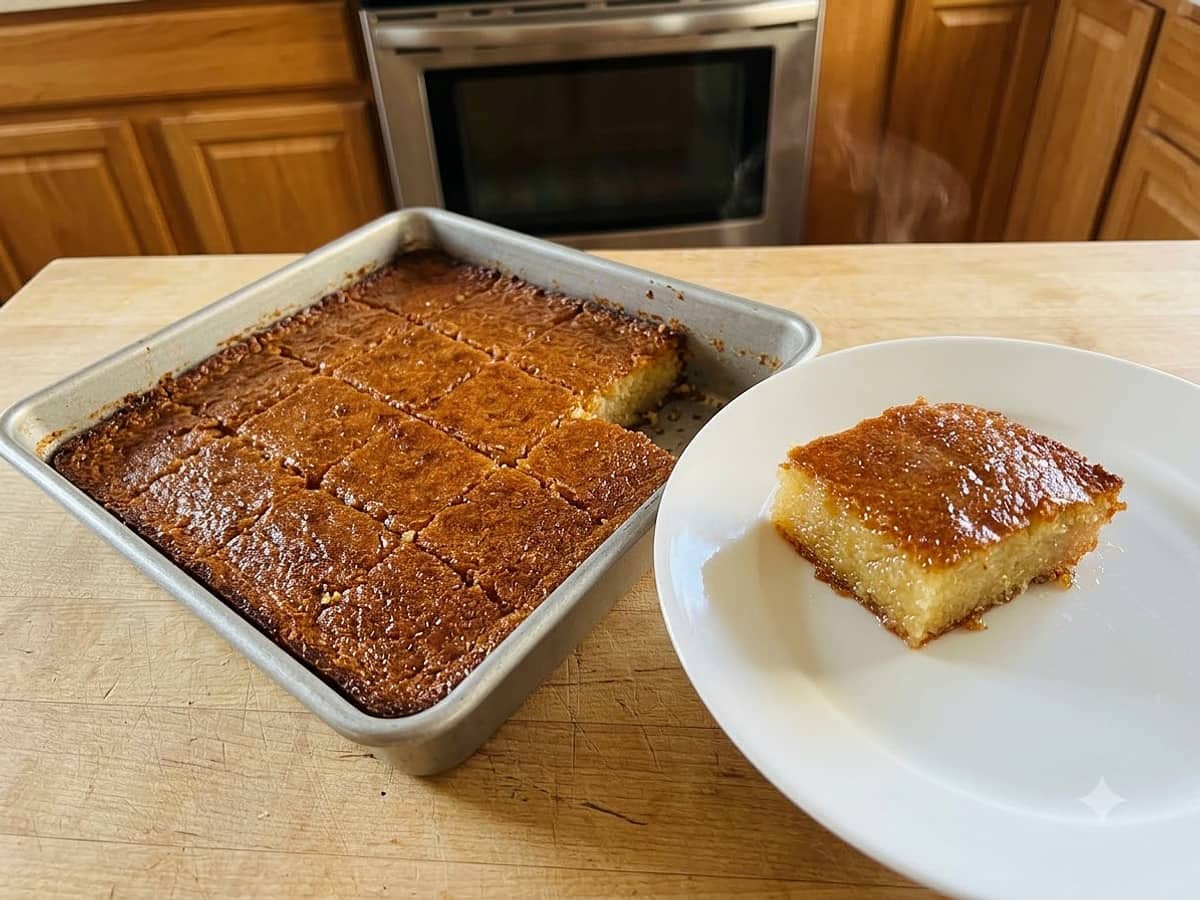
Classic Semolina Basbousa
The heavy paper bag of semolina flour tore open on my counter this afternoon. I swept tiny yellow grains into a dustpan for ten minutes before I could even start making basbousa.
I didn’t plan on baking today, but the mess forced my hand.
A neighbor introduced me to this dessert a few years ago. She handed me a sticky diamond-shaped piece on a plain white napkin.
The coarse texture hooked me immediately.
It’s a dense Middle Eastern cake that requires very little effort once you get the ingredients into the bowl. It relies on a fragrant syrup poured over the hot crust to get that heavy crumb.
I bake a tray of this on lazy weekend afternoons while I wash the laundry.
Prep: 20 minutes · Cook: 35 minutes · Total: about 2 hours (with cooling) · Serves: 9
Why is my basbousa gritty? The batter needs time to rest before baking.
Coarse semolina requires this resting period to absorb the thick yogurt and oil properly. If you bake the pan immediately, the grains stay hard and give the finished cake a sandy texture.
Letting the flour hydrate solves this entirely.
What You’ll Need
- 1 cup (170 g) semolina
- 1/2 cup (125 g) thick plain yogurt
- 1/3 cup (65 g) granulated sugar
- 1/2 cup (45 g) shredded coconut
- 1/3 cup (80 ml) vegetable oil
- 1 tsp baking powder
- 1 tsp vanilla extract
- 9 whole almonds
- 150 g granulated sugar (for the syrup)
- 240 ml water (for the syrup)
- 1 tsp lemon juice (for the syrup)
- 1 tsp rose water (for the syrup, optional)
A Few Notes on the Ingredients
You need coarse or medium semolina for the right bite. You can’t substitute standard all-purpose flour.
Regular flour turns the batter into a thick paste and ruins the heavy texture completely.
Thick plain yogurt acts as the main binding agent here. A runny yogurt adds too much extra moisture to the bowl.
I prefer a full-fat variety for richness, but you can strain a thin yogurt through a paper towel if that is all you have.
The three classic recipes I consulted give widely different syrup ratios, ranging from two-to-one down to point-six-to-one. I suspect different regions prefer different levels of sweetness.
I mix my own preferred amount of 150 grams of sugar to 240 milliliters of water.
Step-by-Step Directions
- Mix the batter. Combine the semolina, thick yogurt, shredded coconut, vegetable oil, sugar, baking powder, and vanilla in a large glass bowl. Stir everything vigorously with a wooden spoon. Keep mixing until you see a thick uniform paste form with no dry spots remaining.
- Let the mixture rest. Leave the bowl directly on your counter to let the coarse grains hydrate. The sources I checked do not give a specific resting time. I wait until the grains look swollen and the batter feels noticeably thicker in the bowl, usually about twenty minutes.
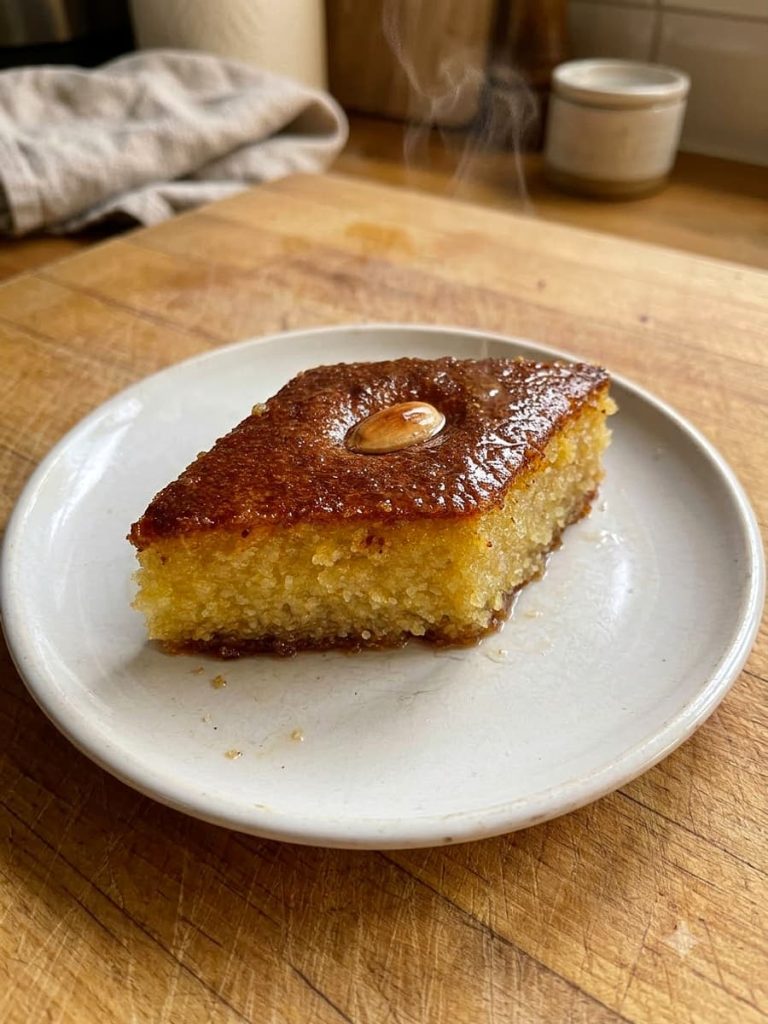
- Score the surface. Spread the batter evenly into your chosen baking pan. Cut a distinct diamond pattern across the top with a sharp paring knife. Place one whole almond into the center of each diamond, pressing down slightly until the nut feels completely secure.
- Bake the cake. Transfer the pan to the middle rack of the oven. The classic recipes I reference leave out an exact temperature and pan size. I use an eight-inch square pan in a 350°F oven, baking until the edges shrink back and turn a rich golden brown.
- Make the syrup. Combine the water, 150 grams of sugar, and lemon juice in a small metal saucepan over medium heat. Stir the pot gently to prevent sticking. Simmer the mixture quietly until the sugar dissolves completely and the bubbling liquid lightly coats the back of a spoon.
- Pour the syrup. Remove the hot cake from the oven and carefully pour the syrup evenly over the surface immediately. All three sources I checked agree on doing this step right away so the hot crumb absorbs the liquid. Let the pan sit undisturbed until the surface looks completely glossy.
Storage and Make-Ahead
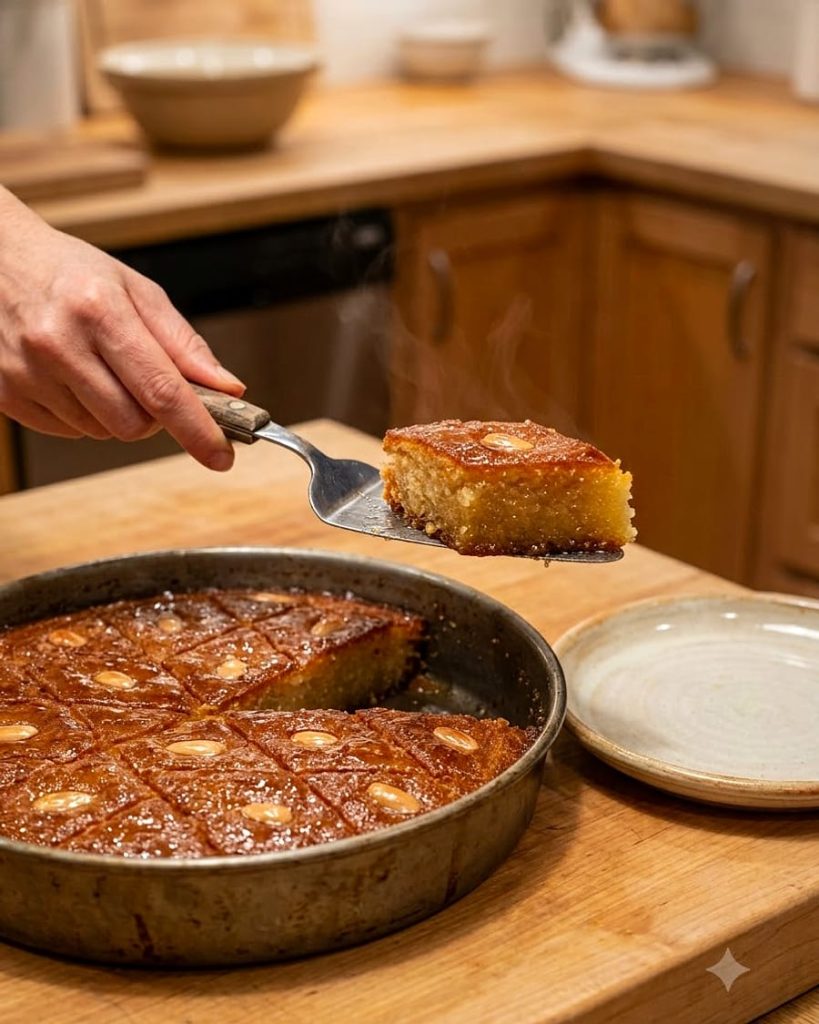
Keep any leftover pieces in an airtight container directly on your kitchen counter at room temperature. The generous amount of syrup acts as a natural preservative.
This holds the moisture inside the crumb for up to four days without drying out. You can freeze the baked and soaked cake very easily.
Wrap the individual cut diamonds tightly in a double layer of aluminum foil, then drop them into a heavy freezer bag. They keep their bright flavor for about two months in the cold.
Thaw those frozen slices on the counter overnight before you plan to serve them. I wouldn’t recommend microwaving this dessert.
The sudden blast of heat turns the delicate sugary crumb into a rubbery mess almost instantly.
Keep Cooking
- Bubbling Blackberry Cobbler
- Bubbling Blueberry Cobbler
- Chewy Snickerdoodles
- Classic Apple Crisp
- Classic Apple Pie
- Classic Blueberry Cheesecake (Baked)
- Classic Carrot Cake with Cream Cheese Frosting
- Classic Chocolate Cake
- Classic French Apple Cake
- Classic Lemon Bars
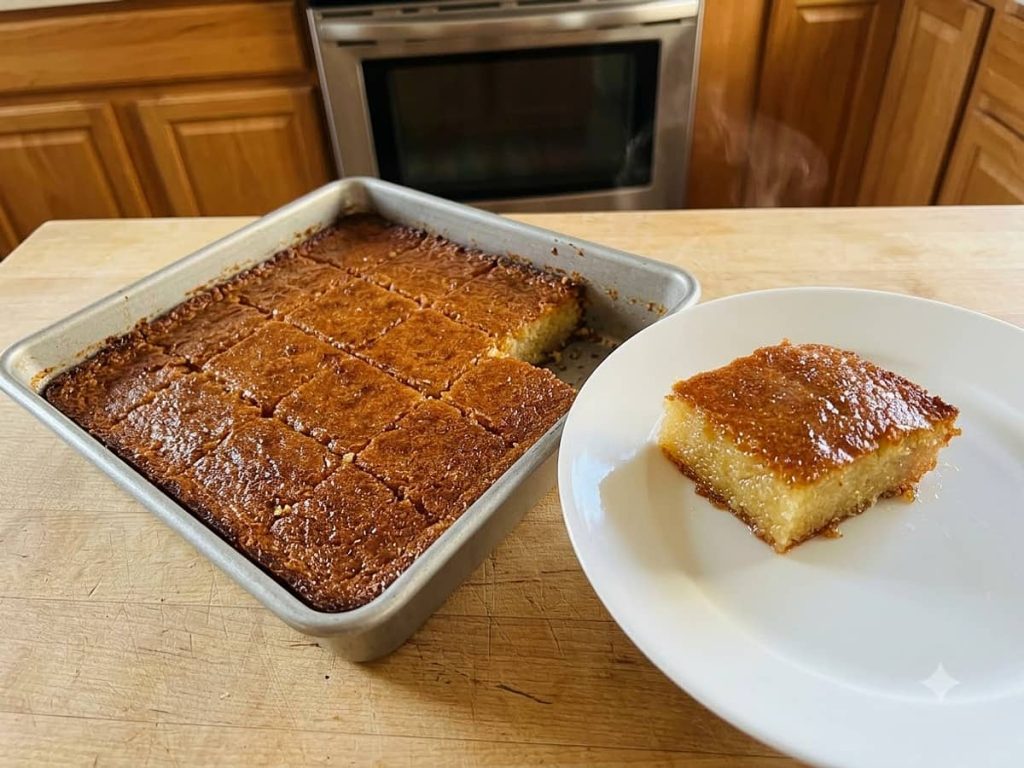
Classic Semolina Basbousa
Course: DessertCuisine: American9
servings20
minutes35
minutesIngredients
1 cup (170 g) semolina
1/2 cup (125 g) thick plain yogurt
1/3 cup (65 g) granulated sugar
1/2 cup (45 g) shredded coconut
1/3 cup (80 ml) vegetable oil
1 tsp baking powder
1 tsp vanilla extract
9 whole almonds
150 g granulated sugar (for the syrup)
240 ml water (for the syrup)
1 tsp lemon juice (for the syrup)
1 tsp rose water (for the syrup, optional)
Directions
- Mix the batter. Combine the semolina, thick yogurt, shredded coconut, vegetable oil, sugar, baking powder, and vanilla in a large glass bowl. Stir everything vigorously with a wooden spoon. Keep mixing until you see a thick uniform paste form with no dry spots remaining.
- Let the mixture rest. Leave the bowl directly on your counter to let the coarse grains hydrate. The sources I checked do not give a specific resting time. I wait until the grains look swollen and the batter feels noticeably thicker in the bowl, usually about twenty minutes.
- Score the surface. Spread the batter evenly into your chosen baking pan. Cut a distinct diamond pattern across the top with a sharp paring knife. Place one whole almond into the center of each diamond, pressing down slightly until the nut feels completely secure.
- Bake the cake. Transfer the pan to the middle rack of the oven. The classic recipes I reference leave out an exact temperature and pan size. I use an eight-inch square pan in a 350°F oven, baking until the edges shrink back and turn a rich golden brown.
- Make the syrup. Combine the water, 150 grams of sugar, and lemon juice in a small metal saucepan over medium heat. Stir the pot gently to prevent sticking. Simmer the mixture quietly until the sugar dissolves completely and the bubbling liquid lightly coats the back of a spoon.
- Pour the syrup. Remove the hot cake from the oven and carefully pour the syrup evenly over the surface immediately. All three sources I checked agree on doing this step right away so the hot crumb absorbs the liquid. Let the pan sit undisturbed until the surface looks completely glossy.


