
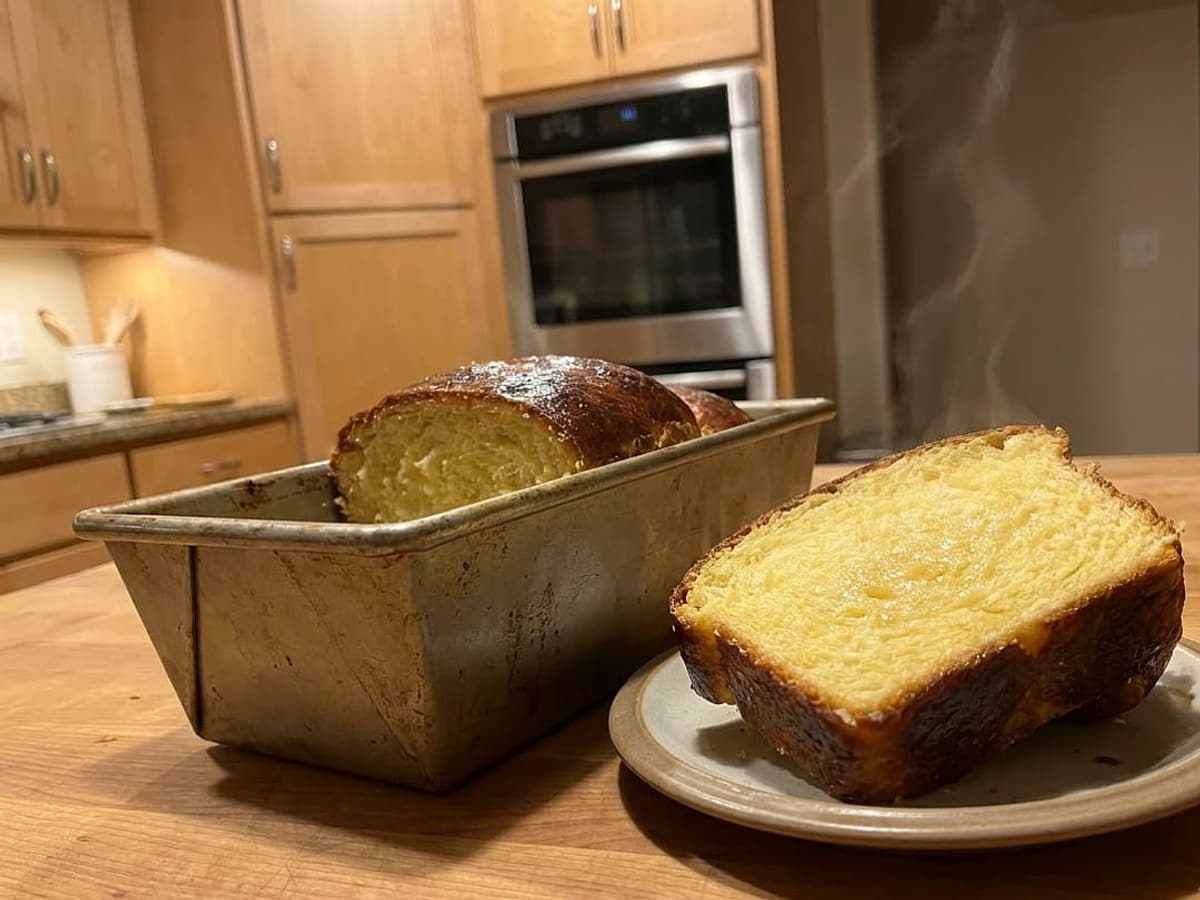
Fluffy Brioche Bread
My daughter pulled a stool up to the counter last Saturday and announced she wanted to help make brioche bread. She’s seven, so “help” mostly meant pressing her finger into the dough every thirty seconds to check if it was ready.
That’s the thing about brioche. It takes a while, and it asks you to pay attention.
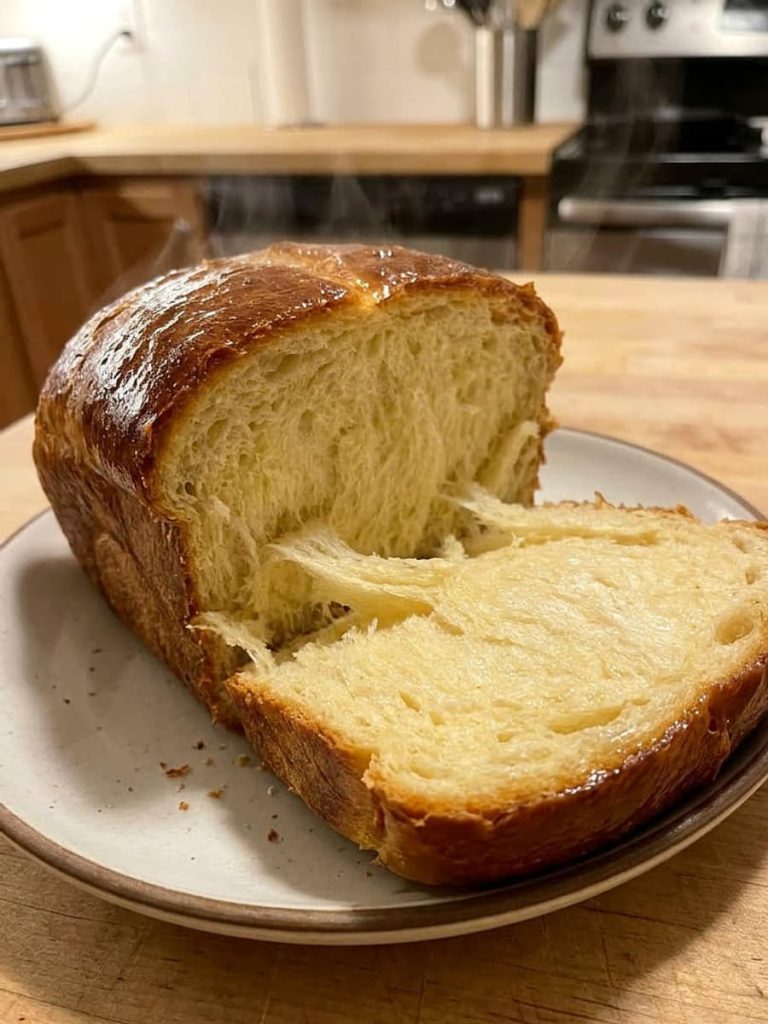
But the payoff is a loaf with a paper-thin crust and a crumb so tender it almost pulls apart in sheets. I’ve been making this on long weekend mornings for a couple of years now.
The recipe is straightforward once you understand the one rule that matters: the butter goes in last. Get that right, and the rest follows.
How do you make brioche bread with a soft, tender crumb?
The key is adding softened butter one piece at a time after the dough is fully kneaded. This lets the gluten network build first, so the butter enriches the crumb without blocking structure. Milk warmed to no more than 110°F keeps the yeast alive and active from the start.
Why This Recipe Works
- Adding butter after the gluten forms lets the dough build enough structure to trap the fat evenly, which is what gives brioche its layered, pull-apart crumb instead of a dense, oily one.
- Milk at or below 110°F keeps the yeast healthy. Yeast begins dying above roughly 140°F, so warm-to-the-wrist is right and anything hotter will kill the sponge before it starts.
- Judging both rises by size rather than by the clock means the dough is always at the right stage, no matter how warm or cool your kitchen runs that day.
The first time I tried this, I added the butter too fast and the dough looked greasy and broken for a solid five minutes. I almost stopped.
It came back together, but I learned to slow down and add one piece at a time, waiting until each one disappears before the next goes in.
Why I Keep Coming Back to This One
- The ingredients are all pantry and fridge staples, nothing specialty required.
- You can shape it as a loaf or divide it into six buns, so it works for toast or for sandwiches.
- The dough can be made ahead and cold-fermented overnight, which builds more flavor with almost no extra effort.
- It freezes beautifully, so one batch gives you bread for two weeks.
Grab These Ingredients
- 5 to 10 g (about 1 3/4 tsp) instant or active dry yeast
- 1 tbsp of the sugar (reserved from the total below)
- 60 ml (1/4 cup) warm milk, at about 110°F
- 500 g (about 4 cups, spooned and leveled) bread flour
- 60 g (about 5 tbsp) sugar (remaining after the sponge portion)
- 5 g (about 1 tsp) fine salt
- 3 large eggs, at room temperature (about 150 g)
- 120 ml (1/2 cup) warm milk, at about 110°F
- 1 tsp vanilla extract
- 150 g (about 10 1/2 tbsp) unsalted butter, softened and cut into 1-tbsp pieces
- 1 egg yolk
- 1 tbsp milk
- A pinch of fine salt
Ingredient Notes
Bread flour is the right call here. It has more protein than all-purpose, which means it builds a stronger gluten network, and that structure is what holds all that butter without the loaf going dense.
You can use all-purpose in a pinch, but the crumb won’t be quite as tall or as springy. The butter must be softened, not melted and not cold.
Softened butter emulsifies into the dough gradually and stays in the structure. Melted butter separates out and makes the dough greasy.
Cold butter takes so long to incorporate that the friction from the mixer overheats the dough, which can cause the butter to separate anyway. For the milk, any fat percentage works.
What matters is the temperature. Use an instant-read thermometer if you have one and aim for 100 to 110°F, which feels warm but not hot on the inside of your wrist.
Hotter than that and you risk killing the yeast before the sponge even gets going.
Making Brioche Bread, Step by Step
- Make the sponge. Stir the yeast, the reserved tablespoon of sugar, and 60 ml of warm milk together in a small bowl. Let it sit uncovered until the surface is visibly frothy and bubbly, 20 to 30 minutes. If it’s flat after 30 minutes, the yeast is dead and the batch won’t be saved by waiting longer. Start fresh.
- Mix the dry ingredients. Whisk the bread flour, remaining sugar, and salt together in the bowl of a stand mixer. Make a well in the center so the wet ingredients have somewhere to land.
- Add the wet ingredients. Pour the frothy sponge, the 3 eggs, the remaining 120 ml of warm milk, and the vanilla extract into the well. Mix on low with the dough hook until a shaggy dough forms and no dry flour is visible at the bottom of the bowl, about 2 minutes.
- Knead the base dough. Increase the speed to medium and knead until the dough is smooth and pulls away cleanly from the sides of the bowl, about 10 minutes. It will still be sticky. That’s correct. Don’t add flour.
- Add the butter. With the mixer running on medium-low, drop in the softened butter one piece at a time. Wait until each piece is fully absorbed before adding the next. If the dough looks oily or starts to separate, the room is too warm. Stop the mixer, let the dough rest for 5 minutes to cool down, then continue. Once all the butter is in, knead on medium for another 10 to 15 minutes until the dough is smooth, elastic, and slightly shiny.
- First rise. Shape the dough into a ball, place it in a lightly oiled bowl, and cover with plastic wrap. Let it rise until doubled in size, about 1 hour at room temperature, or up to 2 hours in a cool kitchen. Go by size, not the clock.
- Shape and second rise. Punch the dough down gently. For a loaf, divide into three equal pieces, roll each into a smooth ball, and set them side by side in a lightly greased 9 x 5-inch loaf pan. Cover loosely and let rise until the dough crowns about 1 inch above the rim of the pan, 45 to 60 minutes.
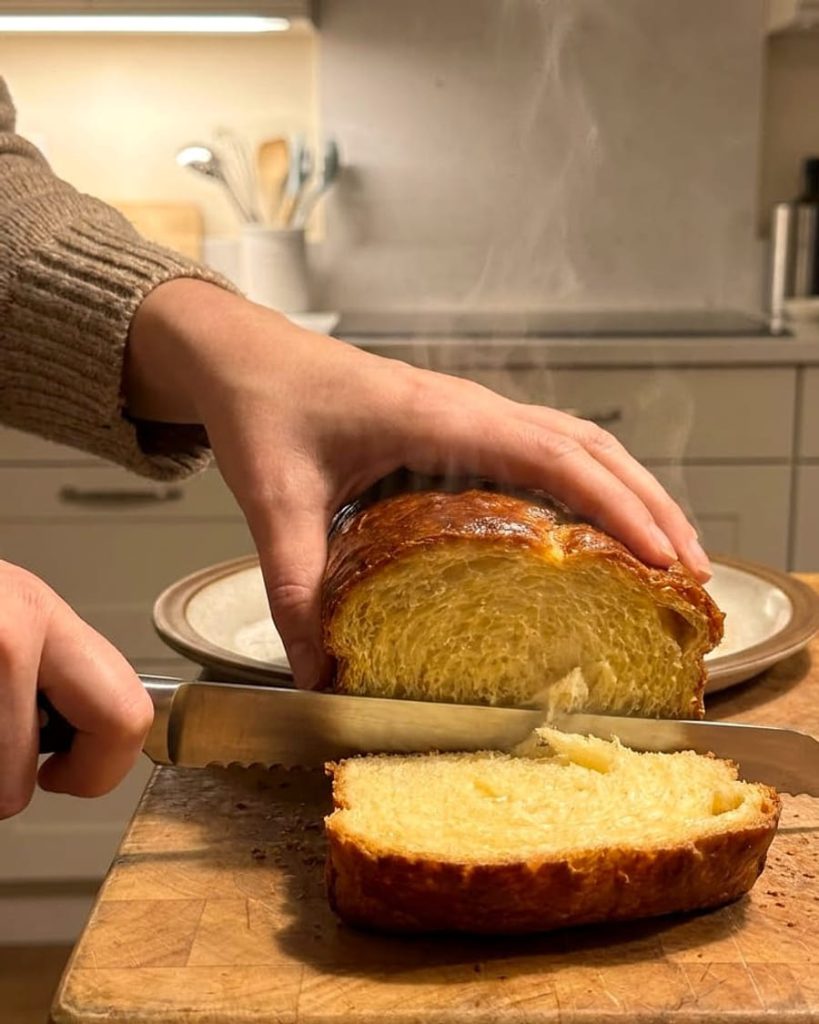
- Egg wash and bake. Heat the oven to 325°F. Whisk together the egg yolk, 1 tbsp milk, and a pinch of salt, then brush it gently over the top of the risen loaf. Bake until the top is a deep golden brown and a thermometer inserted in the center reads 190°F, 30 to 35 minutes. Let it cool in the pan for 10 minutes, then turn it out onto a wire rack and cool for at least 30 minutes before slicing.
Tips From My Kitchen
- Don’t add flour to fix sticky dough. Sticky is correct at the start, and the dough firms up as it proofs. Adding flour lowers the enrichment and changes the crumb.
- If you want more flavor, refrigerate the dough after the first rise instead of shaping it right away. Cold fermentation overnight builds a deeper, slightly richer taste, and the cold dough is also easier to shape.
- Bread flour is the majority choice across classic sources because its higher protein content gives the gluten network enough strength to hold the butter. All-purpose works but produces a slightly less structured loaf.
- Watch for over-proofing on the second rise. Dough that goes too long develops an unpleasant beer-like taste from excess fermentation. Pull it when it crowns the pan, not when it spills over.
- If you don’t have a stand mixer, this dough can be made by hand at the lower butter ratio (about 90 g per 500 g flour). Less butter is genuinely easier to work by hand, and the loaf still comes out tender.
Make-Ahead and Leftovers
Wrap the cooled loaf tightly in plastic wrap and keep it at room temperature for up to 3 days. Brioche stales faster than lean bread because of the enrichment, so don’t leave it unwrapped on the counter.
For longer storage, slice the loaf before freezing. Lay the slices flat on a baking sheet, freeze until solid, then transfer to a zip-top bag.
Frozen slices go straight into the toaster from frozen, no thawing needed, and they come out tasting almost fresh. You can also make the dough up to 24 hours ahead.
After the first rise, punch it down, wrap the bowl tightly, and refrigerate overnight. Shape it cold the next morning, let it come to room temperature and complete the second rise, then bake as directed.
What to Serve With Brioche Bread
- Salted butter and a drizzle of honey, because the slightly sweet crumb and the salt play off each other in a way that needs nothing else.
- Scrambled eggs, since the tender crumb soaks up the egg without going soggy the way regular sandwich bread does.
- A bowl of tomato soup, because the rich bread balances the acidity of the tomatoes and holds up to dipping without falling apart.
- Strawberry jam, which pairs with the vanilla note in the dough and makes a simple breakfast feel like something worth sitting down for.
Equipment Worth Having
- A stand mixer with a dough hook, the most reliable way to knead an enriched dough for 20 to 30 minutes without overheating it.
- A 9 x 5-inch loaf pan, metal conducts heat more evenly than glass for bread and gives you a better crust on the sides.
- An instant-read thermometer, for checking the milk temperature (aim for 110°F) and for confirming the loaf is done at 190°F internal.
- A wire cooling rack, so steam can escape from the bottom of the loaf and the crust doesn’t go soft while it cools.
FAQ
Can I make brioche bread without a stand mixer? Yes. Use the lower butter amount, about 90 g per 500 g flour, and knead by hand on a clean counter for 20 to 25 minutes. Less butter means the dough is less slippery and easier to work. The loaf will still be tender, just slightly less rich.
Why didn’t my brioche rise? The most common reason is milk that was too hot and killed the yeast before the sponge could form. Check that your sponge is visibly frothy and bubbly before you mix the dough. If it’s flat after 30 minutes, start the sponge over with fresh yeast.
Can I use all-purpose flour instead of bread flour? You can, and the loaf will still taste good. Bread flour has more protein, which builds a stronger structure to hold the butter, so the crumb is a little taller and springier with it. All-purpose gives a softer, slightly denser result.
How do I know when brioche bread is fully baked? The top should be a deep, even golden brown, and an instant-read thermometer inserted in the center should read 190°F. Color alone can fool you because the egg wash browns fast, so the thermometer is the honest check.
Can I freeze brioche bread dough? Freezing unbaked enriched dough is tricky and not reliable. Freeze the baked, sliced loaf instead. Slices go straight from the freezer to the toaster and come out tasting close to fresh.
Keep Cooking
- Beef Enchiladas with Chili Gravy
- Bubbling Blackberry Cobbler
- Bubbling Blueberry Cobbler
- Buttery Classic French Toast
- Chewy Homemade Bagels
- Chewy Snickerdoodles
- Cinnamon Apple Muffins (with Crumb Topping)
- Classic Apple Crisp
- Classic Apple Pie
- Classic Baked Ziti

Fluffy Brioche Bread
Course: BakingCuisine: American8
servings30
minutes35
minutesIngredients
5 to 10 g (about 1 3/4 tsp) instant or active dry yeast
1 tbsp of the sugar (reserved from the total below)
60 ml (1/4 cup) warm milk, at about 110°F
500 g (about 4 cups, spooned and leveled) bread flour
60 g (about 5 tbsp) sugar (remaining after the sponge portion)
5 g (about 1 tsp) fine salt
3 large eggs, at room temperature (about 150 g)
120 ml (1/2 cup) warm milk, at about 110°F
1 tsp vanilla extract
150 g (about 10 1/2 tbsp) unsalted butter, softened and cut into 1-tbsp pieces
1 egg yolk
1 tbsp milk
A pinch of fine salt
Directions
- Make the sponge. Stir the yeast, the reserved tablespoon of sugar, and 60 ml of warm milk together in a small bowl. Let it sit uncovered until the surface is visibly frothy and bubbly, 20 to 30 minutes. If it’s flat after 30 minutes, the yeast is dead and the batch won’t be saved by waiting longer. Start fresh.
- Mix the dry ingredients. Whisk the bread flour, remaining sugar, and salt together in the bowl of a stand mixer. Make a well in the center so the wet ingredients have somewhere to land.
- Add the wet ingredients. Pour the frothy sponge, the 3 eggs, the remaining 120 ml of warm milk, and the vanilla extract into the well. Mix on low with the dough hook until a shaggy dough forms and no dry flour is visible at the bottom of the bowl, about 2 minutes.
- Knead the base dough. Increase the speed to medium and knead until the dough is smooth and pulls away cleanly from the sides of the bowl, about 10 minutes. It will still be sticky. That’s correct. Don’t add flour.
- Add the butter. With the mixer running on medium-low, drop in the softened butter one piece at a time. Wait until each piece is fully absorbed before adding the next. If the dough looks oily or starts to separate, the room is too warm. Stop the mixer, let the dough rest for 5 minutes to cool down, then continue. Once all the butter is in, knead on medium for another 10 to 15 minutes until the dough is smooth, elastic, and slightly shiny.
- First rise. Shape the dough into a ball, place it in a lightly oiled bowl, and cover with plastic wrap. Let it rise until doubled in size, about 1 hour at room temperature, or up to 2 hours in a cool kitchen. Go by size, not the clock.
- Shape and second rise. Punch the dough down gently. For a loaf, divide into three equal pieces, roll each into a smooth ball, and set them side by side in a lightly greased 9 x 5-inch loaf pan. Cover loosely and let rise until the dough crowns about 1 inch above the rim of the pan, 45 to 60 minutes.
- Egg wash and bake. Heat the oven to 325°F. Whisk together the egg yolk, 1 tbsp milk, and a pinch of salt, then brush it gently over the top of the risen loaf. Bake until the top is a deep golden brown and a thermometer inserted in the center reads 190°F, 30 to 35 minutes. Let it cool in the pan for 10 minutes, then turn it out onto a wire rack and cool for at least 30 minutes before slicing.
