
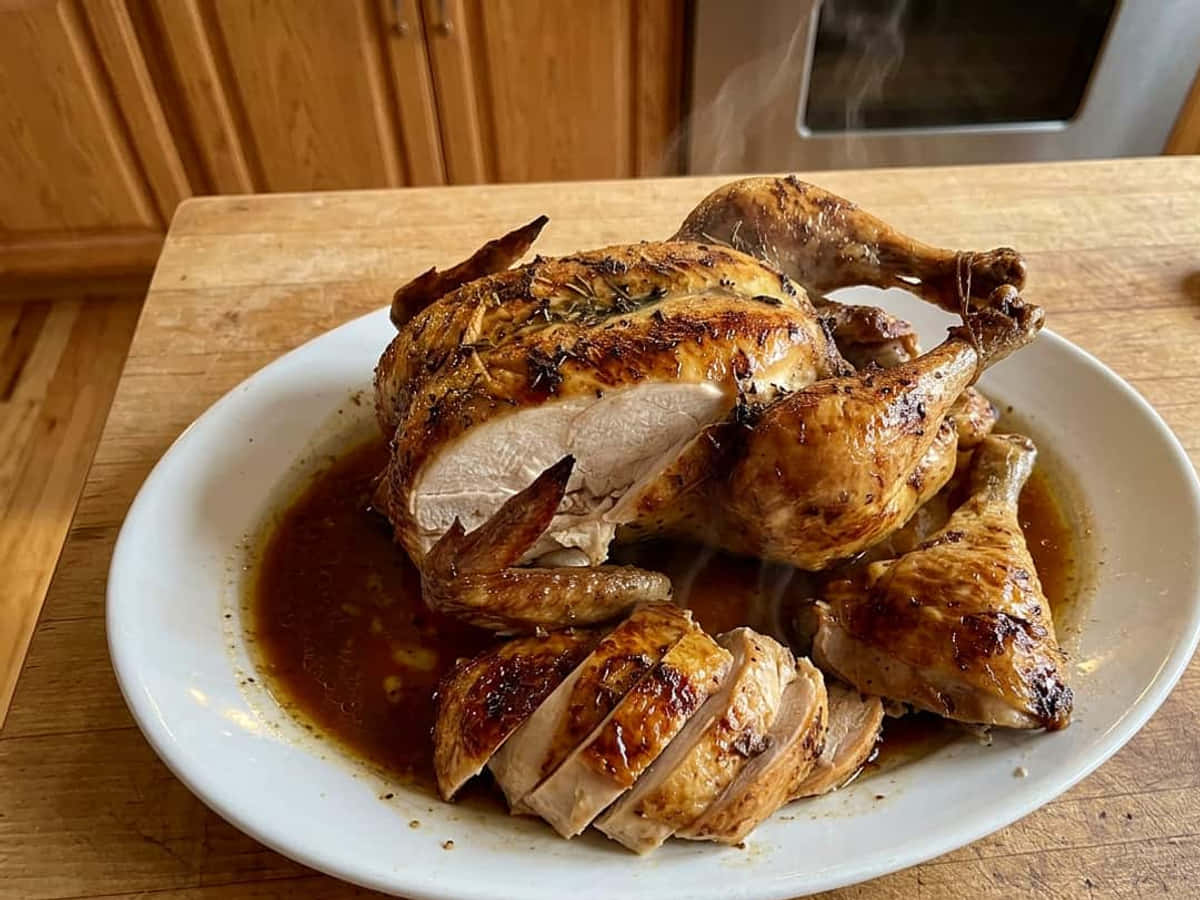
Simple Whole Roast Chicken
A whole roast chicken is the most useful thing I know how to make. On a slow Sunday I rub one with butter and salt, slide it into a hot oven, and let it fill the house with that smell that says dinner is handled.
The skin turns deep golden and crisp, and the meat underneath stays juicy as long as you let it rest before carving. What I love most is the second life it has.
The leftovers become sandwiches, soup, and a quick pot pie during the week, and the bones make a broth I keep in the freezer. One chicken, a whole week of good meals.
Why You’ll Love This Roast Chicken
- Crisp golden skin with juicy meat underneath.
- Just a few ingredients and mostly hands-off time.
- One bird gives you dinner plus leftovers all week.
- The bones make a broth worth saving.
Ingredients for Roast Chicken
- 1 whole chicken (about 4 pounds)
- 2 to 3 tablespoons butter, softened
- 1 to 1 1/2 teaspoons salt
- 1/2 teaspoon black pepper
- 1/2 teaspoon garlic powder
- 1/2 lemon and a few sprigs of fresh thyme or rosemary (optional)
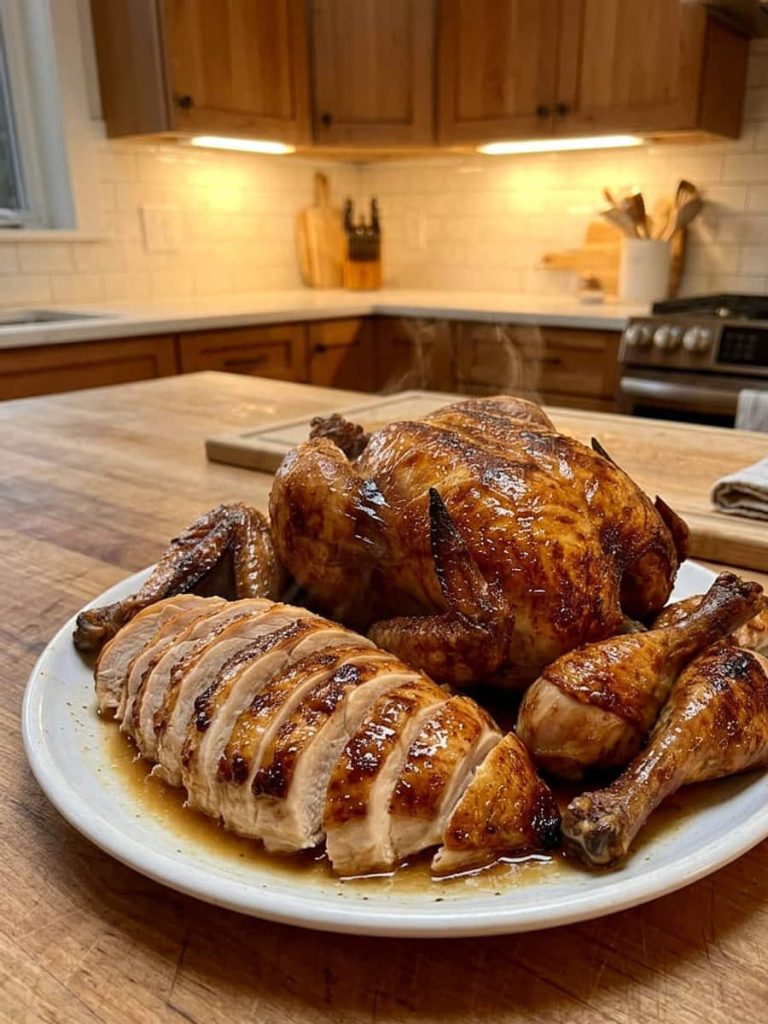
How to Make Roast Chicken
- Heat your oven to 425°F. Pull the chicken from the fridge about 30 minutes ahead so it roasts more evenly.
- Remove any giblets from the cavity. Pat the chicken very dry all over with paper towels. Dry skin is what crisps up.
- Rub the softened butter all over the skin and a little under the skin of the breast. Season all over with the salt, pepper, and garlic powder.
- Tuck the lemon half and herbs into the cavity if you are using them. Tie the legs together with kitchen twine if you have it.
- Place the chicken breast side up in a roasting pan or oven-safe skillet.
- Roast for about 15 minutes per pound, roughly 70 to 90 minutes for a 4 pound bird.
- The chicken is done when a thermometer in the thickest part of the thigh, away from the bone, reads 165°F and the juices run clear.
- Let it rest for 10 to 15 minutes before carving. Resting keeps the juices in the meat instead of on the cutting board.

Tips
- For the crispest skin, salt the chicken and leave it uncovered in the fridge for a few hours or overnight before roasting.
- A thermometer takes the guesswork out. The thigh should read 165°F.
- Save the bones and pan drippings to simmer into a homemade broth.
- Always let it rest before carving. Cutting too soon lets all the juice run out.
Frequently Asked Questions
Do I need to wash the chicken first? No. Rinsing splashes bacteria around the sink. Just pat it dry with paper towels.
How long for a bigger bird? Stay close to 15 minutes per pound and go by the thermometer, not just the clock.
More Recipes You’ll Like
- Classic Beef Chili
- Classic Beef Stew
- Classic Ground Beef Tacos
- Classic Meatloaf with Brown Sugar Glaze
- Classic Pot Roast
- Classic Spaghetti and Meatballs
- Creamy Baked Mac and Cheese
- Homemade Chicken Noodle Soup
- Homemade Chicken Pot Pie
- Classic Apple Pie

Simple Whole Roast Chicken
Course: DinnerCuisine: American20
minutes2
hours15
minutes2
hours50
minutesIngredients
1 whole chicken (about 4 pounds)
2 to 3 tablespoons butter, softened
1 to 1 1/2 teaspoons salt
1/2 teaspoon black pepper
1/2 teaspoon garlic powder
1/2 lemon and a few sprigs of fresh thyme or rosemary (optional)
Directions
- Heat your oven to 425°F. Pull the chicken from the fridge about 30 minutes ahead so it roasts more evenly.
- Remove any giblets from the cavity. Pat the chicken very dry all over with paper towels. Dry skin is what crisps up.
- Rub the softened butter all over the skin and a little under the skin of the breast. Season all over with the salt, pepper, and garlic powder.
- Tuck the lemon half and herbs into the cavity if you are using them. Tie the legs together with kitchen twine if you have it.
- Place the chicken breast side up in a roasting pan or oven-safe skillet.
- Roast for about 15 minutes per pound, roughly 70 to 90 minutes for a 4 pound bird.
- The chicken is done when a thermometer in the thickest part of the thigh, away from the bone, reads 165°F and the juices run clear.
- Let it rest for 10 to 15 minutes before carving. Resting keeps the juices in the meat instead of on the cutting board.


