
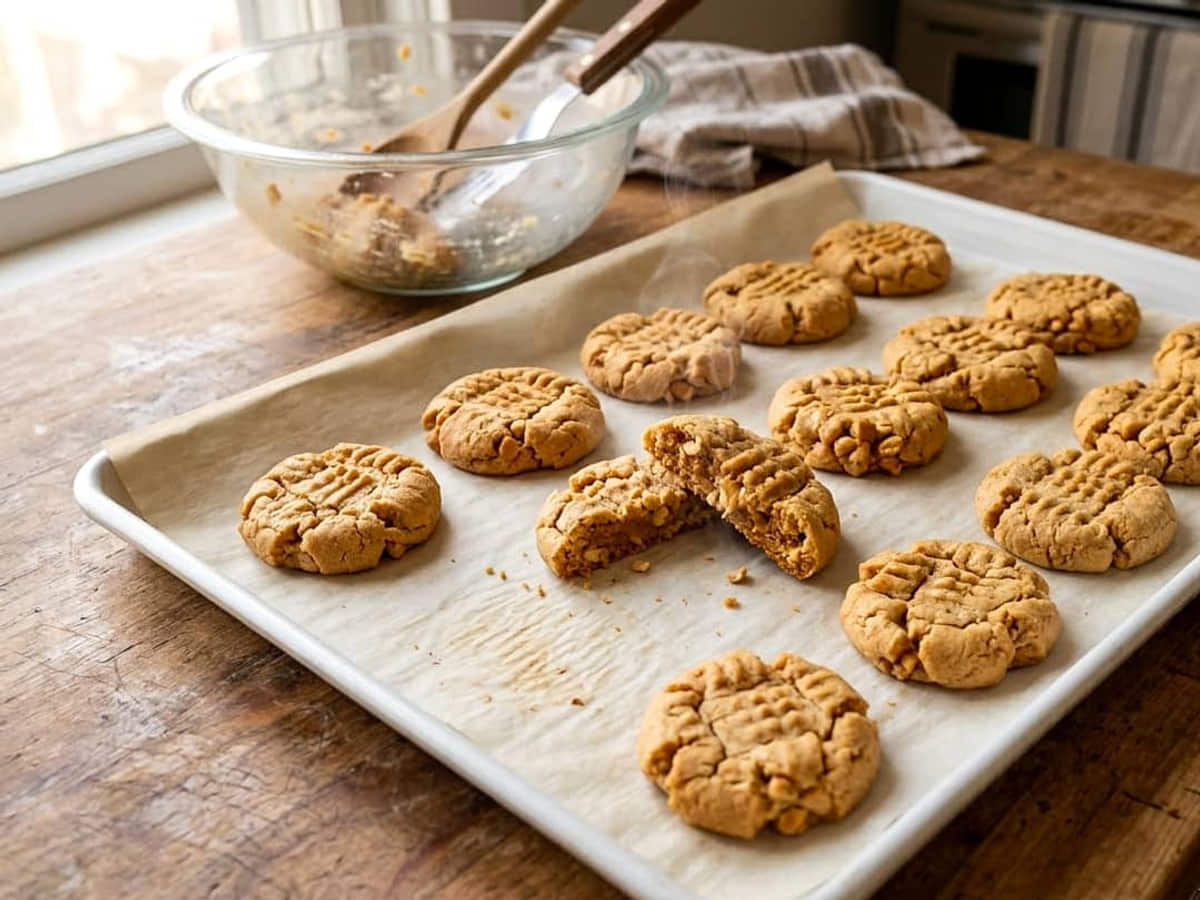
Chewy Peanut Butter Cookies
Rolling warm peanut butter cookies dough straight into balls usually guarantees a puddle on your baking sheet. That high level of rich nut butter demands a firm hand before baking.
I always watch the edge of the dough roll inside the parchment paper to judge when the fat has set completely. Chilling the dough solid lets every round hold its clean shape in the heat.
Pressing a sharp chef knife straight down into the cold log gives you clean slices that stay thick. When the edges set pale gold and the centers stay soft, the tray is ready.
Prep: 20 minutes · Cook: unlisted by source · Total: about 2 hours (with chilling) · Serves: 16
How do you keep peanut butter cookies from spreading flat? Roll the mixed dough tightly in parchment paper and chill it thoroughly until firm before slicing.
Chilling solidifies the softened butter and nut oils so the dough spreads slowly in the oven. Slicing the chilled log into even rounds keeps the centers thick and soft while the edges crisp up.
Why it works
Balancing equal amounts of white caster sugar and light brown sugar provides crisp outer rims while keeping the interior crumb moist and chewy.
Paul Hollywood rolls the dough into parchment paper and chills it, which stabilizes the 275 g of smooth peanut butter so the cookies do not melt into puddles.
Folding in 50 g of crushed salted roasted peanuts cuts through the rich dough and adds a distinct textural contrast against the soft crumb.
Paul Hollywood gives 170°C, or 340°F, for baking these cookies, but his method leaves out the exact baking minutes and chilling time. In my own kitchen, I chill the dough log until it feels completely rigid to the touch, and I pull the baking sheet the moment the edges turn light golden brown while the centers still look pale.
Why you’ll love this
Slice-and-bake convenience lets you keep chilled dough ready in the refrigerator for quick family treats.
Double peanut power from rich smooth spread and crunchy salted nuts delivers bold flavor in every bite.
Simple pantry staples come together in one mixing bowl without any fussy cookie cutters.
Holds a thick, sturdy shape that packs neatly into school lunchboxes or cookie jars.
Ingredients
160 g softened butter
135 g caster sugar
135 g light brown sugar
275 g smooth peanut butter
2 medium eggs
250 g all-purpose flour
1 tsp baking powder
50 g salted roasted peanuts, roughly crushed
Ingredient notes The choice of nut butter makes or breaks the structure of this dough. Paul Hollywood calls for 275 g of standard smooth peanut butter, which contains stabilized oils that cream smoothly with the sugar.
Natural style nut butters with a layer of oil floating on top will separate during baking and leave you with greasy, fragile rounds.
Keep your unsalted butter properly softened at room temperature before beating it with the sugars. It should yield easily to a light finger press without looking shiny or melted.
If the butter is cold, it will leave dense streaks in the dough instead of blending evenly with the peanut butter.
Caster sugar dissolves readily into the creamed fats to produce delicate, crisp edges. Light brown sugar contributes molasses moisture that keeps the middle tender for days.
The 50 g of crushed salted peanuts should be chopped coarsely, leaving distinct pieces that provide a welcome crunch against the tender flour base.
Instructions
Cream the fats and sugars. Beat 160 g softened butter, 135 g caster sugar, and 135 g light brown sugar together in a large bowl until the mixture looks pale and fluffy, then beat in 275 g smooth peanut butter until smooth.
Incorporate the eggs. Add the 2 medium eggs one at a time, beating thoroughly after each addition until the batter is glossy and fully combined with no liquid separating around the sides.
Mix the dry ingredients. Sift in 250 g all-purpose flour and 1 tsp baking powder, then fold in 50 g roughly crushed salted roasted peanuts with a sturdy spatula until a thick dough forms and no dry streaks remain.
Roll into a log. Turn the dough out onto a sheet of parchment paper, shaping it with your hands into a neat cylinder, then roll the paper tightly around it and twist the ends closed until firm.
Chill until solid. Place the wrapped dough log into the refrigerator and chill it thoroughly.
Paul Hollywood does not state an exact chilling time, so I chill the log until it feels completely hard and does not dent when pressed.
Slice into portions. Heat your oven to 170°C, or 340°F, unwrap the cold cylinder, and use a sharp knife to cut 16 slices, arranging the rounds across a parchment-lined baking sheet with space between them.
Bake to a light finish. Slide the tray into the oven.
The source does not list a baking time, so I watch the oven and pull the tray when the rims look set and pale golden while the centers remain soft.
Tips
Use a sharp, non-serrated chef knife to slice the chilled dough log cleanly so the rounds stay circular and do not squash flat on the cutting board.
If your kitchen runs warm, place the sliced dough rounds back into the refrigerator for ten minutes while the oven preheats to ensure they hold their height.
Don’t skip the salted peanuts in the dough, because that small measure of salt cuts the heavy sweetness of the brown sugar.
Let the baked rounds rest on the hot baking sheet for ten full minutes before moving them, because the warm centers are delicate and can break apart if lifted immediately.
Storage Keep your baked cookies in an airtight container or a cookie jar at room temperature. They stay tender and moist for up to five days thanks to the brown sugar and rich peanut butter base.
Placing a small square of parchment paper between stacked layers keeps the cookies from sticking together.
The rolled dough log freezes exceptionally well for quick baking later. Wrap the parchment cylinder in a double layer of plastic wrap and store it in the freezer for up to three months.
When you want freshly baked cookies, slice the frozen log directly on the cutting board and add a couple of minutes to your oven time.
What to serve with
A cold glass of whole milk provides the classic creamy balance to the rich, salty-sweet peanut dough.
A hot cup of dark roast black coffee cuts neatly through the rich butter and toasted nut oils.
A scoop of creamy vanilla bean ice cream turns two warm cookies into an easy weeknight dessert sandwich.
Sliced crisp red apples alongside the cookies offer a fresh, juicy contrast on an afternoon snack plate.
Equipment
A large mixing bowl with plenty of room to cream the butter, sugars, and peanut butter without splashing over the sides.
A sturdy rubber spatula that can easily fold the heavy flour and crushed peanuts into the thick batter.
A sharp chef knife with a thin blade to cut clean, even slices through the chilled dough log without crumbling the edges.
Heavy-gauge aluminum baking sheets that distribute the heat evenly across the bottom of each cookie.
FAQ
Can I use crunchy peanut butter instead of smooth? You can swap in crunchy spread, but it changes the density of the dough slightly.
The 50 g of roughly crushed salted peanuts already adds plenty of texture, so smooth peanut butter ensures the base stays uniform and tender.
Why did my cookies lose their round shape while slicing? If the dough log is not chilled long enough, the pressure of the knife will flatten the bottom of the cylinder into an oval.
Chill the roll until it is firm to the touch, and give the log a quarter turn after every few slices to keep the shape even.
Can I bake these cookies without chilling the dough first? Baking the dough warm causes the high volume of butter and peanut oils to melt immediately, spreading the cookies into thin, greasy disks.
Rolling and chilling the dough is essential for getting thick, chewy centers and distinct edges.
More Recipes You’ll Like
- Bubbling Blackberry Cobbler
- Bubbling Blueberry Cobbler
- Chewy Snickerdoodles
- Classic Apple Crisp
- Classic Apple Pie
- Classic Blueberry Cheesecake (Baked)
- Classic Carrot Cake with Cream Cheese Frosting
- Classic Chocolate Cake
- Classic French Apple Cake
- Classic Lemon Bars
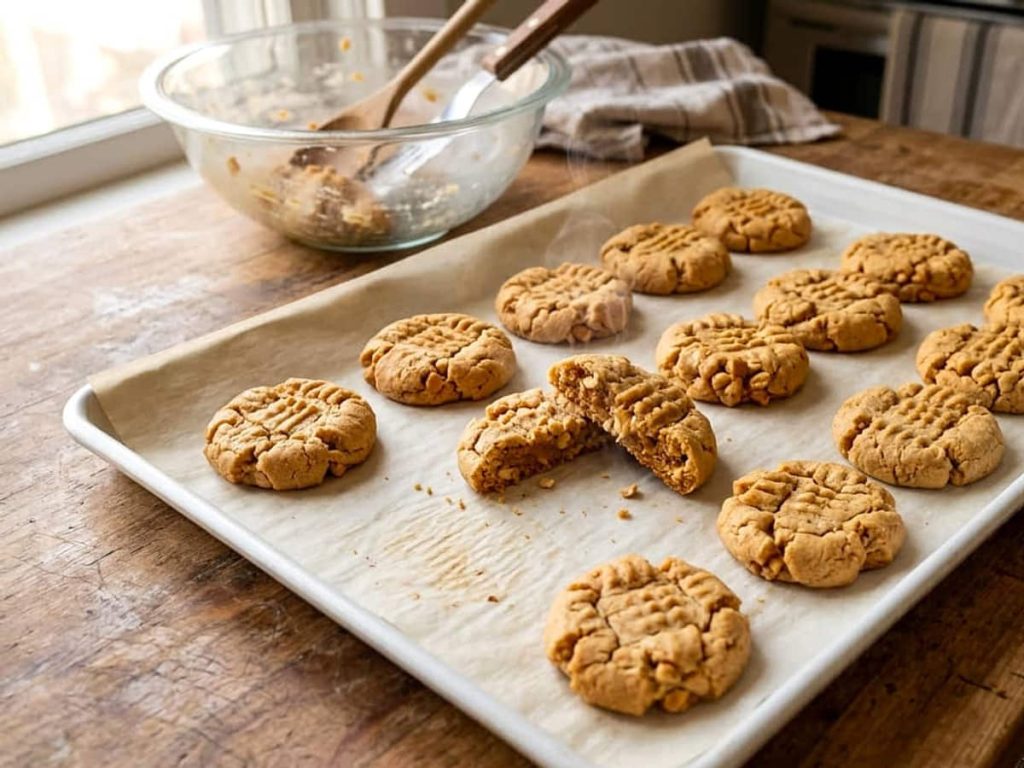
Chewy Peanut Butter Cookies
Course: DessertCuisine: American16
servings


