Tender Filipino Pork Adobo
A third of a cup of soy sauce and a third of a cup of white vinegar, poured into the same pan, make the whole sauce for this Filipino pork adobo. Garlic, one bay leaf, and black pepper do the rest.
The pork browns first in a little oil, then simmers under a lid for about 45 minutes. I check it with a fork, not the clock.
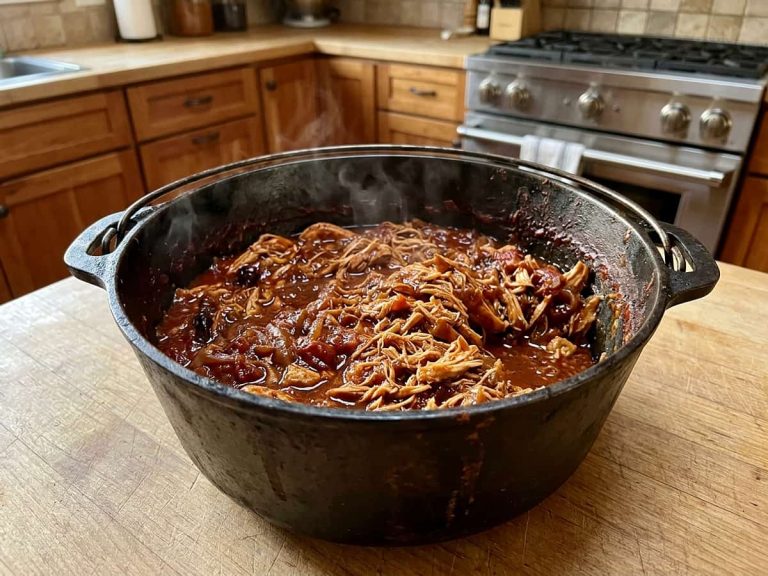
What I want is pork that gives way the moment the fork goes in, sitting in a dark, glossy sauce that tastes salty and sour at once. A spoonful of honey stirred in at the end rounds off the sharp edge.
Then it goes over a bowl of hot white rice. That’s where the sauce ends up anyway.
How long do you simmer Filipino pork adobo?
About 45 minutes, covered, after the sauce comes to a boil and the heat drops. Salu Salo Recipes simmers its pork adobo that long, until the meat is fork tender. Foxy Folksy goes closer to an hour. If the pan looks dry along the way, add water 1/2 cup at a time.
What Makes It Work
- Browning the pork before any liquid goes in gives the meat a deeper, roasted flavor, and the browned bits on the pan dissolve into the sauce once the soy and vinegar hit it.
- A covered simmer keeps the 1 cup of water from cooking off too fast, so the pork braises gently until a fork slides through it.
- Equal amounts of soy sauce and vinegar set salty against sour. The honey or brown sugar stirred in last softens the vinegar’s bite without making the sauce sweet.
I lift the lid once around the halfway mark to look at the liquid. If it has dropped well below the pork, half a cup of water goes in.
Why This One’s Worth Making
- One pan carries the whole dish, from browning to braising.
- The sauce comes from bottles already in most pantries: soy sauce and white vinegar.
- Once the lid goes on, the 45-minute simmer needs almost nothing from you.
- Leftovers keep well, and the pork freezes for later.
The Ingredient List
- 2 tbsp vegetable oil
- 2 lb pork shoulder or pork belly, cut into bite-size pieces
- 3 cloves garlic, chopped
- 1/3 cup soy sauce
- 1/3 cup white vinegar
- 1 bay leaf
- 1/2 tsp freshly ground black pepper
- 1 cup water, plus more 1/2 cup at a time as needed
- 1 tbsp honey or brown sugar
- Steamed white rice, for serving
Picking the Right Ingredients
Pork shoulder and pork belly both work here, and Salu Salo Recipes allows either one. Belly gives a richer, fattier sauce.
Shoulder gives firmer, meatier pieces, and that’s the one I reach for when I want the sauce a little lighter on the rice. Plain white vinegar is what this version uses.
It smells sharp straight from the bottle, and the long covered simmer folds it into the soy until the sauce tastes round instead of harsh. Use regular soy sauce, and hold off on any extra salt.
The sauce reduces as it simmers, so taste it at the end before you think about adding anything. One bay leaf is enough to scent the whole pan.
Fish it out before serving.

How I Make It
- Heat the oil. Warm the vegetable oil in a large skillet or wide pan with a lid over medium-high heat, until the oil shimmers and a piece of pork sizzles hard the moment it touches the pan.
- Brown the pork. Add the pork in a single layer, working in batches if the pan is crowded, and cook, turning, until the pieces are golden brown on the outside. Crowded pork steams and turns gray instead of browning, so give it room.
- Add the garlic. Return all the pork to the pan, stir in the chopped garlic, and cook for 1 minute, until it smells toasty and turns pale gold. Keep it moving so it doesn’t darken against the hot pan.
- Pour in the sauce. Add the soy sauce, white vinegar, bay leaf, black pepper, and 1 cup of water. Stir and scrape the browned bits from the bottom of the pan until the liquid looks dark and the bottom feels clean under the spoon.
- Bring it to a boil. Turn up the heat until the liquid boils across the whole pan. Then lower the heat until it settles into a gentle simmer, with small bubbles rising around the pieces of pork.
- Simmer covered. Cover the pan and simmer for about 45 minutes, until a fork slides into the thickest piece of pork with no resistance. Check the liquid once or twice, and add water 1/2 cup at a time if it drops low enough to catch on the bottom.
- Sweeten and season. Stir in the honey or brown sugar until it melts into the sauce, then taste and adjust. Remove the bay leaf. The Filipino pork adobo is ready when the sauce looks glossy and the pork pulls apart at the edges.
- Serve over rice. Spoon the pork and plenty of sauce over hot steamed white rice. Let the dark sauce run down into the rice at the edges of the bowl, since that’s where most of the flavor ends up.

Tips for Success
- Pat the pork dry before browning. Wet pieces spit in the oil and won’t take on much color.
- Don’t rush the browning by piling all 2 pounds in at once. Two batches take longer, but that color carries straight into the sauce.
- Foxy Folksy cooks its adobo twice, simmering the pork first, then lifting it out to fry with browned garlic before the sauce goes back in. It’s a different method with its own timing, so I don’t mix the two in one pan.
- I’ll admit I don’t measure the pepper closely. Half a teaspoon is the mark, and I grind until it looks about right.
- Pork braised until fork tender is cooked well through. Leftovers still shouldn’t sit at room temperature for more than 2 hours.
How to Store It
Salu Salo Recipes keeps pork adobo in the fridge for up to 4 days and in the freezer for up to 3 months. The other source gives no storage time, so those numbers come from one cook.
Store the pork in its sauce in an airtight container. The sauce keeps the meat from drying out, and it’s what you’ll want on the rice later.
Thaw frozen adobo in the fridge, then reheat it in a covered pan over low heat until the sauce bubbles and the pork is hot all the way through. Add a splash of water if the sauce has tightened up.
Cook the rice fresh.
What Goes With Filipino Pork Adobo
- Steamed white rice, the pairing this dish expects, to catch every spoonful of sauce.
- Sliced tomatoes and cucumbers, cool and crisp next to the salty sauce.
- Sautéed green beans or bok choy, for something green on the plate.
- A fried egg on top of the rice, with a runny yolk that mixes into the sauce.
What I Use to Make This
- A large skillet or wide pan with a tight-fitting lid, wide enough to brown the pork in a single layer.
- Tongs for turning each piece of pork as it browns.
- A wooden spoon with a flat edge for scraping up the browned bits.
- A dinner fork for the tenderness test at the end.
Questions I Get About Filipino Pork Adobo
What cut of pork is used for adobo? Pork shoulder or pork belly, cut into bite-size pieces. Belly makes a richer sauce, and shoulder gives firmer pieces.
Can I use a different vinegar? This recipe is written for white vinegar, which sits in nearly every American pantry. I’d keep to it, since the balance with the soy sauce is built around it.
Why does my adobo taste too sour? Stir in the full tablespoon of honey or brown sugar and taste again. A splash of water can also loosen a sauce that has reduced too far.
How do I know pork adobo is done? A fork slides into the thickest piece with no resistance. That usually takes about 45 minutes of covered simmering.
Keep Cooking
- Arugula Steak Salad (with Lemon Balsamic Dressing)
- Baked Cajun Chicken Drumsticks
- Beef Enchiladas with Chili Gravy
- Buttery Shrimp Scampi
- Cheesy Hobo Casserole
- Cheesy Taco Casserole
- Classic Baked Ziti
- Classic Beef Chili
- Classic Beef Stew
- Classic Cobb Salad

Tender Filipino Pork Adobo
Course: DinnerCuisine: American5
servings10
minutes1
hourIngredients
2 tbsp vegetable oil
2 lb pork shoulder or pork belly, cut into bite-size pieces
3 cloves garlic, chopped
1/3 cup soy sauce
1/3 cup white vinegar
1 bay leaf
1/2 tsp freshly ground black pepper
1 cup water, plus more 1/2 cup at a time as needed
1 tbsp honey or brown sugar
Steamed white rice, for serving
Directions
- Heat the oil. Warm the vegetable oil in a large skillet or wide pan with a lid over medium-high heat, until the oil shimmers and a piece of pork sizzles hard the moment it touches the pan.
- Brown the pork. Add the pork in a single layer, working in batches if the pan is crowded, and cook, turning, until the pieces are golden brown on the outside. Crowded pork steams and turns gray instead of browning, so give it room.
- Add the garlic. Return all the pork to the pan, stir in the chopped garlic, and cook for 1 minute, until it smells toasty and turns pale gold. Keep it moving so it doesn’t darken against the hot pan.
- Pour in the sauce. Add the soy sauce, white vinegar, bay leaf, black pepper, and 1 cup of water. Stir and scrape the browned bits from the bottom of the pan until the liquid looks dark and the bottom feels clean under the spoon.
- Bring it to a boil. Turn up the heat until the liquid boils across the whole pan. Then lower the heat until it settles into a gentle simmer, with small bubbles rising around the pieces of pork.
- Simmer covered. Cover the pan and simmer for about 45 minutes, until a fork slides into the thickest piece of pork with no resistance. Check the liquid once or twice, and add water 1/2 cup at a time if it drops low enough to catch on the bottom.
- Sweeten and season. Stir in the honey or brown sugar until it melts into the sauce, then taste and adjust. Remove the bay leaf. The Filipino pork adobo is ready when the sauce looks glossy and the pork pulls apart at the edges.
- Serve over rice. Spoon the pork and plenty of sauce over hot steamed white rice. Let the dark sauce run down into the rice at the edges of the bowl, since that’s where most of the flavor ends up.