
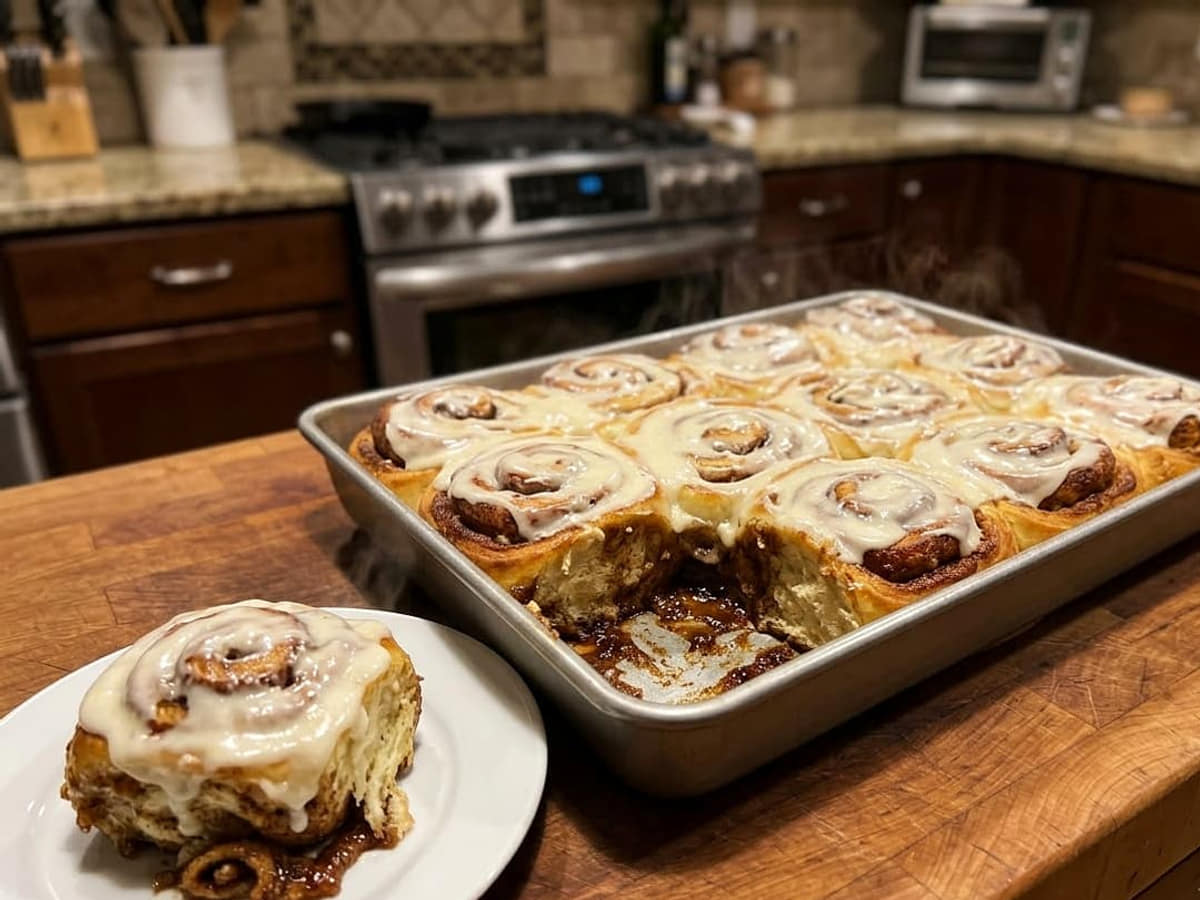
Gooey Homemade Cinnamon Rolls
The 9×13 pan was waiting on the counter when I started these Homemade Cinnamon Rolls on a slow Saturday morning. By the time the kids wandered in, the dough had puffed over the pan’s edges and the cinnamon smell had reached the hallway.
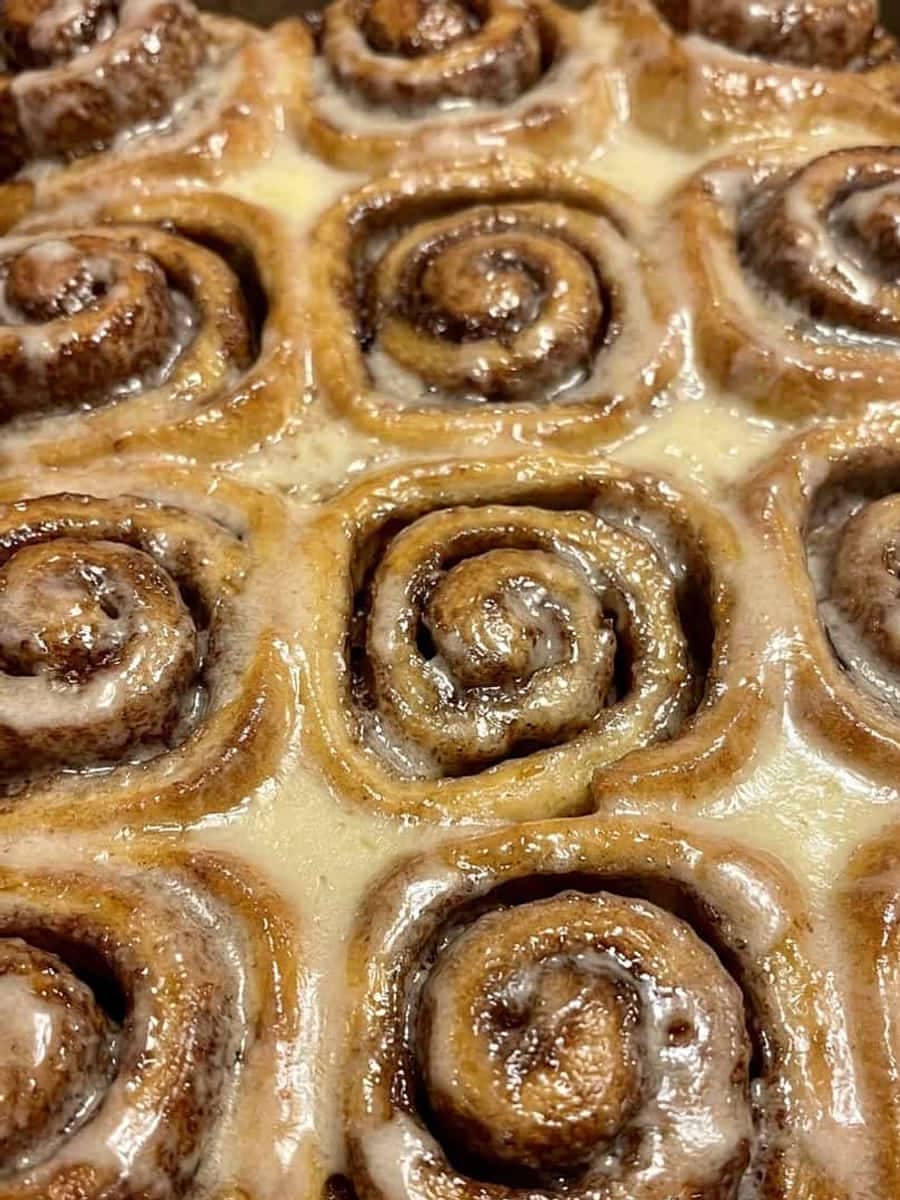
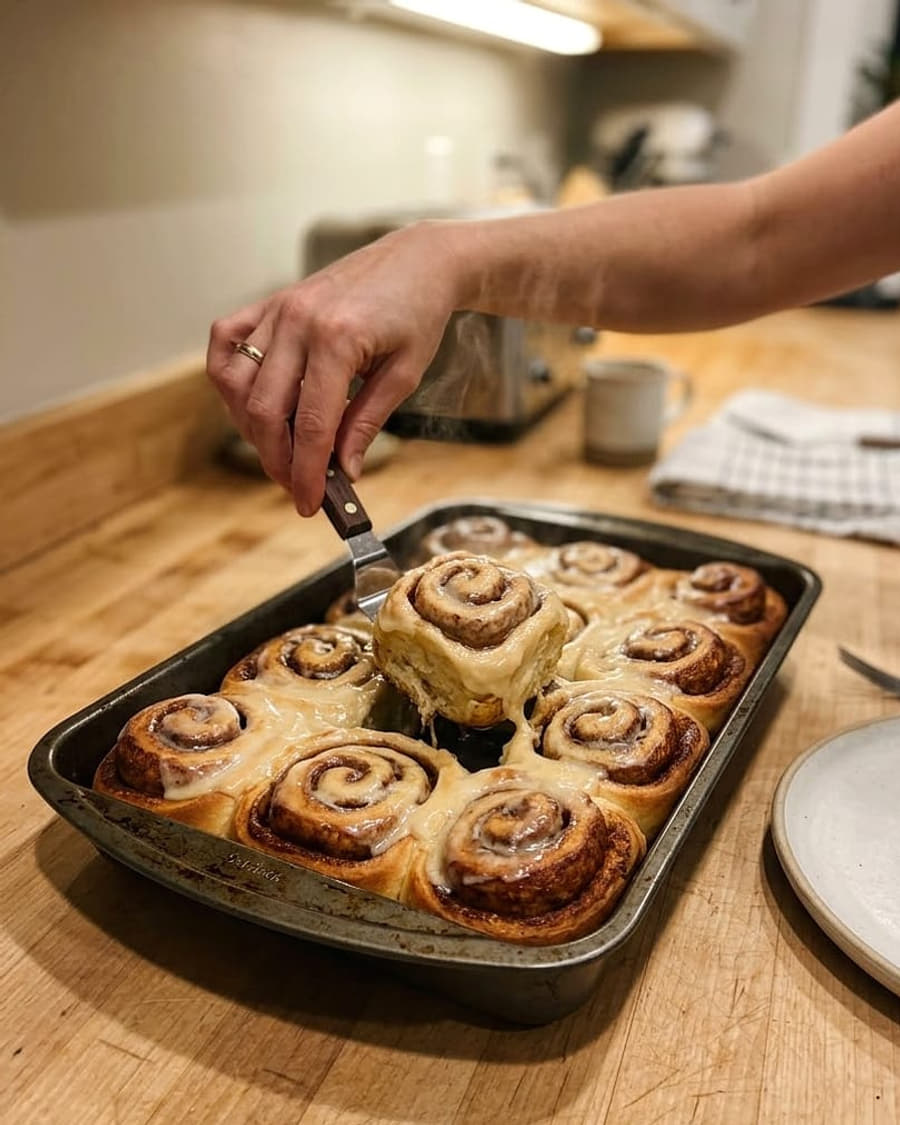
I always pull apart the middle roll first while it’s still warm. That center roll shows you everything, tender spirals, a sticky brown sugar layer, and icing settling into the cracks.
Brown sugar is my firm choice here because it melts into the filling instead of leaving a dry, sandy layer. I used to rush the icing onto a hot pan, and it disappeared straight into the rolls.
Give the pan a few minutes to cool. You’ll get soft rolls with icing that stays creamy on top.
Prep: 30 minutes · Cook: 20 to 25 minutes · Total: about 2 hours 15 minutes · Serves: 15
How do you keep Homemade Cinnamon Rolls soft and gooey?
Keep the dough slightly tacky instead of adding flour until it feels dry, then let it rise until doubled. Use packed brown sugar for a filling that melts into the spirals. Bake only until golden, and spread cream cheese icing over warm rolls after the pan has cooled briefly.
What Makes It Work
- Proofing active dry yeast in warm water before mixing gives it a chance to foam, so you know the dough has the lift it needs before using the remaining ingredients.
- The flour range leaves room for changes in humidity, egg size, and how a particular bag of flour absorbs liquid, which keeps the dough soft instead of stiff.
- Brown sugar melts with the butter during baking, creating a thick cinnamon layer that stays tucked between the rolled dough.
I stop adding flour when the dough is soft and only a little sticky under my fingers. It’s tempting to keep dusting, but a dry dough makes rolls that pull apart like bread instead of squishing softly.
Why This One’s Worth Making
- A 9×13 pan makes 15 rolls, enough for a family breakfast with a few left for later.
- The cream cheese icing is thick and lightly salted, so it balances the sweet brown sugar filling.
- You can make the dough with ordinary supermarket staples and active dry yeast.
- A warm 100°F proofing spot can shorten both rises by roughly half, according to the second source recipe.
What Goes Into Cinnamon Rolls
- 1/4 cup warm water
- 2 1/4 tsp active dry yeast
- 3/4 cup whole milk
- 1/3 cup unsalted butter
- 1/3 cup granulated sugar, plus 1 tsp
- 1/2 tsp salt
- 3 3/4 to 4 1/4 cups all-purpose flour
- 2 eggs, at room temperature
- 1/2 cup unsalted butter, softened
- 1 cup packed brown sugar
- 2 tbsp ground cinnamon
- 4 oz cream cheese, softened
- 1/4 cup unsalted butter, softened
- 1 1/2 cups powdered sugar
- 1/2 tsp vanilla
- 1/8 tsp salt
Picking the Right Ingredients
Use active dry yeast, not instant yeast, since this dough begins with a short proof in warm water. The foam is your early check that the yeast is alive.
If it stays flat after 10 minutes, start again with fresh yeast before you use the rest of the ingredients.
Keep the eggs at room temperature. Both source recipes call for them that way because cold eggs lower the dough temperature and can slow the rise.
Set them out while you gather the milk, butter, and sugar.
All-purpose flour gives these Homemade Cinnamon Rolls a soft pull-apart texture. The first source uses 3 3/4 to 4 1/4 cups, while the second source gives a similarly flexible flour amount, so add only what the dough needs.
Bread flour is allowed by the second source if you prefer a slightly chewier roll.
Choose packed brown sugar for the filling. The first source uses brown sugar, while the second uses granulated sugar with more cinnamon relative to the sugar.
Brown sugar melts into a moist layer, which is the texture I want in the center spirals.
Step-by-Step Directions
- Proof the yeast. Stir the warm water, yeast, and 1 tsp sugar together in a large mixing bowl, then leave it undisturbed for 7 to 10 minutes. Continue only when a foamy cap covers the surface and the mixture smells yeasty.
- Warm the dairy. Heat the milk and 1/3 cup butter in a small saucepan over low heat until the butter melts and the mixture feels warm, not hot. Let it cool slightly until it won’t feel hot against your wrist.
- Mix the dough. Stir the warm milk mixture, remaining sugar, salt, room-temperature eggs, and 3 3/4 cups flour into the yeast mixture. Add more flour a little at a time only until a soft, slightly tacky dough forms.
- Knead until smooth. Turn the dough onto a lightly floured counter and knead until it feels elastic and springs back after a gentle press. Avoid working in extra flour unless it truly sticks to your hands and counter.
- Let dough rise. Place the dough in a lightly buttered bowl, cover it, and let it stand at room temperature until doubled, roughly 1 hour. Use a 100°F proofing spot if needed, until the dough looks puffy and nearly doubled in size.
- Roll the dough. Press the risen dough down gently and roll it into a large rectangle on a lightly floured counter. Spread the softened 1/2 cup butter evenly over the surface until no dry patches of dough remain.
- Add the filling. Mix the packed brown sugar and cinnamon, then scatter it evenly over the buttered dough. Press the filling lightly into the butter until it clings in an even layer from edge to edge.
- Shape the rolls. Roll the dough up tightly from a long side, pinch the seam closed, and cut into 15 even pieces. Arrange them cut-side up in a buttered 9×13 pan until the spirals are visible and evenly spaced.
- Rise the pan. Cover the pan and let the rolls rise until puffy and touching, about 30 to 45 minutes at room temperature. Bake in a 375°F oven for 20 to 25 minutes, until the tops are golden and the centers look set.
- Make the icing. Beat the cream cheese and 1/4 cup softened butter until smooth, then beat in the powdered sugar, vanilla, and salt. Spread it over the rolls once they are warm rather than hot, until it softens into the spirals without running away.
Tips
- Don’t force all the flour into the dough. It should feel soft and a little tacky, and I promise it becomes easier to handle after the first rise.
- Check the yeast before adding the milk, eggs, and flour. If there’s no foam after 10 minutes, it won’t raise the dough and you’ll save yourself a wasted pan.
- Cut the log with unflavored dental floss if your knife squashes the spirals. Slide it underneath, cross the ends over the top, and pull until the roll separates cleanly.
- Keep the brown sugar packed when measuring. Loose brown sugar leaves the filling thinner, and the finished layers won’t have that sticky center.
- Don’t ice the rolls straight from the oven. Letting them sit briefly means the cream cheese icing stays thick instead of turning into a puddle.
How to Store It
Keep cooled rolls in an airtight container at room temperature for up to 2 days. For a softer leftover roll, cover it loosely and warm it briefly until the center feels tender and the icing starts to soften.
Refrigerate the rolls for up to 4 days because the icing contains cream cheese. Reheat one roll at a time on a microwave-safe plate until warm through, using short bursts so the icing doesn’t melt away.
Freeze uniced rolls in a tightly wrapped pan or freezer container for up to 2 months. Thaw them overnight in the refrigerator, warm them gently, then make and spread the icing before serving for the freshest texture.
What Goes With Cinnamon Rolls
- Scrambled eggs work well beside a sweet roll because their savory flavor keeps breakfast from feeling like all sugar.
- Crisp bacon adds a salty bite and is easy to cook while the rolls finish their second rise.
- Fresh orange slices bring a bright, juicy contrast to the buttery cinnamon filling.
- A pot of coffee belongs here because its slight bitterness cuts through the cream cheese icing.
What I Use to Make This
- A 9×13 baking pan, preferably metal or glass, with enough depth for the rolls to rise without spilling over.
- A large mixing bowl, roomy enough for the dough to double without pressing against the cover.
- A rolling pin, for shaping the dough into an even rectangle that makes uniform spirals.
- A small saucepan, for warming the milk and melting the butter gently.
- A hand mixer or sturdy spoon, for getting the cream cheese icing completely smooth.
FAQ
Can I make Homemade Cinnamon Rolls the night before? Yes, shape the rolls and arrange them in the pan, then cover and refrigerate overnight. Let the pan sit at room temperature until the rolls look puffy before baking.
Why didn’t my cinnamon rolls rise? The yeast may have been old, or the water may have been too hot or too cool. Always look for foam after proofing active dry yeast before mixing the dough.
Can I use bread flour for cinnamon rolls? Yes, the second source recipe allows bread flour as an alternative. Expect rolls with a little more chew and structure than rolls made with all-purpose flour.
Why are my cinnamon rolls dry? Too much flour is usually the culprit, especially when the dough feels firm before its first rise. Bake only until the tops are golden, since extra oven time dries the centers quickly.
If You Liked This One
- Classic Blueberry Muffins
- Classic Pumpkin Bread
- Crispy Buttermilk Waffles
- Easy Banana Muffins
- Flaky Buttermilk Biscuits
- Fluffy Buttermilk Pancakes
- Fluffy Scrambled Eggs
- Southern Biscuits and Gravy
- New Orleans Beignets
- Chewy Snickerdoodles
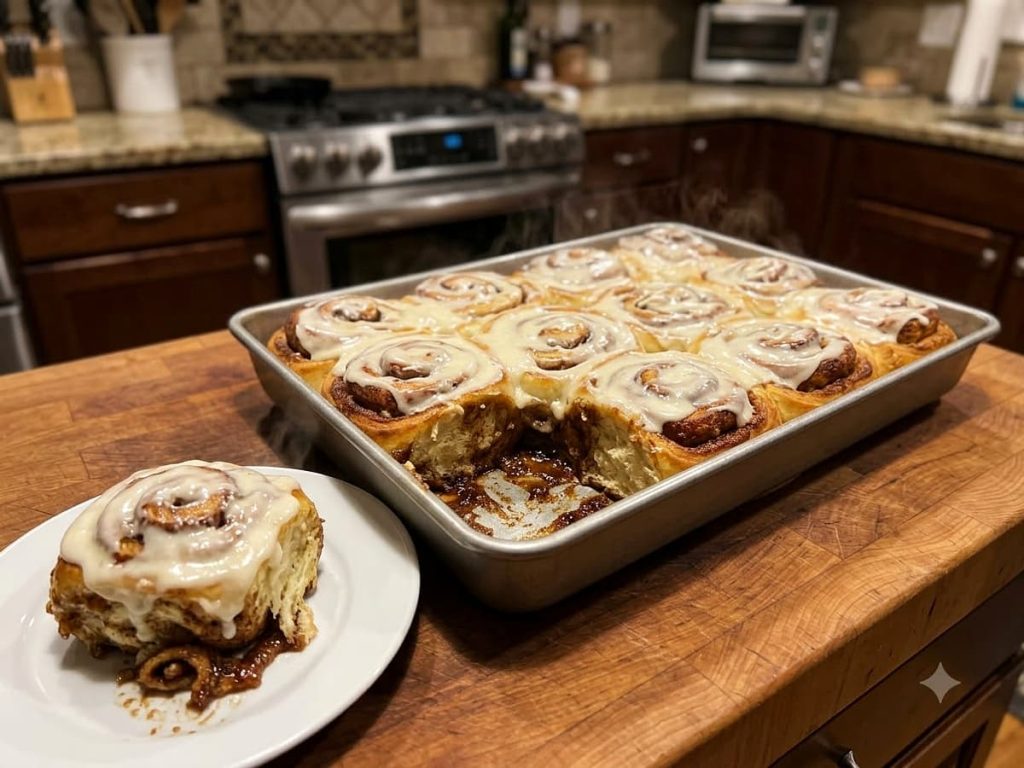
Gooey Homemade Cinnamon Rolls
Course: BreakfastCuisine: American15
servings30
minutes25
minutesIngredients
1/4 cup warm water
2 1/4 tsp active dry yeast
3/4 cup whole milk
1/3 cup unsalted butter
1/3 cup granulated sugar, plus 1 tsp
1/2 tsp salt
3 3/4 to 4 1/4 cups all-purpose flour
2 eggs, at room temperature
1/2 cup unsalted butter, softened
1 cup packed brown sugar
2 tbsp ground cinnamon
4 oz cream cheese, softened
1/4 cup unsalted butter, softened
1 1/2 cups powdered sugar
1/2 tsp vanilla
1/8 tsp salt
Directions
- Proof the yeast. Stir the warm water, yeast, and 1 tsp sugar together in a large mixing bowl, then leave it undisturbed for 7 to 10 minutes. Continue only when a foamy cap covers the surface and the mixture smells yeasty.
- Warm the dairy. Heat the milk and 1/3 cup butter in a small saucepan over low heat until the butter melts and the mixture feels warm, not hot. Let it cool slightly until it won’t feel hot against your wrist.
- Mix the dough. Stir the warm milk mixture, remaining sugar, salt, room-temperature eggs, and 3 3/4 cups flour into the yeast mixture. Add more flour a little at a time only until a soft, slightly tacky dough forms.
- Knead until smooth. Turn the dough onto a lightly floured counter and knead until it feels elastic and springs back after a gentle press. Avoid working in extra flour unless it truly sticks to your hands and counter.
- Let dough rise. Place the dough in a lightly buttered bowl, cover it, and let it stand at room temperature until doubled, roughly 1 hour. Use a 100°F proofing spot if needed, until the dough looks puffy and nearly doubled in size.
- Roll the dough. Press the risen dough down gently and roll it into a large rectangle on a lightly floured counter. Spread the softened 1/2 cup butter evenly over the surface until no dry patches of dough remain.
- Add the filling. Mix the packed brown sugar and cinnamon, then scatter it evenly over the buttered dough. Press the filling lightly into the butter until it clings in an even layer from edge to edge.
- Shape the rolls. Roll the dough up tightly from a long side, pinch the seam closed, and cut into 15 even pieces. Arrange them cut-side up in a buttered 9×13 pan until the spirals are visible and evenly spaced.
- Rise the pan. Cover the pan and let the rolls rise until puffy and touching, about 30 to 45 minutes at room temperature. Bake in a 375°F oven for 20 to 25 minutes, until the tops are golden and the centers look set.
- Make the icing. Beat the cream cheese and 1/4 cup softened butter until smooth, then beat in the powdered sugar, vanilla, and salt. Spread it over the rolls once they are warm rather than hot, until it softens into the spirals without running away.


