Easy Weeknight Chickpea Curry
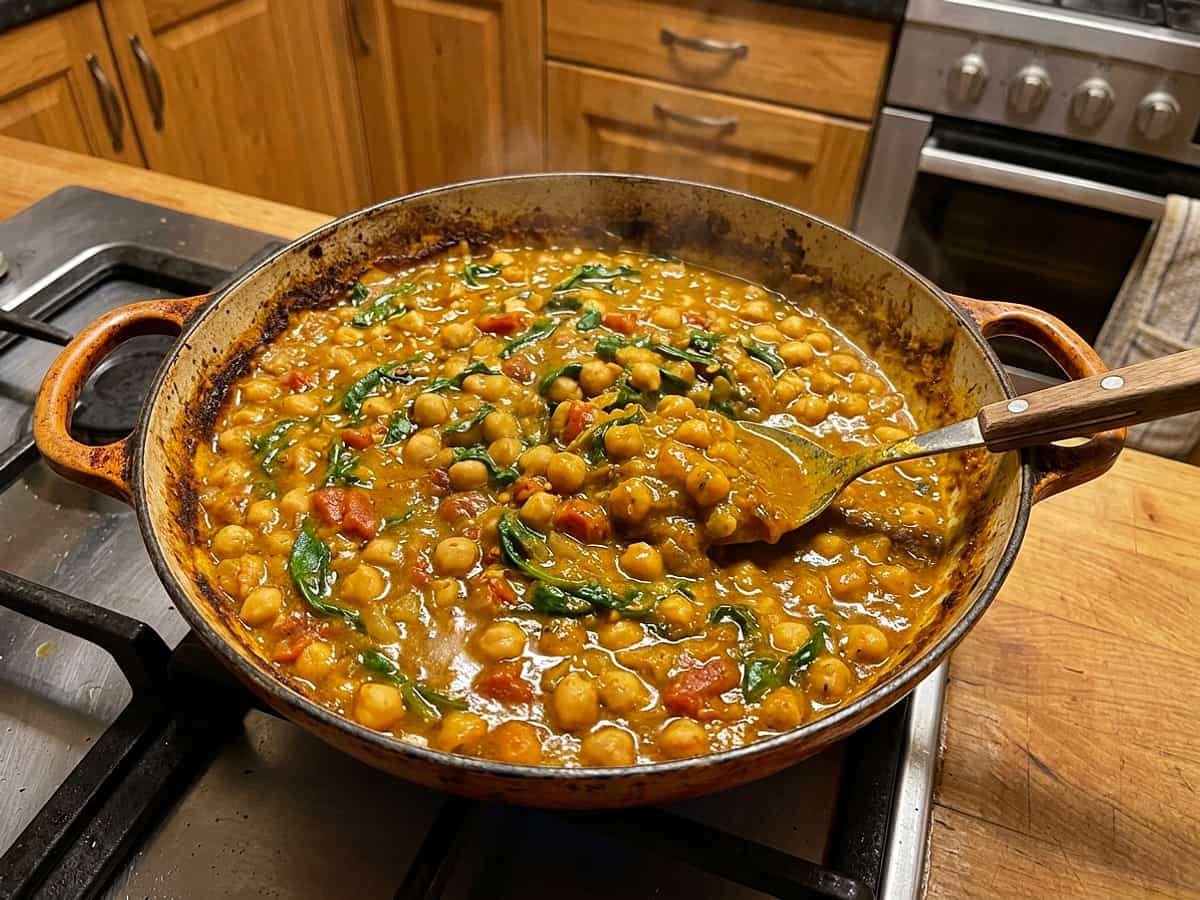
The stove burner ticked four times before finally catching a spark this evening. I needed something fast and filling, so a quick chickpea curry was the obvious answer.
We lean on pantry staples heavily by the time Thursday rolls around. Canned beans and a can of coconut milk save dinner when I haven’t been to the grocery store all week.
Digging through the cupboards usually turns up exactly what I need.
I still don’t measure the black pepper perfectly, and I’m not going to start. A heavy hand works completely fine here.
The fresh acid added right at the end wakes the whole pan up. That’s the single step you shouldn’t skip.
Prep: 15 minutes · Cook: 25 minutes · Total: about 40 minutes · Serves: 4
How do you keep chickpea curry from turning out watery? The trick is letting the tomatoes break down completely before you pour in the coconut milk.
Raw tomatoes release water into the sauce as they cook. Cooking them until soft first gives you a thick base.
Simmering everything together at the end reduces the liquid further.
Grab These Ingredients
- 2 tablespoons olive or vegetable oil
- 1 onion, chopped
- 4 cloves garlic, minced
- 1 tablespoon grated ginger
- 1 teaspoon cumin
- 1 teaspoon curry powder
- 2 teaspoons garam masala
- 1/2 teaspoon black pepper
- Salt to taste
- 4 small tomatoes, chopped
- 1 can chickpeas (300 g drained)
- 1 can (400 ml) coconut milk
- 2 tablespoons lime or lemon juice
Ingredient Notes and Swaps
The backbone of this recipe relies heavily on canned chickpeas. The Cooking Foodie builds their version specifically around a drained can to keep the cooking time under thirty minutes.
Dried beans require overnight soaking and a long boil on the stove. You need the tender texture of the canned beans to make this quick method work.
You want small fresh tomatoes chopped into even pieces so they break down easily in the hot oil. If you only have canned tomatoes on hand, they tend to run a bit sharper.
Backyard Chef recommends adding a teaspoon of sugar and a tablespoon of tomato paste to balance them. You just stir those in when you add the tomatoes.
Full-fat canned coconut milk gives the richest result and a thick sauce. The lime or lemon juice acts as a finishing touch to lift the heavy flavors of the coconut.
It goes in right before serving so the residual heat does not destroy the fresh citrus bite.
Making Chickpea Curry, Step by Step
- Sauté the aromatics. Heat the olive or vegetable oil in a large sauté pan or shallow pot. Soften the chopped onion in the oil for about 5 minutes, then stir in the minced garlic and grated ginger. Cook until fragrant, about 2 to 3 minutes.
- Bloom the spices. Sprinkle the cumin, curry powder, garam masala, and black pepper directly into the hot fat. Stir constantly for 1 minute before anything wet goes in. Ground spices scorch fast, so watch for a toasted aroma and a darkened color.
- Cook the tomatoes. Add the chopped small tomatoes to the spiced onion mixture. Cook them down until they are completely soft and broken apart, about 5 to 10 minutes. Tomatoes added late stay sharp and the sauce never comes together properly.
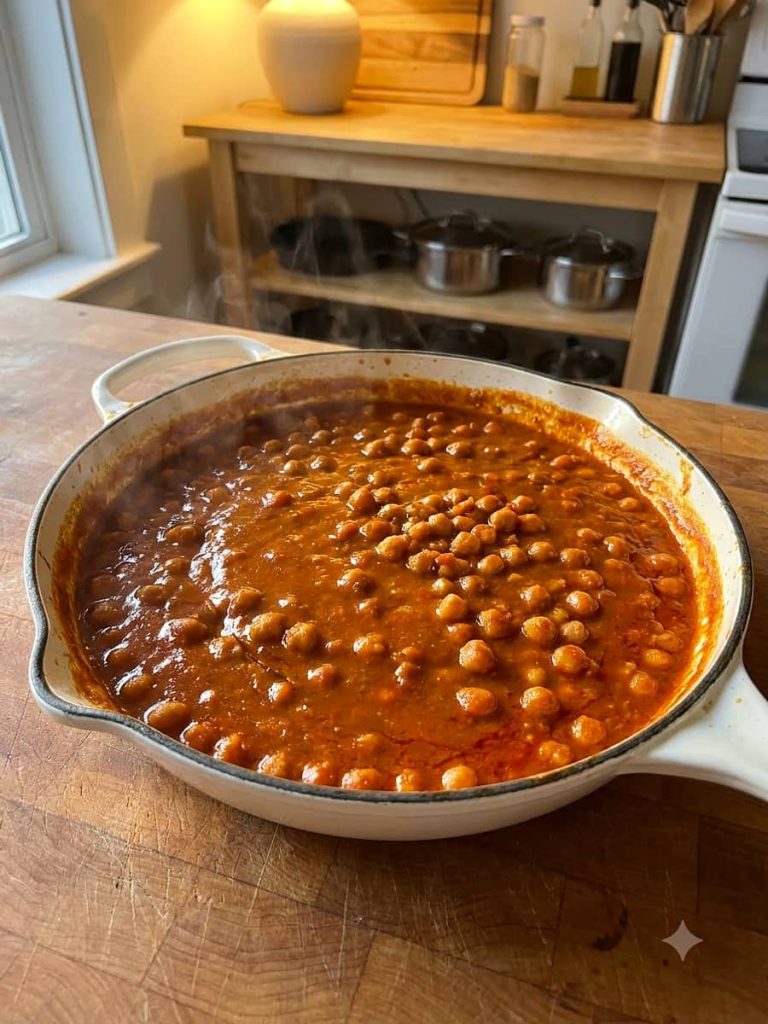
- Simmer the curry. Pour in the drained canned chickpeas and the can of coconut milk. Bring the pan to a boil, then immediately drop the heat to medium-low. Simmer until the sauce is slightly thickened, 5 to 10 minutes. Coconut milk splits at a hard boil.
- Season and finish. Turn off the heat completely. Stir in the lime or lemon juice off the heat so the acid retains its lift. Taste the sauce, then season with salt to your liking. The Cooking Foodie notes to check salt only after the sauce reduces.
Storing and Reheating
Neither source gives storage or freezing guidance, so I follow my usual routine for coconut-based sauces. I let the pan cool completely on the stove before packing it up.
Then I transfer everything to an airtight glass container for the fridge. It keeps well for up to four days.
Reheat portions gently on the stove over low heat. Boiling leftover coconut milk makes the fat separate from the liquid, leaving an oily layer on top.
A splash of water helps loosen the sauce if it thickened too much overnight in the cold fridge. I do not recommend freezing this dish.
Thawed coconut milk often turns grainy and the chickpeas lose their firm texture in the freezer. Making a fresh batch yields a much better dinner.
If You Liked This One
- Beef Enchiladas with Chili Gravy
- Classic Baked Ziti
- Classic Beef Chili
- Classic Beef Stew
- Classic Cottage Pie
- Classic Ground Beef Tacos
- Classic Meatloaf with Brown Sugar Glaze
- Classic Pot Roast
- Classic Spaghetti and Meatballs
- Classic Stuffed Peppers
Easy Weeknight Chickpea Curry
Course: DinnerCuisine: American4
servings15
minutes25
minutesIngredients
2 tablespoons olive or vegetable oil
1 onion, chopped
4 cloves garlic, minced
1 tablespoon grated ginger
1 teaspoon cumin
1 teaspoon curry powder
2 teaspoons garam masala
1/2 teaspoon black pepper
Salt to taste
4 small tomatoes, chopped
1 can chickpeas (300 g drained)
1 can (400 ml) coconut milk
2 tablespoons lime or lemon juice
Directions
- Sauté the aromatics. Heat the olive or vegetable oil in a large sauté pan or shallow pot. Soften the chopped onion in the oil for about 5 minutes, then stir in the minced garlic and grated ginger. Cook until fragrant, about 2 to 3 minutes.
- Bloom the spices. Sprinkle the cumin, curry powder, garam masala, and black pepper directly into the hot fat. Stir constantly for 1 minute before anything wet goes in. Ground spices scorch fast, so watch for a toasted aroma and a darkened color.
- Cook the tomatoes. Add the chopped small tomatoes to the spiced onion mixture. Cook them down until they are completely soft and broken apart, about 5 to 10 minutes. Tomatoes added late stay sharp and the sauce never comes together properly.
- Simmer the curry. Pour in the drained canned chickpeas and the can of coconut milk. Bring the pan to a boil, then immediately drop the heat to medium-low. Simmer until the sauce is slightly thickened, 5 to 10 minutes. Coconut milk splits at a hard boil.
- Season and finish. Turn off the heat completely. Stir in the lime or lemon juice off the heat so the acid retains its lift. Taste the sauce, then season with salt to your liking. The Cooking Foodie notes to check salt only after the sauce reduces.