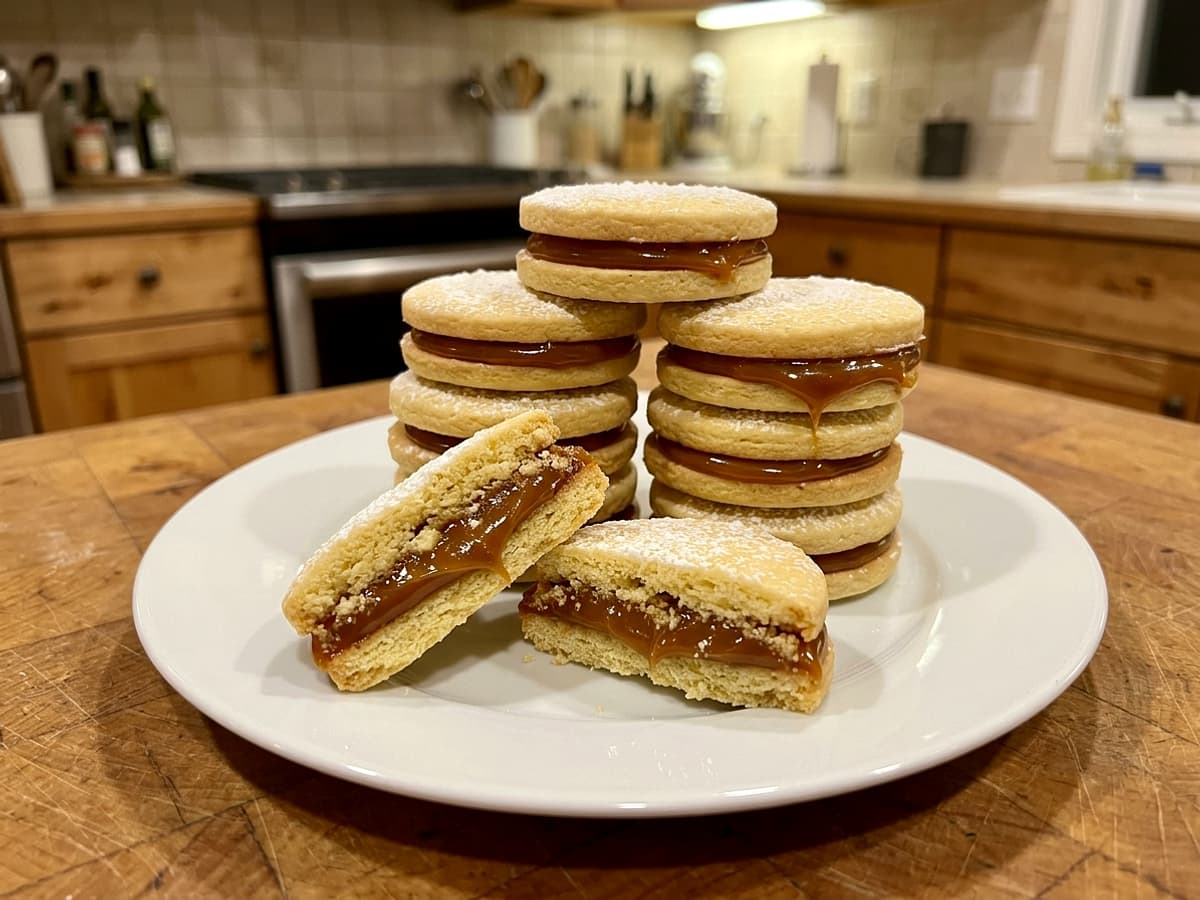
Tender Classic Alfajores
The jar of dulce de leche on the top shelf finally caught my eye this morning. I bought it weeks ago with grand plans, and it has just been sitting there judging me.
Making alfajores was the perfect excuse to crack it open. These tender sandwich cookies are a staple in South America, and they melt right in your mouth.
I still have a hard time rolling the dough out perfectly even, and I don’t stress over it. My kids certainly do not care if they are perfectly round.
Prep: 30 minutes · Cook: 12 minutes · Total: 1 hour 30 minutes (with cooling) · Serves: 12
Why do alfajores crumble so easily? They get their signature tender texture from a high ratio of cornstarch to flour in the dough.
You have to handle them gently after baking because the cornstarch makes them extremely delicate. Let them cool completely on the baking sheet before moving them so they do not break apart.
Ingredients for Alfajores
- 200 to 225 g cornstarch (about 1 1/2 to 1 3/4 cups)
- 130 to 165 g all-purpose flour (about 1 to 1 1/4 cups)
- 150 to 175 g unsalted butter, softened and cubed (about 10 to 12 tbsp)
- 75 g granulated sugar (about 1/3 cup) OR 120 g powdered sugar (about 1 cup)
- 1/2 to 1 tsp baking powder
- 1/4 to 1/2 tsp baking soda
- 1 tsp vanilla extract
- 1 tbsp lemon zest (optional)
- 1 large egg
- 1 cup dulce de leche
Ingredient Notes and Swaps
The recipes I worked from did not specify whether to use powdered sugar or granulated sugar. The two classic sources actually differed on this completely.
I recommend the powdered sugar if you want an ultra-smooth dough, but granulated works fine if that is all you have in the cupboard.
Neither of the sources I checked mentioned eggs, which is common in shortbread but tricky for a dough this crumbly. I add one large egg to my own recipe to help bind the flour and cornstarch together.
It gives the dough just enough moisture to roll out without cracking into a million pieces on the counter.
You need a very thick dulce de leche so it stays put between the cookies. The canned variety from the baking aisle works perfectly, while the pourable syrup style will make a giant mess.
I estimate you will need about one cup of filling, though the original recipes did not give an exact amount.
Making Alfajores, Step by Step
- Cream butter and sugar. Place the softened cubed butter and your choice of sugar in a large bowl. Beat them together on medium speed, scraping down the sides of the bowl with a rubber spatula halfway through, until the butter looks pale and incredibly fluffy, about three to four minutes.
- Mix the dry ingredients. Whisk the cornstarch, all-purpose flour, baking powder, and baking soda together in a separate medium bowl. Stir them continuously until the baking powder disappears completely into the flour to ensure an even rise.
- Combine wet and dry. Add the vanilla, lemon zest if using, and the egg to the butter mixture, mixing on low speed. Gently fold in the dry ingredients just until the dough comes together in a soft ball, stopping as soon as no dry streaks remain.
- Roll out the dough. The classic sources did not give a rolling thickness, so I roll mine to about a quarter inch thick on a lightly floured countertop. Cut out circles using a two-inch round cutter, gathering and re-rolling the scraps gently until the dough is entirely used up.
- Bake the cookies. The sources left out the oven temperature and time, so I bake these at 350°F on a center rack based on my own kitchen experience. Bake them on a parchment-lined sheet until the bottom edges are just barely golden, about ten to twelve minutes.
- Cool the cookies completely. Leave the fragile cookies on the baking sheet for five minutes to firm up before moving them to a wire rack with a spatula. Let them sit until they are completely cool to the touch, which prevents the warm caramel filling from melting.
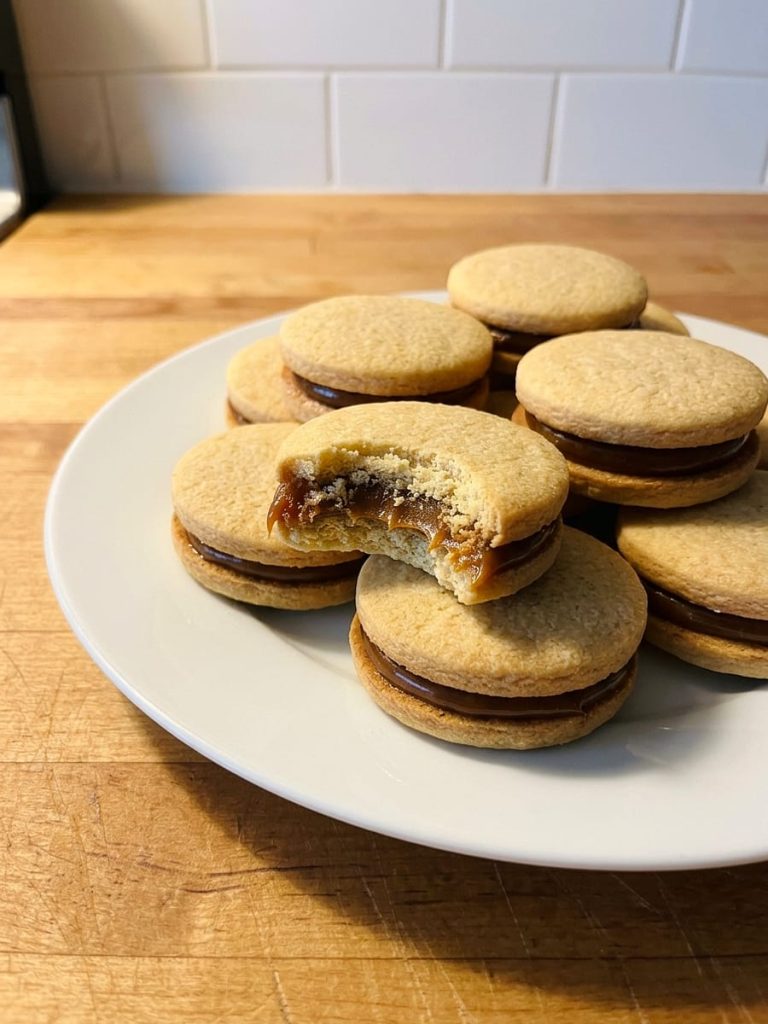
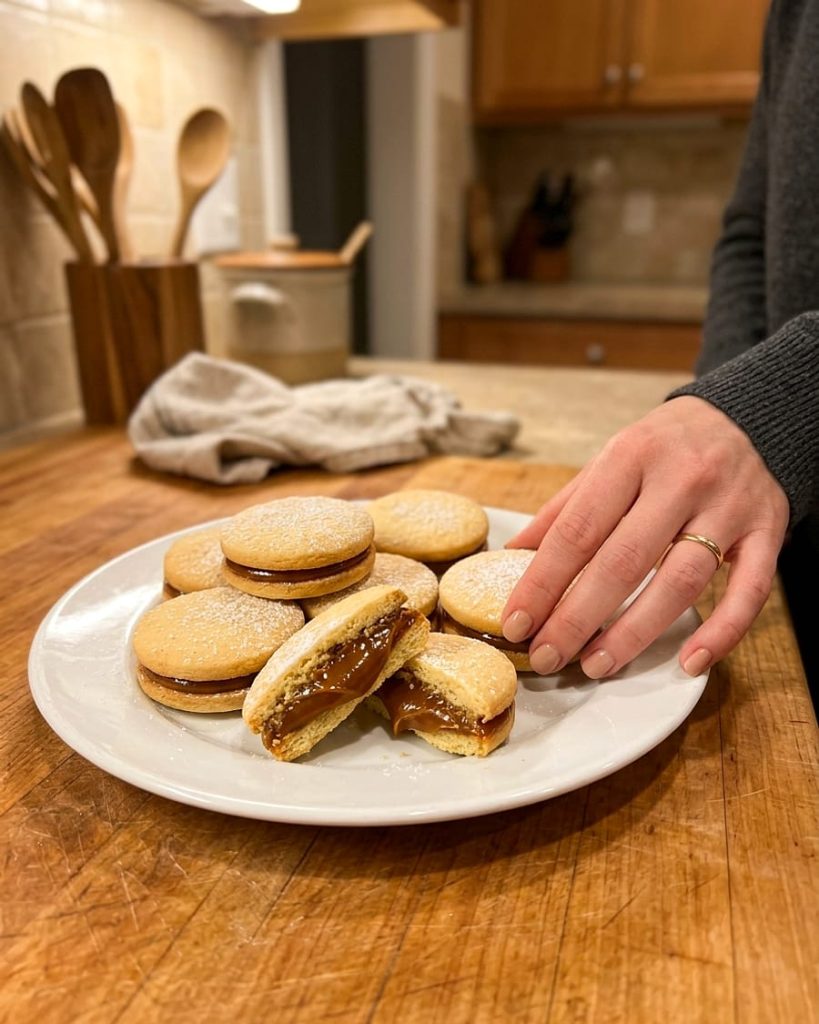
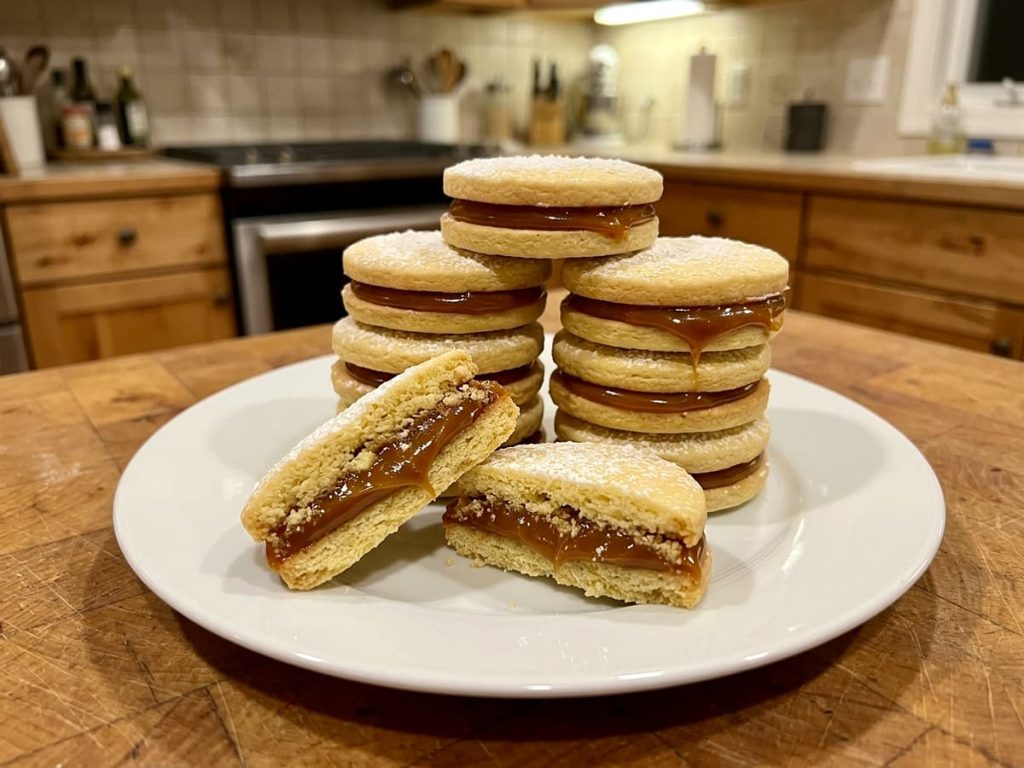
- Fill with dulce de leche. Spread a thick, generous layer of dulce de leche on the flat bottom side of one cookie. Press a second cookie on top very gently, twisting slightly until the caramel filling reaches the outer edges without breaking the crumbly biscuit.
Storing and Reheating
Keep the assembled cookies in an airtight container at room temperature for up to three days. The cookies will actually soften slightly as they sit with the filling, which makes them even better the next day.
If you want to make the dough ahead of time, wrap it tightly in plastic wrap and store it in the fridge for up to two days. Let it sit on the counter for about fifteen minutes to soften slightly before trying to roll it out.
You can freeze the baked cookies without the filling for up to three months in a freezer bag. Thaw them completely on the counter before spreading the dulce de leche on them.
Keep Cooking
- Bubbling Blackberry Cobbler
- Bubbling Blueberry Cobbler
- Chewy Snickerdoodles
- Classic Apple Crisp
- Classic Apple Pie
- Classic Blueberry Cheesecake (Baked)
- Classic Carrot Cake with Cream Cheese Frosting
- Classic Chocolate Cake
- Classic French Apple Cake
- Classic Lemon Bars
Tender Classic Alfajores
Course: DessertCuisine: American12
servings30
minutes12
minutesIngredients
200 to 225 g cornstarch (about 1 1/2 to 1 3/4 cups)
130 to 165 g all-purpose flour (about 1 to 1 1/4 cups)
150 to 175 g unsalted butter, softened and cubed (about 10 to 12 tbsp)
75 g granulated sugar (about 1/3 cup) OR 120 g powdered sugar (about 1 cup)
1/2 to 1 tsp baking powder
1/4 to 1/2 tsp baking soda
1 tsp vanilla extract
1 tbsp lemon zest (optional)
1 large egg
1 cup dulce de leche
Directions
- Cream butter and sugar. Place the softened cubed butter and your choice of sugar in a large bowl. Beat them together on medium speed, scraping down the sides of the bowl with a rubber spatula halfway through, until the butter looks pale and incredibly fluffy, about three to four minutes.
- Mix the dry ingredients. Whisk the cornstarch, all-purpose flour, baking powder, and baking soda together in a separate medium bowl. Stir them continuously until the baking powder disappears completely into the flour to ensure an even rise.
- Combine wet and dry. Add the vanilla, lemon zest if using, and the egg to the butter mixture, mixing on low speed. Gently fold in the dry ingredients just until the dough comes together in a soft ball, stopping as soon as no dry streaks remain.
- Roll out the dough. The classic sources did not give a rolling thickness, so I roll mine to about a quarter inch thick on a lightly floured countertop. Cut out circles using a two-inch round cutter, gathering and re-rolling the scraps gently until the dough is entirely used up.
- Bake the cookies. The sources left out the oven temperature and time, so I bake these at 350°F on a center rack based on my own kitchen experience. Bake them on a parchment-lined sheet until the bottom edges are just barely golden, about ten to twelve minutes.
- Cool the cookies completely. Leave the fragile cookies on the baking sheet for five minutes to firm up before moving them to a wire rack with a spatula. Let them sit until they are completely cool to the touch, which prevents the warm caramel filling from melting.
- Fill with dulce de leche. Spread a thick, generous layer of dulce de leche on the flat bottom side of one cookie. Press a second cookie on top very gently, twisting slightly until the caramel filling reaches the outer edges without breaking the crumbly biscuit.